Cave de Genève
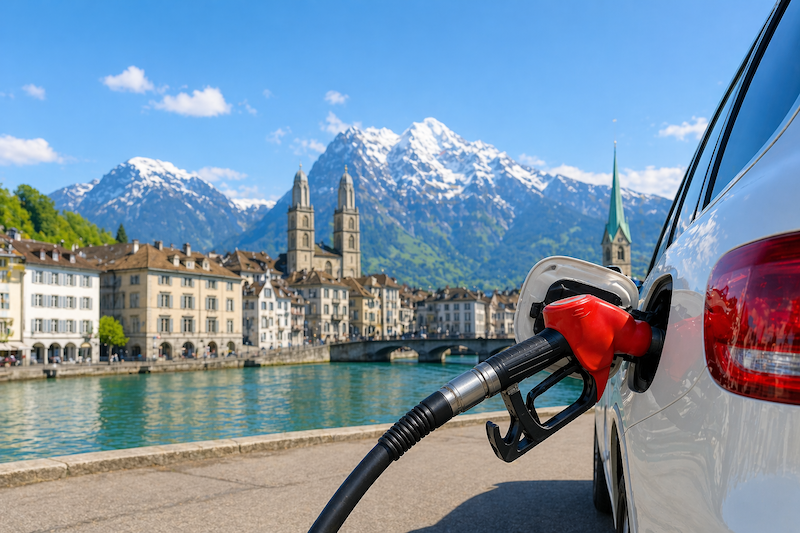
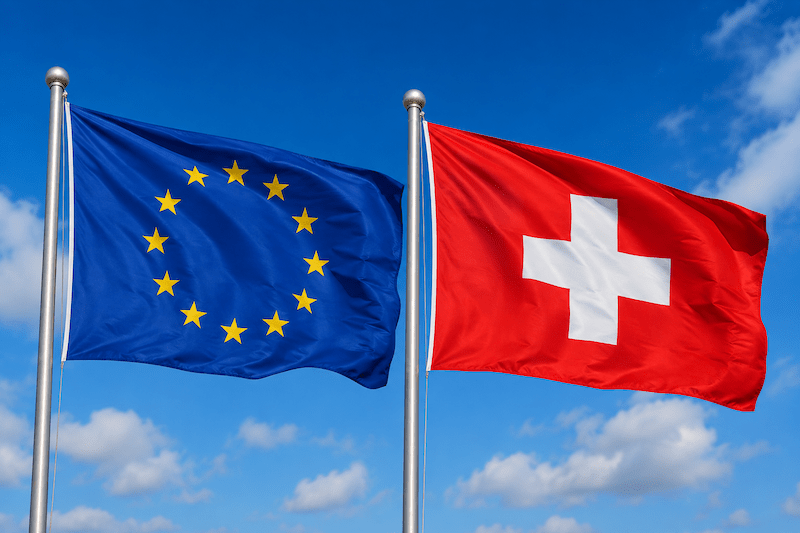
Switzerland is not on the front line of the crisis in the Middle East. But its degree of economic openness, its singular diplomatic role and its structural dependence on energy imports make it a country more exposed than it may seem to the shockwaves of a geographically distant conflict.
The war in the Middle East has indirect but real repercussions for Switzerland, through a series of economic, financial, diplomatic and security mechanisms that reflect the interconnectedness of spaces on a global scale. On the energy front, Switzerland produces neither oil nor gas: it depends entirely on imports to cover its hydrocarbon needs. In 2023, some 9.5 million tonnes of petroleum products were thus imported, transported mainly by pipeline from France and by barge on the Rhine; crude oil, for its part, comes from diversified sources, Nigeria, the United States, Kazakhstan, according to the Federal Office of Energy. So it is not so much the direct origin of supply that exposes Switzerland to Middle Eastern tensions, but price formation on global markets: any disruption to supply in this region mechanically pushes up prices, making production, transport and, more broadly, the general price level more expensive. In a highly open economy, these inflationary pressures are generally contained by the strength of the franc and the rigor of monetary policy, but they are not zero. Added to this are disruptions to strategic maritime routes: since 2023, attacks in the Red Sea have forced many shipowners to reroute their vessels via the Cape of Good Hope, lengthening transit times and raising freight costs, with tangible repercussions for Swiss industrial and pharmaceutical sectors, which depend on regular and predictable supplies.
The financial centre is a second vector of exposure, paradoxical in its effects. In times of geopolitical instability, investors seek safe-haven assets, which invariably increases the attractiveness of the Swiss franc. This appreciation, seen as a sign of strength, in turn penalises exporters by making their products more expensive abroad, a well-known effect for Swiss companies whose competitiveness relies precisely on access to external markets. On the diplomatic front, Switzerland is concerned in a particularly specific way: its neutrality and traditional role as a mediator lead it to maintain relations with many states in the region, to act as a protecting power or facilitator, and to contribute to humanitarian initiatives. The crisis thus mobilises its diplomatic resources while requiring a delicate balance to preserve the credibility of a stance that international tensions regularly test.
The security and migration dimensions complete this picture. Conflicts in the Middle East can have indirect repercussions in Europe through the risks of radicalisation they fuel, obliging the authorities to maintain a high level of vigilance and strengthen international intelligence cooperation. Population movements generated by these conflicts may also reach Switzerland in the form of asylum requests or secondary flows, posing challenges in terms of reception and integration in compliance with international obligations to protect refugees. These issues feed broader internal debates on energy security, neutrality and foreign policy, reminding us that a country geographically distant from a conflict is no less exposed to its shockwaves in a world where interdependence leaves little room for isolation.
Find all our articles Analysis