A classic safe haven, the Swiss economy once again demonstrates its rare ability to steer through a highly volatile global backdrop. Yet beneath the surface of resilience, structural challenges are mounting, testing the strength of a model long regarded as untouchable.
Switzerland is, quite simply, unlike any other European economy. Named the most competitive country in the world in 2025, it relies on monetary stability and a capacity for innovation that have allowed it to hold course while its neighbours absorb the shock of fiscal retrenchment and persistent inflation. The Swiss franc is the most visible symbol of this strength: strong and stable, it acts as a shield against external turbulence, while forcing national flagships, from luxury watchmaking to pharmaceuticals and medical technologies, into a constant climb up the value chain. In 2026, the “Swiss brand” is no longer sold on price, but on exclusivity and precision that few nations can match.
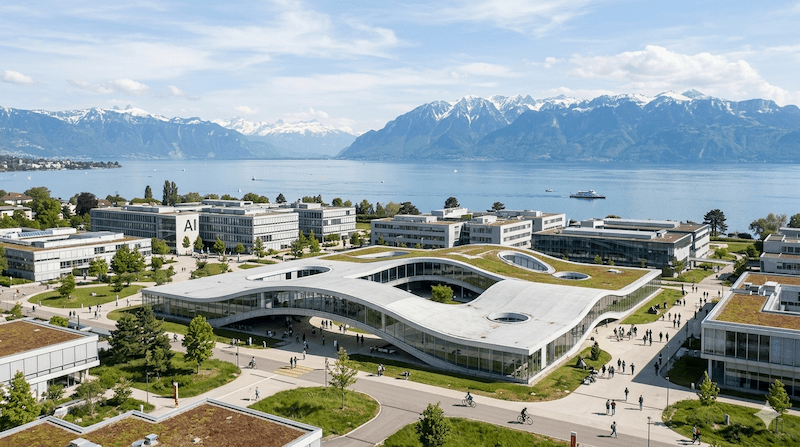
The financial sector, meanwhile, is undergoing a profound transformation. After the major banking reshuffles of recent years, Geneva and Zurich have repositioned themselves as global benchmarks in sustainable finance and private wealth management: Geneva alone now manages nearly 27% of the world’s private offshore wealth. Switzerland has built a clear legal framework for tokenised assets, attracting international capital in search of security in an increasingly unstable regulatory environment. This shift towards “trusted Fintech” is allowing the country to offset the disappearance of traditional banking secrecy through cutting-edge technological expertise, turning a historical constraint into a lasting competitive advantage. Family offices, sovereign wealth funds and major asset managers continue to flock in, drawn by the unique combination of institutional stability, legal know-how and digital infrastructure that the Confederation is now the only country able to offer at this scale. On the industrial front, the country is also banking on CleanTech as a genuine growth engine. From carbon capture to high-performance energy storage systems, the laboratories of EPFL and ETH Zurich continuously feed the economic fabric with technologies exported across every continent. This knowledge economy rests on a solid foundation: Switzerland’s dual education system, combining vocational training and specialised higher education, remains one of the most effective in the world, ensuring an exceptional match between corporate needs and available skills. The unemployment rate, although edging up to 3.1% in March 2026 according to SECO, remains among the lowest in Europe and reflects the structural resilience of the Swiss labour market.
And yet, not everything is clear sailing. Relations with the European Union remain the main point of friction in Swiss economic policy: access to the single market is vital for thousands of Swiss companies, but the preservation of national sovereignty and the protection of wages remain red lines that a large part of the population refuses to cross. This delicate diplomatic balancing act is the main risk factor for long-term foreign investment. At home, property pressure in urban centres such as Geneva, Zurich, Basel and Lausanne is gradually eroding the room for manoeuvre of a middle class increasingly squeezed between steadily rising rents and unavoidable fixed costs. The country’s appeal cannot rest indefinitely on multinationals and wealthy international fortunes alone; it must also allow local talent to thrive without sacrificing the quality of life that defines Switzerland’s reputation.

Switzerland in 2026 is therefore a high-precision economy: solid in its fundamentals, agile in its transformations, yet fully aware that prosperity is never automatic. It is built every day, in the constant tension between openness to the world and the preservation of a unique social model — an equilibrium as fragile as it is enviable.
Find all our articles in Decryption