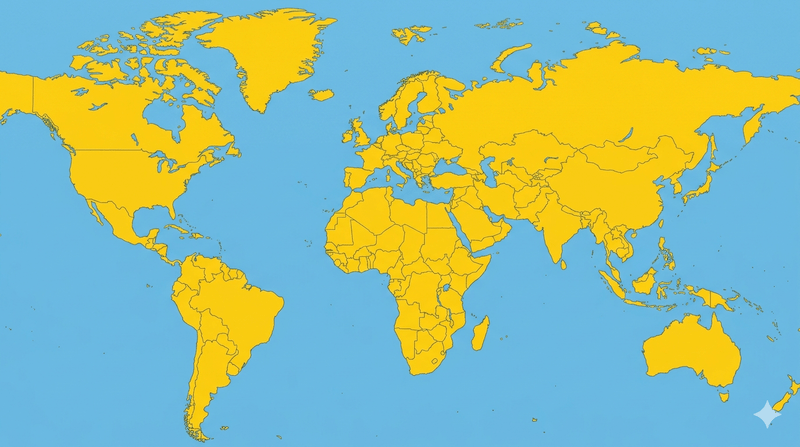
The idea of an economic alliance between Switzerland and Africa rests on a fundamental paradigm shift: turning a relationship historically built on development aid into a strategic co-growth partnership. By turning its gaze southward, the Confederation could find the engine of dynamism it lacks in a mature European market with stagnant demographics. This synergy is based прежде all on a near-natural complementarity between Swiss technical excellence and the vitality of a continent that will have two billion inhabitants by 2050, in the midst of rapid urban and digital transition. The timing is right, and the window of opportunity will not remain open indefinitely.
Switzerland’s pharmaceutical and biotechnology industry is one of the clearest levers for this expansion. Rather than limiting itself to exporting finished products that are often unaffordable for local populations, Basel-based companies could decentralise their research and production hubs directly onto African soil. By building on the rise of technology clusters in Rwanda, where Kigali Innovation City already embodies this pan-African ambition across 61 hectares dedicated to innovation and science, as well as in South Africa and Kenya, Switzerland could co-develop medical solutions tailored to local climatic and epidemiological specificities, thereby securing durable market positions while strengthening the continent’s health resilience. Tropical diseases, antimicrobial resistance and the logistical challenges of the cold chain are all areas where Swiss expertise could deliver a genuine competitive edge. This approach would allow the Confederation to be seen not merely as a supplier, but as a structural partner in African public health, with all that implies in terms of commercial loyalty and long-term purchasing preferences.
Switzerland’s financial centre also has a complementary trump card in sustainable finance and impact investing. While Swiss institutional investors are seeking stable returns in a constrained-rate environment, African infrastructure — particularly in renewable energy, sustainable mobility and access to water — offers significant green growth opportunities that large pension funds still struggle to capture for lack of suitable instruments. By deploying its international credibility to structure secure financial products — green bonds, public-private blended funds, first-loss guarantees — Switzerland could become the preferred channel through which global capital is invested in Africa’s energy transition, strengthening the standing of Geneva and Zurich against competition from Singapore and London. Capital alone is not enough: the long-term success of such a strategy will also depend on Switzerland’s ability to export its dual vocational training model. With a median age of 19.5, Africa is the world’s youngest continent, a vast workforce waiting to be skilled. By setting up centres of excellence for learning, modelled on Swiss vocational schools, Swiss companies would not only secure impeccable local production quality, but also help foster a network of African SMEs capable of integrating into their value chains. This dual contribution — capital and skills — is the best guarantee of long-term economic stability: by creating jobs and shared prosperity, it mechanically reduces the political risks that still deter too many foreign investors.
Artificial intelligence and digitalisation are finally opening up an unprecedented field of cooperation. Africa is the continent of leapfrogging, the ability to skip intermediate technological stages and adopt the solutions of tomorrow directly. It does not have to unlearn obsolete infrastructure: it is building from the outset on the most advanced standards. Swiss startups specialising in data management, cybersecurity, precision agriculture or automated logistics could find there an application field at the scale of an entire continent, both a test market and a growth market. In this scenario, Switzerland would do more than consolidate its prosperity: it would reinvent itself as the technology partner of an Africa in full acceleration, linking its economic destiny to that of the most dynamic region of the coming century. The real question is not whether such a partnership is possible. It is whether Switzerland will have the political will to build it before others do.

Find all our Analysis articles