Dear readers,
Recently, I received a letter that gave me pause. A lady, politely and without any aggression, reproached me for using the word “woman” in one of my editorials. She urged me instead to use the term “sex assigned at birth” so as not to offend anyone. Though written without malice, her letter left me thoughtful and reflective.
Behind this seemingly simple exchange lies a broader question: are we living in an era in which the desire not to offend anyone is overtaking spontaneity and the richness of language? And, more broadly still, does the drift commonly referred to as “wokism” sometimes push certain well-intentioned impulses too far? Language is alive. It evolves with our societies, adapts to our values and reflects our aspirations. Today, debates around words reveal an underlying tension between the need to respect each individual in their uniqueness and the fear of distorting or freezing the way we communicate. For a long time, certain words have been burdened with prejudice and exclusion. The struggles for equality, whether around gender, ethnicity or sexual orientation, have helped dismantle systems of domination embedded in language. And that is a precious advance. But in seeking to avoid any possible offence, do we not risk falling into the opposite excess: a kind of word policing that inhibits rather than enriches?
The term “sex assigned at birth” suggested by this reader is an attempt at neutrality. A way of including people who do not identify with the gender assigned to them at birth. I understand that intention. But I wonder: in seeking to be inclusive, might we not end up erasing part of our collective and individual identity?

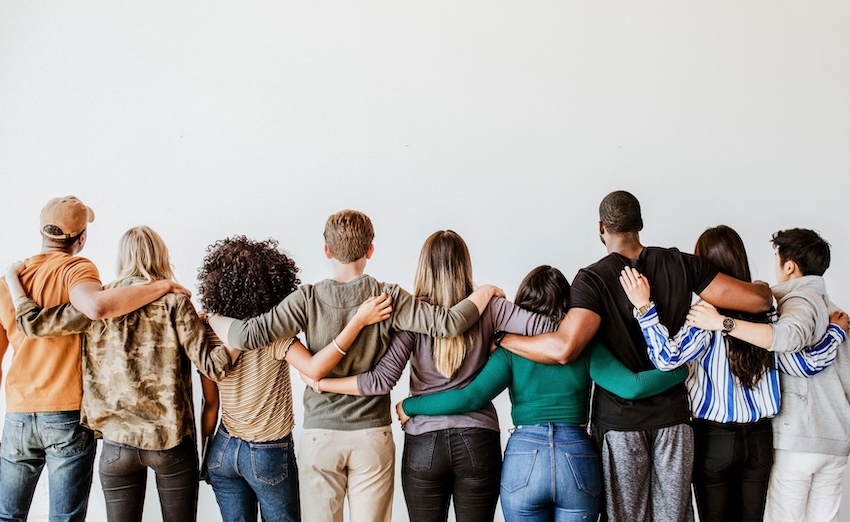
My reflection is not a criticism of the movements that seek to make our world fairer and more respectful. It is a call for balance. Social progress depends on taking new sensitivities into account, but it must not come at the expense of freedom of expression or the richness of our human interactions. Perhaps it is time to reaffirm that kindness is measured not only by the precision of our words, but also by the intention that guides them. Rather than seeing this reader’s observation as a constraint, I choose to regard it as an invitation. An invitation to reflect, to dialogue, to better understand the sensitivities around us. But also to assert that exchange must remain open, without fear of inadvertently offending. The path toward a more inclusive society will never be linear. It is punctuated by missteps, adjustments and moments of awareness. But it must always be guided by a shared determination to build and unite, rather than divide.
Through this editorial, I would like to thank this reader for her feedback. She gave me the opportunity to step back, to question my certainties and to reaffirm my convictions: words matter, but it is our intentions and our actions that make the difference. So let us continue moving forward together, with kindness and positivity. It is by exchanging views, listening and learning from one another that we will find balance, without losing what makes our languages so rich and diverse.
* * * * * * * * * * *
PS : As a journalist, my editorials are never intended to hurt sensibilities, but to encourage constructive and benevolent reflection on the nuances of human interactions in a world in constant evolution.
Find all our Décryptage articles