Cave de Genève
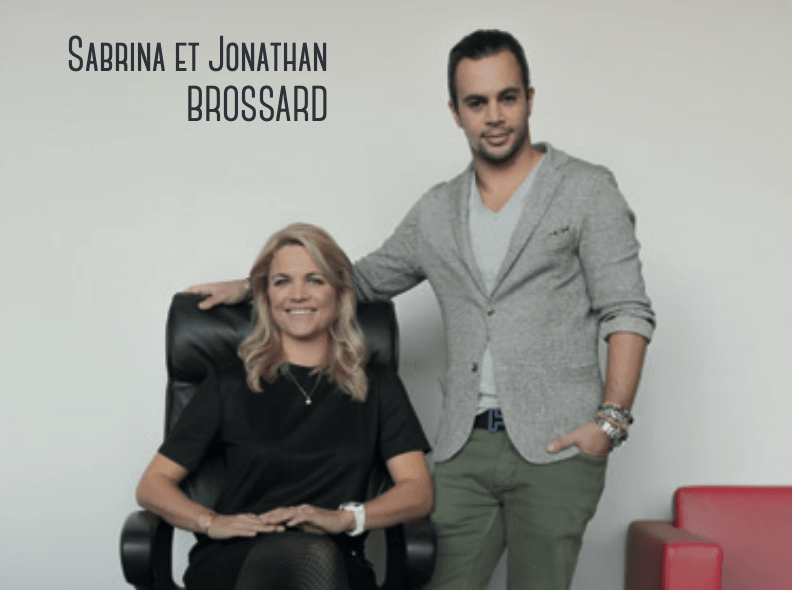
Photo © Groupe Connextivity
Based in Saint-Prex, in the canton of Vaud, Conextivity Group has been designing and manufacturing high-performance connectors, cabling and electronic solutions since its origins under the Fischer Connectors brand — ensuring the transmission of power and data in demanding environments such as the medical, defence and industrial sectors. In less than ten years, the third generation of this family-owned business has transformed a purely industrial activity into a cutting-edge technological platform spanning the entire connectivity value chain, from micromechanics to the Internet of Things, through its new entity Wearin’, while strengthening the group’s industrial capabilities and doubling its workforce, which now stands at 800 employees worldwide. Sabrina and Jonathan Brossard, respectively chair of the board of directors and CEO, discuss the role of external directors in their family business.
Le Monde Économique: What are the main challenges facing Conextivity Group?
Brossard: Conextivity Group has had to meet a profound transformation challenge: moving from a historically industrial company to a technology company, while preserving the rigour and reliability that underpin its value. This shift has meant repositioning skills, production resources and expertise in the right place, in line with the specific requirements of each market. It is no longer simply a matter of manufacturing efficiently, but of combining industrial know-how, innovation, technological adaptation and a deep understanding of customer needs. This transformation requires great execution discipline, because it forces the organisation to evolve while preserving quality, responsiveness and the group’s overall coherence.

The second challenge is strategic and geopolitical. As an international company, Conextivity Group has had to navigate a decade marked by significant political and economic instability, which has led it to fundamentally rethink the way it is organised and managed. Some capabilities had to be consolidated, others relocated geographically, and several strategic pivots had to be made rapidly in order to preserve the group’s competitiveness. Added to this is the pressure of an exceptionally strong Swiss franc, which imposes a constant requirement for productivity, optimisation and industrial trade-offs. In this context, the ability to decide quickly, reallocate resources intelligently and remain agile becomes an essential condition of resilience.
Le Monde Économique: Has Conextivity’s board of directors taken risks in recent years?
Brossard: Our shift from industry to technology required us to overcome some of the industrial reflexes that are part of our DNA, in favour of technological risk-taking. Our challenge was to turn our entrepreneurial vision into a value proposition — into products capable of setting us apart from the competition. Today, our risk lies in pursuing substantial growth while developing the technology of the future for demanding markets that need innovative and effective solutions. We want to seize this momentum to secure the company’s potential and long-term sustainability.
Le Monde Économique: What do external directors bring to the management of these challenges?
Brossard: In a family-owned company, external directors first and foremost bring something essential: distance. When you are immersed day in, day out in the business — in operational urgencies, commercial constraints and human issues — it becomes difficult to maintain a fully peripheral view. The presence of external directors (three out of five on our board) makes it possible to bring in other skills, other experiences and a less emotional perspective on decisions. They do not come to replace the entrepreneur, but to enrich their reading of the situation, providing a capacity for perspective that is particularly valuable in periods of transformation or tension.
The board must also play a safeguard role, in the broadest sense of the term. It oversees control, of course, but also the application of governance rules and the robustness of the decision-making framework. This is precisely where external directors are useful: they help prevent the risk of charging ahead headlong, by recalling the fundamentals, the balances that must be preserved, and the weak signals that should not be overlooked. Their contribution is therefore not limited to technical expertise; it also consists in preserving collective lucidity, securing the strategic course, and preventing entrepreneurial energy from turning into blindness.
Le Monde Économique: What is the main added value you expect from the board?
Brossard: With a single shareholder, we have the advantage of not having to manage minorities, generational issues or divergent centres of interest.
When developing strategy, we quickly fall in love with our vision of the future, and therefore need people who challenge that vision. External directors fulfil this role and take part in the company’s journey without offering tacit approval. We expect them to provide an external and complementary perspective, while sharing our values. Board members must be attuned to market dynamics, the international context, our value chain and the company culture.
Le Monde Économique: What are your main criteria when selecting an external director?
Brossard: We look for someone who brings their own vision and takes an interest in ours, contributes their experience, challenges us, takes the time to engage with the role, and exchanges ideas with an open mindset — while showing respect for the company as well as for the people around the table.
We favour people who facilitate discussion, generate ideas and questions, and broaden our perspective, rather than lecturers or systematic contrarians. If, in addition, a director brings a network that is useful to the company, this can become an accelerator in certain markets.
Le Monde Économique: Sabrina Brossard, you have chaired Conextivity Group since 2023. What changes have you brought to the way the board operates?
Sabrina Brossard: Ten years ago, the board members from outside our family were mostly from the industrial world. Since then, our business scope has expanded considerably, with new value propositions and innovative technologies within our two commercial entities: Fischer Connectors, which develops new electronic solutions, and Wearin’, which specialises in smart IoT solutions serving connected field response teams. The board’s role has naturally adapted to this strategic vision, notably through the addition of three external directors with much more diverse profiles than before, and the introduction of renewed governance. The issues now dealt with are more strategic than operational, and the frequency of meetings has increased. We have also encouraged informal exchanges alongside the formal agenda, fostering a group dynamic conducive to open, trust-based discussions.Find all our Interviews