Cave de Genève
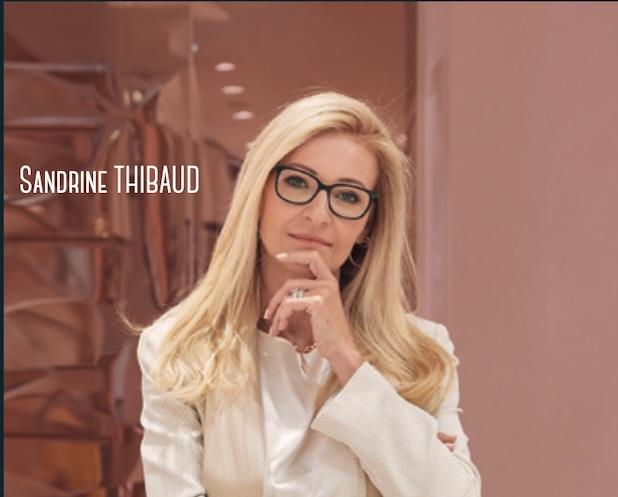
Photo © Fullord
At first glance, nothing seemed to predestine Sandrine Thibaud to become one of the most distinctive figures in contemporary jewellery. And yet her journey resembles a river in Africa — capricious, unpredictable, but always moving toward something greater. The founder of Fullord, the Geneva-based jewellery house established in 2019, Sandrine Thibaud has built her empire of elegance on a foundation of bereavement, uprooting and a quiet determination to remain true to what she loves.
Sandrine Thibaud was born in Cameroon and grew up there until the age of 14, in a world where nature was her playground. No imported toys, no plastic dolls, no glittering shop windows — but a jewellery box belonging to her grandmother, filled with wonders that the young Sandrine would contemplate with a fascination that never left her. It was in this raw setting that an extraordinary sensitivity quietly took shape.
And very quickly, her family environment added another dimension to that emerging sensitivity: her grandfather moved in Yaoundé’s circles of power, her grandmother ran the African industrial patents office, and her mother, a professional photographer, travelled the world with the exacting eye of those who capture what matters most. Sandrine grew up surrounded by people who created, invented and transformed. She absorbed it all, without yet knowing what she would make of it. At 13, she knew one thing for certain: she would do something important. Not great in the sense of excess, but great in the sense of achievement.
At 14, life presented her with its first bill, and it was merciless: her mother died at 38, far too soon, far too suddenly, and before grief had time to settle she was already forced to leave — to leave Cameroon, leave Africa, and find herself cast toward a Europe she had not chosen and that had not been waiting for her. From Cameroon to France, there are not just thousands of kilometres; there are two worlds with nothing to connect them: there, doors remain open, meals are shared with strangers, time belongs to everyone; here, each person closes their door, crosses the hallway in silence, and discretion becomes the unspoken rule.
She was 14, she had just lost her mother, and she had to learn to exist in a world that did not know her, that had made no room for anyone like her. “There were many, many moments of anxiety and fear,” she says today, with the calm voice of someone who has digested what others might not have survived. This uprooting is not a figure of speech: it is an organic, almost physical pain — that of a child searching for bearings in an environment where nothing yet belongs to her. It is precisely in that absolute deprivation that something fundamental is revealed: when there is nothing left to hold on to — neither mother, nor country, nor childhood — you hold on to yourself. At the bottom of that solitude, Sandrine discovered a truth she would only formulate years later: she is stronger than what happens to her. Not invulnerable, not numb, but able to endure, to get through, to keep moving forward even when the path has disappeared beneath her feet. She does not evade this brutal uprooting, this moment of rupture; she carries it, and it becomes the driving force behind a fierce determination.
Once in France, Sandrine followed a traditional academic path, earned a literature baccalauréat, then began studying law. She dreamed of the courtroom, but vocation sometimes has other plans. “I quickly realised that my true passion was jewellery-making.” At 20, she joined a manufacturing workshop and discovered what she had been looking for without knowing it: the precision of gestures, the mystery of raw material transformed into an object of desire, that silent alchemy between hand and metal. “I was truly passionate,” she says simply — and in her voice, the phrase sounds less like a passing anecdote than the explanation for everything that follows.
Five years later, Sandrine Thibaud met the man who would become her husband. He had just founded a business in the nautical industry, specialising in gangways, doors and technological systems for yachts and super-yachts. He asked her to join him. She accepted. “Love has only one voice,” she says with a smile — the kind that says yes without needing to think twice. Sandrine became a sales executive, helped develop the business, travelled, negotiated and helped structure its growth. For 25 years, she helped turn the company into a global leader employing more than 400 people. But behind that success was a woman juggling roles: entrepreneur, mother, stepmother, wife, expatriate. “Everything is possible,” she says today.
But at the heart of this life lived at full speed, one tiny detail would change everything. Sandrine Thibaud is, in fact, a woman who never compromises on elegance. And it was precisely that standard which, one day when strong winds were sweeping across the decks of a yacht, set everything in motion. The Fullord story began… with a scarf that flew away. On yacht decks, Sandrine often saw her scarves slip free. She looked for an accessory to hold them in place, but found nothing. “I didn’t understand why no one had invented a piece of jewellery for scarves. A real jewel, not a napkin ring, capable of holding a silk square elegantly.” So she drew. A first sketch. A first prototype. A simple but revolutionary idea: turn the scarf into a jewellery piece.
Seven years later, the brand has around twenty international points of sale, a placement in Emily in Paris, a notable presence at VicenzaOro, and iconic collections — Eden, Masai, Ghost — available as rings, necklaces and bracelets that combine high-quality materials with artisanal craftsmanship. Fullord is not an accessory. It is a gesture. A signature. A different way of wearing femininity.
Sandrine Thibaud’s journey carries the poetry of lives that rise again and the music of souls that refuse to fade. She belongs to those women who sculpt their destiny as one sculpts a jewel: slowly, patiently, with a precision born of the heart. In the end, one truth stands out: we do not shine because life spares us, but because we have remained standing, again and again, until we became light.
Find all our articles Parcours