Cave de Genève

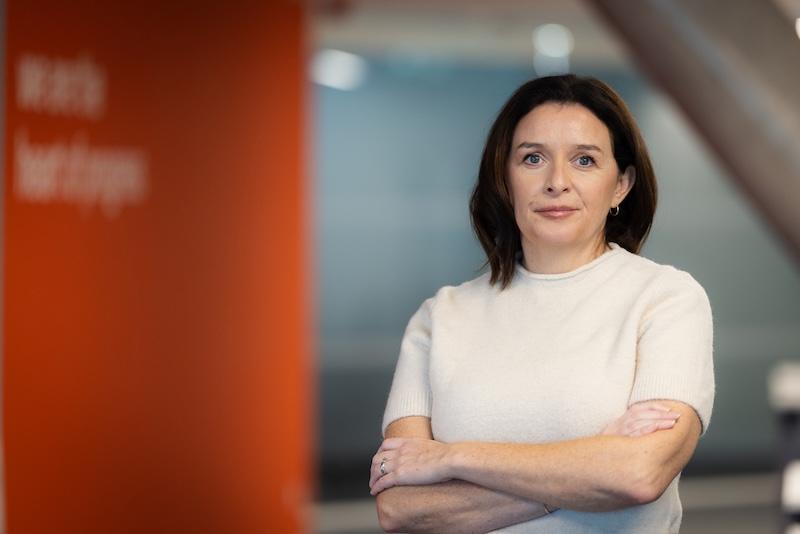
By Anthony Lebrun
Many SMEs begin with a gesture, an intuition, a distinctive mastery: that of a founder who embodies a craft before ever creating a company. This starting point is far from trivial. Over the long term, it shapes how the business grows, hires, innovates and positions itself in its market. Large organisations often build expertise by accumulating skills and layers of hierarchy; an SME is born from a single field of expertise. That origin leaves a lasting mark on its culture. It sets the company’s standards, its relationship to its craft and its particular way of tackling clients’ problems, even before the first contract is signed.
Often, that expertise is rooted in a long personal journey, typically shaped by years inside large organisations and the frustrations that come with them. A watchmaker who spent fifteen years at one of the great names of Swiss watchmaking before opening his own workshop. A specialist in industrial cybersecurity who, tired of corporate trade-offs and shifting priorities, decides to offer a precise, targeted service to manufacturing SMEs overlooked by the consulting giants. A former head of procurement at a major retailer who sets up a bespoke firm to help SMEs struggling with the growing complexity of global supply chains. In each case, the expertise comes before the business; it is what makes the business possible. And it has an almost artisanal quality, in the noblest sense of the word: finely honed, embodied knowledge that goes beyond written procedures. It shows in the ability to read a situation, tailor a response and anticipate what the client has not yet put into words.
In an SME, expertise is not a department or a budget line. It is the genetic imprint that sets the company apart from all its peers.
This is fundamentally different from what happens in large organisations. In a multinational, expertise is fragmented, spread across teams and often diluted in processes designed to reduce dependence on any one individual. It belongs to the company, but it is not the company’s face. In an SME, by contrast, expertise is embodied. It has a first name, sometimes a surname that becomes inseparable from the brand. You can see it in the way a difficult client is handled, in how a non-standard order is dealt with, or in the willingness to turn down a contract that falls outside what the company truly does well, because reputation matters more than the quarter’s revenue. This embodiment is both the SME’s greatest strength and its built-in weakness. A strength, because it creates authenticity, responsiveness and a client relationship that large groups cannot imitate. A weakness, because it makes the company dependent on one person, a small team, sometimes a single mind whose absence puts the whole enterprise at risk.
The SMEs that have turned this fragility into lasting resilience are those that understood that expertise is not something you own. It must be deliberately nurtured, rigorously documented, generously shared and, above all, passed on before it is too late.
Passing it on is perhaps the ultimate test of maturity for a specialist SME. As long as expertise rests on one person, it is precious but as fragile as glass. Once it becomes a shared practice, a common language, a way of solving problems that every member of the team has absorbed so thoroughly that they apply it without being told, it truly becomes part of the company’s identity. It no longer belongs to one individual; it belongs to the culture as a whole. And it is in that culture, not in patents or pricing, that a company’s true DNA lies. The SMEs that have grasped this know that they do not sell products or services like everyone else in their market. There are many of them in French-speaking Switzerland, in precision manufacturing, specialist consulting, engineering and business services. What they sell is a way of approaching problems, rigour in execution, and knowledge built up over years that competitors cannot replicate simply by hiring or copying a commercial offer.
An SME does not exist because it found a market. It endures because it masters something others cannot do as well.
This self-awareness is not arrogance: it is an SME’s first strategic asset. Before talking about positioning, sales strategy or brand awareness, a company must answer a question that sounds simple but is demanding in practice: what do we do better than anyone else, and why should clients choose us? The answer is not a slogan for the website. It is a deep operational conviction that guides every daily decision, every hire, every refusal of an ill-fitting contract, every investment in skills. It determines what the company wants to become in five years’ time. An SME that cannot answer this question clearly is still searching for its DNA. It exists, certainly, but it has not yet decided what it wants to be. And in a market where large groups have far greater resources, an SME that does not know what makes it irreplaceable is condemned to compete on price, a battle it will always lose.
The real question, then, is not how to grow, but why the company exists. The SMEs that have answered it honestly are the ones their clients never leave.
Find all our articles Business Culture