Cave de Genève
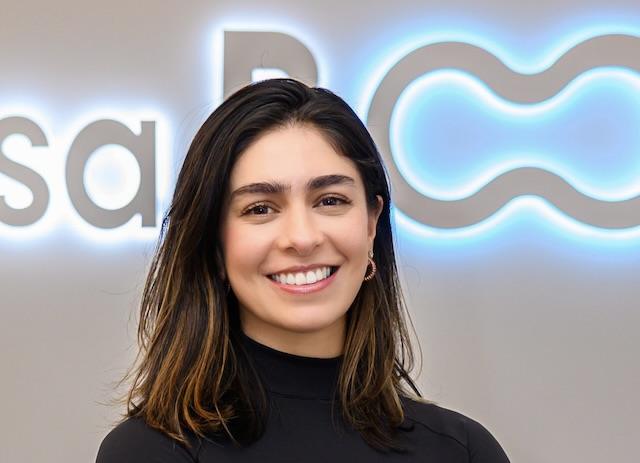
Photo Diana Caballero © Casa Boost
When Diana Caballero arrived in Geneva, she looked for a place to train the way she had in Mexico. When she couldn’t find one, she decided to build it.
When her family asked whether she was sure she wanted to start a business, she said yes without hesitating. The doubts came later. She had a management degree, experience in the luxury sector and a clear idea of what she wanted to build. What she did not know was whether customers would come.
After studying business administration at the International University in Geneva, she completed an MBA with a minor in luxury marketing in 2015. She then returned to Mexico and worked as a business analyst at Cartier, where she learned to pay close attention to process, quality and service. Back in Geneva in 2019, she tried to rejoin the company, but the conditions attached to her permit stood in the way of her being hired. She chose to become an entrepreneur.
The idea came from her own experience as a client. In Mexico, she had found in boutique studios a way of doing sport that suited her: the discipline, the energy of the group, the drive to push further. In Geneva, she could not find it. She also discovered a sporting culture centred on the outdoors, skiing and hiking, whereas she was used to training indoors. She saw an opportunity, provided she could adapt the idea to local habits.
During the pandemic, she spent a year and a half preparing the project, with no suppliers and no local benchmarks for the real costs of a business with so many variable expenses. She also learned to sort through advice. “Every opinion is valid, but they don’t all carry the same weight.”
In 2021, she opened a first studio, the origin of CASA BOOST: one class room and changing rooms, enough to test whether the concept worked before rolling it out in full. The early months, between waves of Covid, were financially difficult. Looking back, she sees them as the time she needed to learn the business.
The market held some surprises. Her clients went away for weekends more often, and on holiday for longer, than her experience in Mexico had led her to expect. She had to understand how those absences affected attendance and find a balance between occupancy, pricing and costs. She also had to explain how a studio works, down to why opening hours followed the class schedule. As studios have multiplied and become more visible on social media, she has noticed that clients now ask different questions.
In April 2025, a second location opened in Eaux-Vives, a neighbourhood where clients had been asking for one before it was even announced. The schedule grew from 20 to 65 classes a week. Diana Caballero was able to build the project she had first imagined, this time with the experience of someone who had already run a business.
Her client’s perspective remains central to how she leads. Her instructors take different classes as participants and go through the full experience, from the welcome to the moment after the session. She wants them to understand the service from the point of view of those who receive it.
She is now considering growth elsewhere in Switzerland, then abroad, and is open to outside investment, but not before strengthening the team and the method. The studio she couldn’t find now exists. The question is how far it can travel.
Find all our Parcours articles