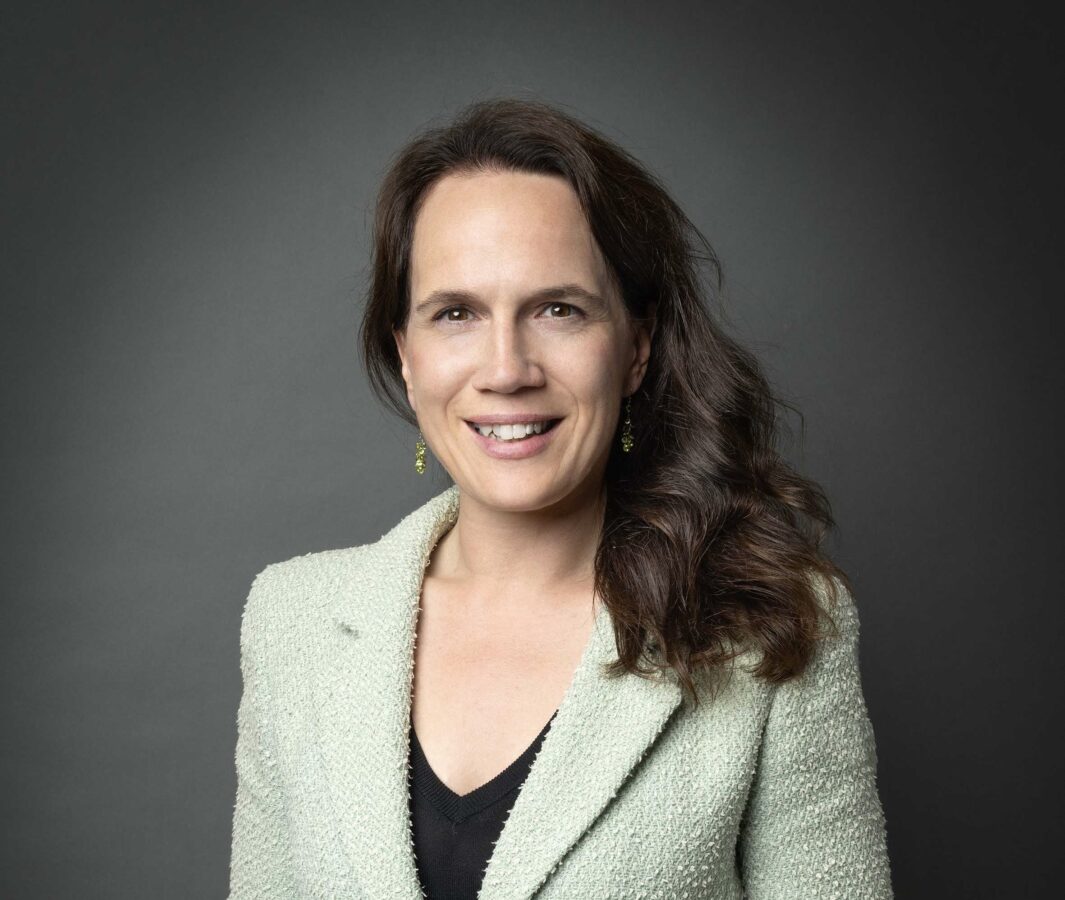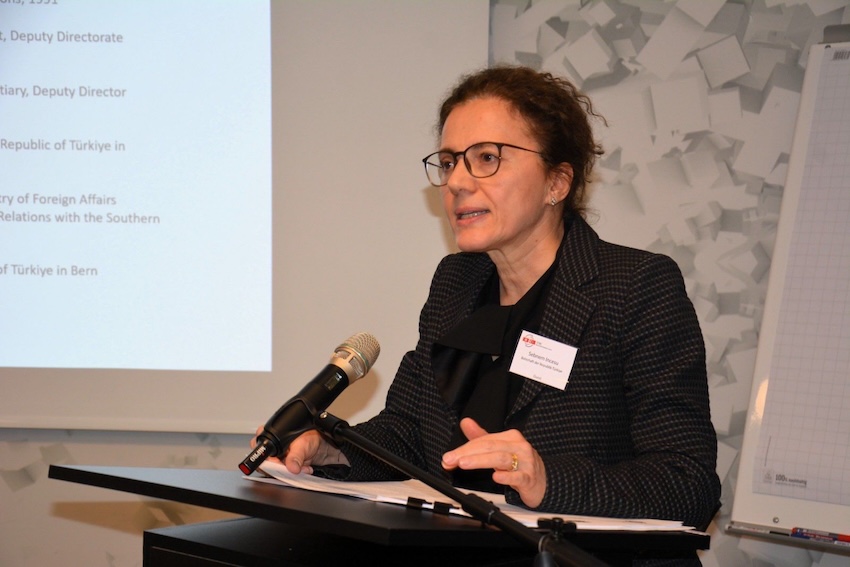
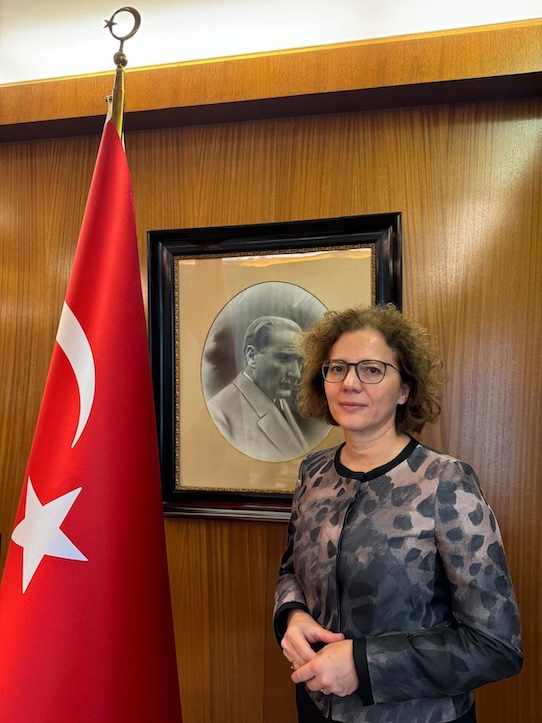
Photo: H.E. Ambassador Şebnem İncesu ©
On the occasion of the centenary of the Friendship Treaty between Türkiye and Switzerland, the official visit of Federal Councillor Guy Parmelin to Ankara marked a decisive milestone. In the context of geopolitical tensions and rising protectionism, both countries have expressed a clear intention: to transform their historical ties into a strategic economic partnership. Le Monde Économique offers an in-depth interview to understand the drivers behind this commercial diplomacy, its opportunities and challenges, and to provide business leaders with insight into what lies ahead.
Monde Économique: As the two countries celebrate 100 years of diplomatic relations, they are also entering a new phase. In your view, what defines the “new maturity” in bilateral relations that Guy Parmelin referred to?
H.E. Ambassador Şebnem İncesu: From our perspective, the ‘‘new maturity” refers to sustaining a pragmatic and mutually beneficial dialogue between the two countries in an age of uncertainty. Today, we are confronted with a range of challenges that directly affect both bilateral and international relations. Our world is increasingly fragmented. Geopolitical competition has intensified, and geo-economic developments as well as economic protectionism are on the rise across the globe. The multilateral system is under severe strain. All states need to recognize that no nation can address these challenges alone. It is becoming ever more important for countries to diversify their economic relations and broaden their partnerships. Fortunately, Turkish – Swiss economic cooperation has adapted dynamically to these new realities.
Against this backdrop, we believe that the “new maturity” between our two countries, as Mr. Parmelin noted, is defined above all by Türkiye and Switzerland’s ability to engage in open, forward-looking, and pragmatic dialogue on a widening range of issues. This new maturity reflects an increasingly diversified relationship—one that extends beyond traditional political contacts to encompass growing cooperation in trade and investment, innovation, science and technology, renewable energy, migration, and people-to-people ties.
Monde Économique: Trade between the two countries has reached 12 billion dollars in just nine months. Which sectors offer the greatest growth potential today, and what should be the short-term priorities?
H.E. Ambassador Şebnem İncesu: First and foremost, the economic and commercial relations between our two countries rest on a solid legal foundation, shaped by numerous bilateral and multilateral agreements arising from our long-standing diplomatic ties. These include the Agreement on the Mutual Promotion and Protection of Investments signed in 1988; the Free Trade Agreement between Türkiye and EFTA, signed in 1991 and revised in 2018; and a series of agreements concluded between Türkiye, Switzerland, and EFTA from 2002 to 2010 covering trade, economic cooperation, conformity assessments, energy cooperation, and the prevention of double taxation.
In addition, bilateral agreements in agriculture and transportation, along with the favorable investment environments in both countries, further strengthen this foundation.
Together, these legal frameworks make Türkiye and Switzerland attractive partners for mutual investment and commercial–economic cooperation.
Although Switzerland is considered a small country in terms of land area and population, and has no direct access to sea routes, it remains one of the centers of global trade—particularly in the field of commodity trading.
There is still considerable potential to further develop our economic relations with Switzerland. The trade volume between our two countries, which stood at $11.5 billion in 2024, reached $13.5 billion in the first ten months of 2025. Given our country’s capacity and Switzerland’s strong position in the global economy, this volume can be increased substantially. Strengthening relations between two economic actors with such high potential therefore remains one of our top priorities.
Our Embassy, with the support of its Trade Office, is working closely with our Consulates General in Geneva and Zurich, as well as with civil society organizations that have economic expertise, to encourage our Swiss friends to collaborate with our companies and invest in Türkiye.
In this context, I believe one of our key objectives is to ensure that Swiss companies recognize Türkiye’s innovation and production capacity and view it as a place where they can source supplies under highly favorable and efficient conditions. This is essential for rapidly deepening our cooperation in this field.
It is therefore important to emphasize the role of trade fairs, where companies from both countries can meet, hold B2B meetings, explore each other’s potential, and establish business connections. Participation in such events is a significant driver of progress.
Commercial partnership opportunities that we can advance in the near term include renewable energy, environmental technologies, automotive, health tourism, and other sectors. Potential exports from our country to Switzerland include ready-to-wear clothing, furniture, aluminum and steel products, vegetables and fruits, motor vehicles, jewelry, packaging materials, ceramics, and natural stones.
Monde Économique: Switzerland is one of the main foreign investors in Türkiye. What explains Türkiye’s attractiveness for Swiss companies, and what risks should be monitored as this expansion continues?
H.E. Ambassador Şebnem İncesu: Türkiye offers tremendous global connectivity opportunities for foreign investors and multinational companies due to its location at the intersection of Asia, Europe, and Africa. In addition to its large domestic market, Türkiye’s 30-year Customs Union relationship with the EU and the Free Trade Agreements it has signed with key trading partners provide access to approximately 1 billion consumers in various regions around the world.
Türkiye’s investor-friendly policies, supported by legislation and a wide range of incentives, combined with its young and dynamic population, a high-quality and productive workforce, and increasing R&D investment and incentives, create a strong environment for sustainable international investment.
Our country has made notable advances in automotive, machinery, defense-aerospace, agriculture-food, and public-private infrastructure sectors, while also growing its presence in the global energy market and expanding renewable energy sources. The resilience of Türkiye’s manufacturing sector and supply chains during the COVID-19 pandemic further underscores its reliability for investors.
Additionally, Türkiye is an important tourist destination for Switzerland, while tourist visits by Turkish citizens to Switzerland are also on the rise, reflecting growing bilateral interest and exchange.
At this point, I must say that rising economic protectionism and new trade barriers present main challenges to the economic interests of both countries. Türkiye and Switzerland share a commitment to preserving the liberal international order and a rules-based international system. The two countries are well placed to work together on multilateral platforms and contribute to global efforts to prevent the world from drifting toward more protectionist economic policies.
Monde Économique: Both governments aim to accelerate cooperation in advanced technologies. How can collaboration be strengthened in fields such as robotics, precision engineering, healthcare or renewable energy?
H.E. Ambassador Şebnem İncesu: Türkiye has increasingly become a prominent country in our region and globally, particularly during and after the pandemic, thanks to its rapidly developing healthcare sector. This growth has been fueled by substantial investments in healthcare and infrastructure, as well as public-private partnership projects. Türkiye has emerged as a leader in delivering essential healthcare services, not only to its citizens but also to those in need worldwide. Consequently, it is well-equipped to provide high-quality healthcare services to international patients and visitors seeking medical care.
The “Protocol on Health” under the revised Türkiye-EFTA Free Trade Agreement, which came into force in 2021, offers a solid platform to further strengthen cooperation in this field. Türkiye presents Swiss investors with numerous opportunities, supported by a skilled, young, and dynamic workforce in the health sector and a modern, technologically advanced healthcare infrastructure.
Türkiye also presents significant opportunities for cooperation in the energy sector. As of 2024, the country generates over 60% of its total installed electricity capacity from renewable energy sources, ranking 5th in Europe and 11th globally in installed renewable energy capacity.
Türkiye’s world-renowned construction and energy companies are successfully executing and completing energy and infrastructure projects worldwide. Turkish and Swiss companies can leverage their complementary strengths to enhance cooperation and undertake joint projects internationally. This potential for collaboration was highlighted as one of the key outcomes of the Türkiye-Switzerland Economic Forum, held during Mr. Parmelin’s visit to Türkiye at the end of October 2025.
Monde Économique: The dynamism of Türkiye’s startup ecosystem has impressed the Swiss delegation. What concrete synergies could emerge between Turkish startups and Swiss players in tech, finance and industry?
H.E. Ambassador Şebnem İncesu: Türkiye’s startup ecosystem has become one of the most dynamic in its region, driven by a young, tech-savvy population, strong engineering talent, and rapidly maturing access to capital. It also complements Switzerland’s strengths in finance, deep tech, and advanced industries. Turkish startups’ dynamism in fintech, digital services, mobility, and energy solutions aligns well with Swiss expertise in financial innovation, precision technologies, research infrastructure, and global market access.
Together, these strengths create concrete opportunities for joint R&D, co-investments, technology transfer, and the integration of Turkish startups into broader European and global value chains. The recent global visibility and investment attracted by leading Turkish startups and unicorns in gaming and e-commerce—such as Peak Games, Dream Games, and Hepsiburada—highlight the broader potential of Türkiye’s dynamic and innovative economy across sectors.
Monde Économique: A landmark memorandum of understanding has been signed between Swiss SERV and Turkish Eximbank. What changes could this agreement bring for Swiss exporting companies and for Turkish firms seeking international growth?
H.E. Ambassador Şebnem İncesu: The Memorandum of Understanding (MoU) between Türk Eximbank and Swiss SERV has the potential to be a game-changer for both sides.
The agreement seeks to foster cooperation in key areas, particularly export credit insurance, through information exchange and the use of insurance, co-insurance, reinsurance, and guarantee mechanisms for projects jointly undertaken by companies from both countries in third markets.
For Swiss exporters, this can translate into easier access to risk-sharing and co-financing solutions for projects involving Turkish partners or operations in Türkiye, lowering entry barriers, improving financing conditions, and making it more attractive for SMEs and larger firms to engage in complex cross-border projects.
In this way, the MoU strengthens the financial foundation of the bilateral economic relationship and supports a more ambitious, outward-looking partnership. Türkiye will continue to expand similar MoUs and cooperation agreements with other export credit agencies and foreign financial institutions to provide broader support to exporters.
Monde Économique: In a context of geopolitical tensions and rising protectionism, how can relations between Türkiye and Switzerland become a model of resilient cooperation? And how do you envision the future of this friendship and partnership in the years to come?
H.E. Ambassador Şebnem İncesu: As I noted earlier, no country can navigate today’s complex global challenges in isolation. Türkiye’s strategic significance is increasingly recognized, given its constructive engagement in Gaza, Ukraine, and Syria, as well as its role in maintaining secure East-West transportation corridors. By focusing on tangible projects in trade and investment, innovation, the green transition, migration, and education, we can show that collaborative efforts yield real benefits for our societies, even in times of uncertainty.
Looking ahead, we aspire to a friendship and partnership that is deeper, more strategic, and more people-centered. This means fostering closer connections among our businesses, universities, startups, and cultural communities; supporting joint initiatives in areas such as sustainable finance, health, climate action and digitalization; and encouraging meaningful exchanges between our people.