By *Ivan Reusse, Leadership Development Director at Grant Alexander
Only a year ago, the question was straightforward: “Should we use artificial intelligence?” Today, that question is no longer relevant. Employees are already using it. They draft emails with ChatGPT, Claude, and other tools, summarise documents, prepare presentations or automate certain administrative tasks.
Yet one observation keeps resurfacing in companies: despite this growing adoption, productivity gains often remain difficult to measure.
Why?
Because AI currently improves individual productivity above all, whereas real value creation is collective.
Take a very concrete example.
In a services SME, each project manager uses AI to prepare reports or save time on certain analyses. Each one may save an hour a day. On paper, that is excellent news.
But if approval processes remain unchanged, if meetings are still too frequent, if decisions continue to move through several hierarchical layers before being made, the company itself gains virtually nothing.
Employees move faster.
The organisation does not.
That is precisely where the real challenge lies today.
Artificial intelligence does not replace an efficient organisation. On the contrary, it exposes its limits. It acts as a spotlight: bringing to light the bottlenecks, duplicates and habits that are already holding back performance.
This is exactly when the role of the leader changes in nature. For years, performance meant optimising what already existed. Today, it means having the courage to challenge what seemed to be working. Artificial intelligence does not simply call for learning new tools; it forces leaders to rethink their habits, their decision-making processes and sometimes even the foundations of their organisation. It is an exercise in leadership far more than in technology.
Those who will get the most out of this revolution will not be the ones who deploy the most tools, but those who are willing to rethink the way they work.
Ultimately, AI forces leaders to ask a much more fundamental question than the choice of a software package: if we were starting from a blank slate today, would we organise our company in the same way?
A second example illustrates this shift perfectly.
An industrial SME decides to use AI to respond more quickly to customer requests. Quotes are now produced in minutes instead of several hours.
An excellent initiative.
But very quickly, a new effect emerges: the volume of requests rises sharply. Sales teams generate more opportunities… which the technical office can no longer handle. The real bottleneck has simply shifted.
AI did not create a problem.
It exposed the one that already existed.
That is why the most successful companies no longer view artificial intelligence as an IT project. They turn it into a management transformation project.
They redefine responsibilities, streamline processes, shorten decision-making chains, develop their teams’ skills and encourage smoother collaboration. In other words, they use AI as a lever to rethink their organisation, not as a mere tool to produce faster what they were already doing.
This distinction is essential.
In a few years, all companies will have access to the same artificial intelligence tools. They will all be able to produce faster, analyse faster and automate more. Technology will therefore cease to be a differentiator.
The real difference will lie elsewhere: in leaders’ ability to transform their organisation, simplify decisions and mobilise collective intelligence.
AI will replace certain tasks. It will never replace the courage of a leader willing to reinvent their company.
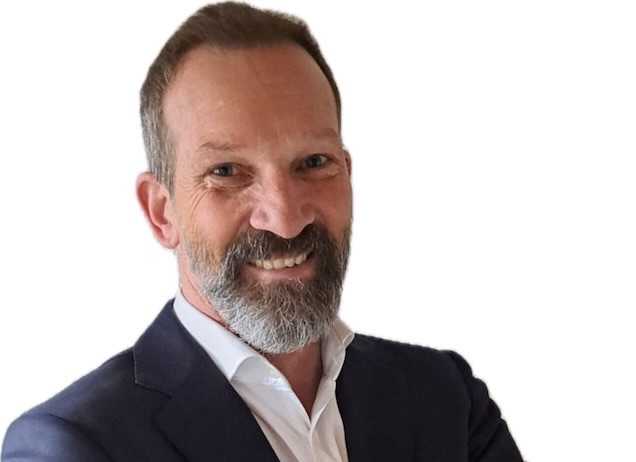
*About the author: By training, Ivan Reusse is a sociologist and economist. He has 18 years of experience in multinational companies, where he led industrial operations in the fragrance and then pharmaceutical sectors, with strong expertise in the EMEA region. He later moved into strategy consulting, and today serves as Swiss Director of the Leadership Development department at Grant Alexander, a consulting and HR services group that supports companies in direct search recruitment and leadership development. Driven by a deep interest in the complexity of the human factor and the strategic dynamics of organisations, he supports leaders in developing their leadership and transforming their structures.
Find all our articles on Inside