By Jorge Monteiro, Western Romandy Region Manager, Implenia Civil Engineering

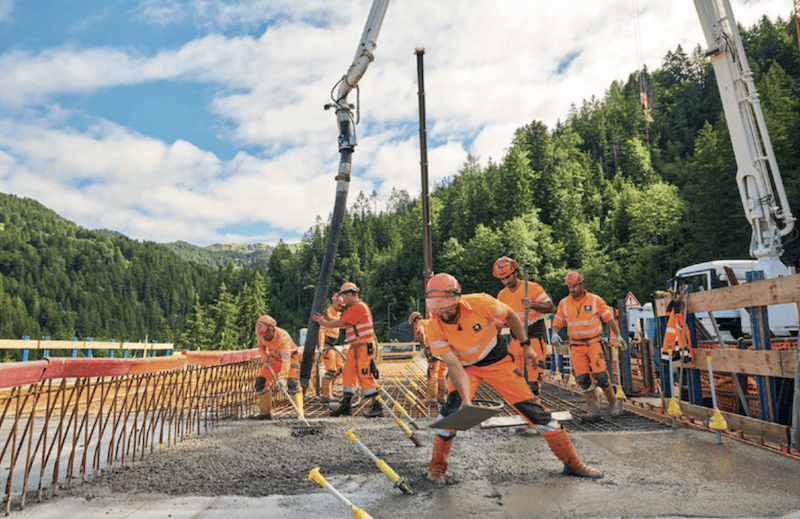
In construction, quality, on-time delivery and sustainability are built where teams work every day: on site. Delivering on these commitments requires clear processes, rigorous preparation and, above all, safe and fair working conditions. This is Implenia’s ambition: to design worksites where safety and performance reinforce one another. Because these working conditions are visible and tangible, they must be conceived and managed with the same rigor as any technical dimension of a project.
Working on a construction site means operating in a living environment, where deadlines can be tight, expectations high, and coordination between trades requires constant vigilance. In this context, performance cannot exist without close attention to the conditions in which teams operate — on a construction site, everything is connected. Smoother execution depends on anticipating risks, improving planning, clarifying roles and putting the right resources in place. Unlike a project left at the mercy of setbacks, teams that are fit, properly equipped and well supervised are more efficient, more precise and more committed. In other words, good working conditions do not slow performance down; they make it possible. Safety, in this respect, is the first indicator of a site’s performance. It should never be treated as a constraint, but cultivated as a shared culture.
For that culture to take root over the long term, time, education and leadership by example are essential, alongside continuous investment in training. At Implenia, this translates into regular briefings, clear rules and a consistent approach to risk assessment. Every employee must feel entitled to report a hazard and, if necessary, to halt a risky situation until it is brought under control. Making worksites safe, attractive and sustainable over time also requires concrete investment — in safer, more ergonomic equipment, in ongoing training, and in strict processes designed to reduce risk. Just as importantly, it requires a mindset of collective vigilance, where everyone feels empowered to flag a danger, suggest an improvement, or stop a risky situation when needed. The sector is evolving in step with this shift: digitalisation, notably through tools such as BIM (Building Information Modeling), makes it possible to anticipate further ahead, plan more effectively and reduce certain constraints on the ground. Our ambition is to make our professions more sustainable over the long term, because attracting and retaining talent remains one of the industry’s major challenges.
Younger generations are attentive to work-life balance, safety and the meaning of their work. Often described as a generation in search of purpose, they do not shy away from effort or responsibility — they simply expect reciprocity: in return for their personal commitment, they look for decent working conditions, genuine recognition, and real attention to their physical and mental health. The young construction professionals we meet are proud to build, to transform territory, and to leave a visible mark behind them. Our responsibility is to offer them worksites where that pride can be expressed over time, through training, supervision, the right equipment — and, just as importantly, through listening. If we want to keep building, we must first make people want to build. Creating that desire is not just about promising a salary or a contract: it means showing, in concrete terms, that the company protects those who drive its success. It means accepting to slow down at times in order to last longer, and making the site a place where people can thrive while contributing. In a context of skilled-labour shortages, this ability to attract and retain talent becomes a strategic asset.
The demand for meaning and recognition that younger generations bring to the table forces us to ask a broader question: what will the construction site of the future look like — the one where they will want to commit for the long term? For my part, tomorrow’s site will be more technological, better organised and safer. But above all, it will have to be more human. And it is in that direction, ultimately, that true performance should be measured: not only in deadlines met or costs controlled, but in a company’s ability to protect, train and help grow the men and women who do the work.
Retrouvez l’ensemble de nos articles Culture Business