Cave de Genève
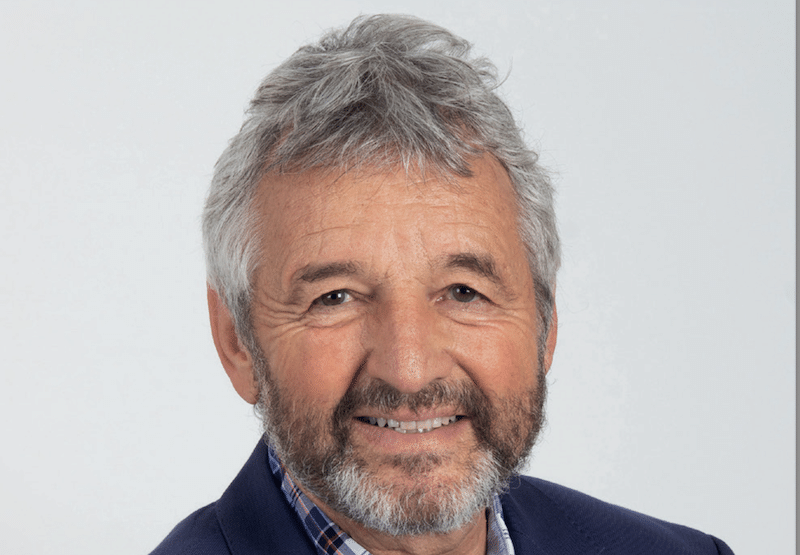
Photo ©
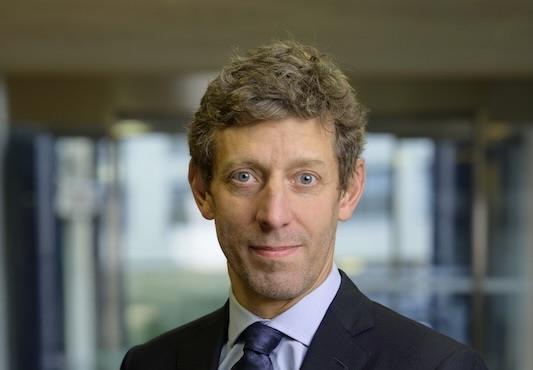
Daniel ROSSELLAT, Founder & President of the Paléo Festival
Since 1976, the Paléo Festival in Nyon has established itself as Switzerland’s largest open-air festival and one of Europe’s leading events of its kind. Ahead of its 49th edition, taking place from 21 to 26 July 2026 and featuring Katy Perry’s first appearance in Switzerland on the Grande Scène, and with the 50th edition now less than a year away, its founder and president Daniel Rossellat looks back on the foundations of an unusual business model built on passion, financial restraint and an uncompromising focus on the audience experience. An interview with a cultural entrepreneur who turned an idea dreamed up among friends into an institution.
Monde Économique: Paléo now sells its entire allocation of 230,000 tickets within hours – in just nineteen minutes at the last ticket release. Yet behind that figure lie fifty years of patient building. How would you describe the founding principle that made this possible?

Daniel Rossellat: The answer may be disappointingly simple, but it is entirely sincere: we never set out to sell tickets. We set out to create a festival that we, as founders, would enjoy.
From the very beginning in 1976, we were a group of friends who loved music. I have always seen myself as a privileged member of the audience, not a frustrated artist: I can’t play an instrument, I sing badly and I dance even worse. But the magic of a live concert, that collective energy when thousands of people move as one, has fascinated me since I was a teenager. So we built the festival as if we were our own customers. The only difference from an ordinary festivalgoer is that we didn’t always get in for free: in the years we ran a deficit, we paid dearly. But that basic mindset – asking not “how do we maximise revenue?” but “what would be the best possible experience for someone who comes here?” – shaped everything. Money was never the goal; it was always a means. That puts us fundamentally at odds with the major entertainment multinationals, for whom a festival is first and foremost a vehicle for profit. And paradoxically, that is almost certainly what explains our resilience.
This reversal of the usual economic logic is reminiscent of certain Swiss family businesses that put longevity ahead of short-term returns. Is that a comparison you accept?
Yes, but I would add an even more rural image: I feel close to the farmer or the winegrower. Every year brings risks. There are good harvests and poorer ones. But the vine remains. You have to look after it, tend it and work it over the long term, without getting carried away in good years or losing heart in difficult ones. It is a discipline that very few organisations truly master.
The comparison with a family business holds in several respects. Paléo is a non-profit association, so we have no shareholders demanding dividends, and any profit is systematically reinvested. We receive no public subsidies, which gives us complete freedom but demands absolute discipline in how we manage the festival. And we deliberately cap sponsorship at around 20% of our budget, precisely so that we never become dependent in a way that might compromise our artistic choices or our values. I believe this restraint in our relationship with money is one of the main reasons we have come through crises, including two consecutive cancellations during the pandemic, without our existence ever being called into question. You cannot fall from a height you never climbed out of arrogance.
But financial resilience alone does not explain a satisfaction rate of 97 to 99%, or an audience that returns year after year with almost unconditional loyalty. What builds that relationship?
That is the key question, and I think the answer lies in a conviction we have never given up: the comfort of festivalgoers and the quality of their experience come before every other consideration, including financial ones. Let me give you a concrete example. Today, demand far exceeds supply. For the Katy Perry and Vanessa Paradis evening, we could have sold twice the 35,000 to 36,000 tickets available. Our finance team quite naturally suggested we look into accommodating more people on site. It is tempting: it means short-term profit. We said no, because we know that beyond a certain point, the welcome deteriorates, comfort suffers and the experience is no longer what it should be. A disappointed festivalgoer is a lost festivalgoer. That is not the same as someone who is frustrated at not getting a ticket: that person remains eager, still wanting to come next year. Choosing to keep capacity under control rather than inflate it is perhaps the hardest decision to defend publicly, but it is one of the most important to our model.
The festival industry has changed profoundly over fifty years: market consolidation, the financialisation of artist rights, and the rise of secondary resale platforms such as Viagogo. How does Paléo position itself in this radically transformed landscape?
The secondary market is a real and growing problem for the whole sector. What we used to call the black market – one person holding a “Looking for a ticket” sign while an accomplice next to them held one saying “Tickets for sale” – has become industrialised and digitised. Platforms such as Viagogo now appear in search results above the organiser’s official website, selling tickets at two to three times their face value. Some go even further and are outright scams: they take the money and never deliver.
Our response is systematic. We have set up an official resale platform at face value, so that anyone who cannot attend – because of illness, travel or simply a change of plans – can pass on their ticket without going through a reseller. And on each day of the festival, we hold back a quota of tickets for sale when the box office opens, which automatically disrupts speculation. Is that enough when demand so vastly exceeds supply? No. But it sends our community a clear signal about the values we stand for.
The line-up for the 49th edition shows your ability to attract top-tier artists such as Katy Perry, The Cure, Gorillaz and Lorde. How does that pulling power work in practice with international agents and managers?
You have to understand that the relationship has gradually been reversed. With emerging artists, we are the ones who seek them out, follow them and believe in them, sometimes before the general public does. With established artists, it is very often they – or rather their agents and managers – who come to us. We regularly receive offers: this artist is planning a European summer tour; would you be interested?
The Katy Perry booking is a good example. Several things fell into place. We already had Vanessa Paradis booked for that Saturday. An offer for Katy Perry came in, and we had to decide very quickly. Two factors made it possible. First, she had chosen not to play stadiums on this tour, preferring a handful of carefully selected festivals, which made the cost more manageable than if she had been touring stadiums. Second, the technical side: a stadium act arrives with a production and stage set that can take two days to build and a day to dismantle, which is incompatible with a festival format. In this case, it was technically feasible.
“A disappointed festivalgoer is a lost festivalgoer. That is not the same as someone who is frustrated at not getting a ticket.”
We also regularly talk to other festivals, with which we have friendly relations. This dialogue is healthy. It doesn’t stop us from competing for certain artists, but it creates an ecosystem of trust that benefits everyone.
You cite Glastonbury, Coachella and Roskilde as benchmarks. But doesn’t direct competition with these giants put a festival of Paléo’s size at a disadvantage?
Honestly, no, and for a fairly simple reason: our markets barely overlap. Coachella is as much a brand phenomenon as a music festival, aimed at an influencer audience and heavily shaped by a certain premium Californian aesthetic. I have been several times and find it fascinating, but it is a radically different model from ours, and some of its approaches are exactly what we choose not to do. Glastonbury is inspiring, partly for what it does and partly because it prompts us to take the opposite approach in other areas. Roskilde, on the other hand, is a festival with which we share many values: roots as a non-profit association, a social mission, and the reinvestment of profits in cultural and humanitarian causes.
Our only real competition is for artists’ availability at the same time of year. Some Japanese festivals, notably Fuji Rock, take place just after Paléo, and an artist may sometimes prefer that market because of the terms or the fee. But when it comes to the public, the media and our partners, we are not competing with anyone in our natural catchment area. We sell out within minutes without advertising. Our partners have stayed with us for years. We accredit 500 journalists and media professionals every year. There are no battles to fight on those fronts.
As Paléo approaches its 50th edition in 2027, how do you see the future of a model so closely associated with one person? And what is your vision for that anniversary edition?
For 2027, we want this edition to be a gift to our audience, our volunteers and the region that has supported us for half a century. We are preparing a book on the festival’s history, documentary film projects, and installations and decorations that will visually mark the anniversary on site. The idea is to celebrate three dimensions: looking back at how far we have come, living the present to the full, and beginning to sketch out the future.
As for succession, I am not avoiding the question. We are thinking about it. Paléo is an institution built collectively, not a personal project. Its identity, its values and its organisational culture are strong enough to come through a transition.
If you had to distil one management principle from these fifty years to pass on to a business leader, what would it be?
Don’t be afraid of failure, and learn to prepare for it. You learn far more from your own failures than from other people’s successes. Copying gets you nowhere, or at least not very far. I gave up my engineering studies to organise concerts. Those concerts failed. That failure forced me to come up with something else: a model in which we controlled every revenue stream – not just ticket sales but food and drink, merchandising and logistics. It was that failure that made Paléo possible.
The second principle follows from the first: take a fundamentally positive attitude towards setbacks. Not naive optimism, but an intellectual discipline that consists of systematically looking for the opportunity that every obstacle may contain. When things are going well, don’t get carried away. When things are going badly, don’t go under. And above all, never let your costs rise in step with good results, because it is in the bad years that you discover what your foundations are really worth.
Read all our Interviews