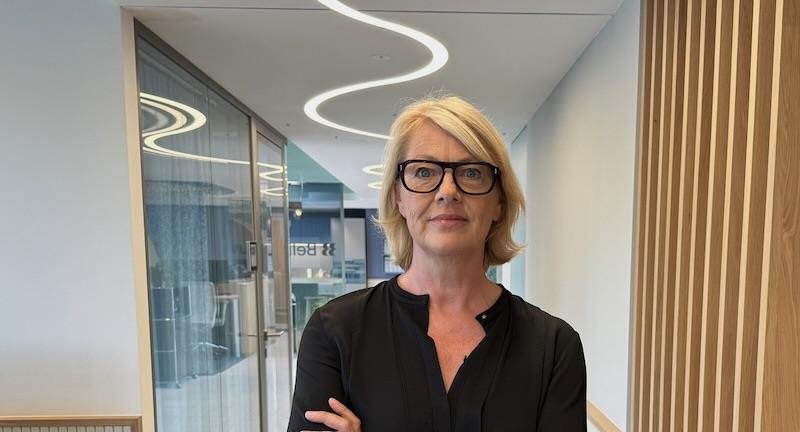
Photo Yann Hazoumè © Yann Hazoume Consulting
Yann Hazoumè – Founder of Yann Hazoume Consulting
Twenty years ago, the chief executive and chief financial roles in the African subsidiaries of Western multinationals were almost always entrusted to expatriates from European or North American headquarters. That pattern has now reversed. Yann Hazoumè, who heads a consulting firm based in Africa, has been observing executive committees across the continent for more than two decades. He has witnessed this structural shift, driven by operational imperatives rather than by any communications exercise. Local counterparts are no longer merely executing a strategy defined elsewhere: they are the ones arbitrating, negotiating and taking responsibility for the bottom line. For Western companies already established in Africa — or planning to enter the market — this means rethinking governance.
Monde Economique: For more than twenty years, you have been observing management committees at companies operating in Africa. What is the most significant shift today for Swiss and European leaders investing on the continent?

Yann Hazoumè The strongest signal is the gradual replacement of multinational subsidiaries’ management teams by African executives, whether drawn from the region or from the diaspora that has returned to settle there. This is no longer an isolated exception or a communications effect; it is a structural trend that I have seen confirmed year after year in my work on executive committees.
Twenty years ago, chief executive and chief financial positions in the African subsidiaries of major groups were almost systematically held by expatriates sent in from European or North American headquarters. Today, that model is being reversed, and for sound operational reasons: local executives know the terrain, its networks, its shifting regulations and its political balances in a way no expatriate can acquire in a two- or three-year mandate. This movement has also been accompanied by a much stronger local training offer than existed twenty-five years ago, built around African business cases analysed in their own economic context, with their own data and constraints, rather than on imported methodologies artificially imposed on realities they do not reflect.
For a European investor or executive looking to establish or strengthen a presence in Africa, this shift fundamentally changes the nature of the business relationship. The local counterpart is no longer simply the relay tasked with executing a strategy conceived elsewhere; increasingly, he or she is the decision-maker, the one who arbitrates, negotiates and bears responsibility for the profit and loss account. This requires a fairly profound rethink of governance structures for European companies: the real question is no longer whether African leaders can be trusted at the helm of their subsidiaries, but how to design group governance that properly combines this growing local autonomy with overall strategic coherence. Companies that have understood this turn and supported it rather than endured it are now gaining a genuine competitive advantage in terms of decision speed, local roots and credibility with the partners, regulators and talent they themselves are seeking to attract.
Monde Economique: We often hear Western companies cite two reservations about Africa: doubts over the availability of skilled labour, and fears of a cultural or intellectual mismatch with local teams. Are these concerns still valid?
Yann Hazoumè They reflect a reality that has evolved considerably and that today mainly holds back those who continue to cultivate those doubts. The continent is experiencing a demographic abundance that has not yet fully translated into economic abundance, admittedly, but high-quality university and technology hubs have emerged in West Africa, East Africa and Southern Africa, and they are training sought-after talent. Added to this is a less visible but equally decisive pool: many pan-African groups and local multinationals have built their own internal certification systems, placing their managers at the same level of standards as those trained abroad, with the added advantage of a deep understanding of regional realities. That said, genuine gaps remain in certain sectors, and that is precisely where foreign companies need to invest through targeted certification programmes rather than one-off hires.
Monde Economique: You work with both African executives and European managers sent on assignment to the continent. Does this geographical move fundamentally change the nature of coaching?
Yann Hazoumè Completely, and this is something companies often underestimate when they deploy an executive abroad. A Western manager works through coaching on personal issues, work-life balance, and boundaries that are already clearly set between professional and private life. The African executive, by contrast, also carries a community dimension, a role model status, a responsibility toward an extended family — all of which quickly become the real pressure points. And this reality does not disappear when someone returns from the diaspora: on the contrary, it is compounded by an additional shock, namely that of a professional trained in highly standardised environments who suddenly has to learn how to deal with local regulatory and geopolitical uncertainty. I experienced this myself when I returned to settle in Benin after my studies, and then chose to move back to Senegal: even within the same sub-region, every country imposes its own codes. It is a message I often repeat to my European clients: there is no African executive who is automatically interchangeable from one country to another; there are fifty-four distinct realities.
Monde Economique: Faced with this complexity, how should Western companies rethink their talent recruitment strategy on the African continent?
Yann Hazoumè The challenge is to build an intelligent mix between three talent sources, something very few companies genuinely master, even among those that on paper present sophisticated HR policies. Roughly half of skills development should rest on internal training, with real investment in structured pathways rather than isolated sessions disconnected from actual business needs. Then comes a contribution from the diaspora, around ten to fifteen per cent, bringing a valuable dual culture — mastery of international standards and a nuanced understanding of local realities — provided, however, that this return is supported by specific work on the differences in reference points I mentioned earlier. The third pillar, often the most neglected, is the regional circulation of experts: executives who move from one African market to another and who, through these moves, develop a multi-market understanding that is extremely valuable for groups operating simultaneously in several countries with very different economic and regulatory dynamics.
Most companies settle for just one of these levers, usually internal training because it is the easiest to budget for and measure, and assume that this is enough to secure their talent pipeline. That is precisely where the strategic mistake lies, because the real source of competitiveness is not one or another of these three levers taken in isolation, but their deliberate combination. A company that can move an Ivorian executive to Ghana, integrate a diaspora profile that has returned to Abidjan, and at the same time train its local talent on business cases anchored in their own economic reality, builds an organisation that is both more resilient and more agile than its peers. It is demanding HR engineering, requiring a medium-term vision that is rarely compatible with the piecemeal recruitment logic still practised by many African subsidiaries of international groups, but this is the work that, in ten years’ time, will separate companies able to retain their best people over the long term from those that will continue hiring without ever managing to stabilise their teams.
Monde Economique: You speak of a generational shift in which young African talent behaves, to quote you, as entrepreneurs of knowledge. What does that mean in practical terms, and why should Swiss business leaders care?
Yann Hazoumè It is probably the most significant transformation in the African labour market over the next fifteen years. Companies are no longer buying diplomas; they are buying layers of skills that talent must go and acquire themselves, often through online certifications from major universities, available free of charge. A few years ago, I recruited developers in Dakar for an American company who simply refused to relocate: they managed their expertise remotely, according to demand, without ever leaving their city. For a European investor accustomed to a traditional mobility model, this is a complete paradigm shift — and an opportunity, provided one accepts to work differently with such talent.
Monde Economique: Is this rise in local talent being matched by sufficient institutional support, particularly from governments?
Yann Hazoumè It is still too uneven, but there are already exemplary trajectories, notably in Benin, where specific tracks and technical self-employment schemes have been put in place with tangible results. A government that wants today to reform its talent policy has two or three interesting national models on the continent that it can follow almost methodically. What is still most lacking is earlier pedagogical reform, from the first school years, to develop critical thinking and the ability to question established authority, which sometimes runs up against cultural frameworks where the words of elders are rarely challenged. But the young people who manage to break free of that framework show remarkable initiative, and that is a richness we must learn to encourage rather than fear.
Monde Economique: What levers do you recommend for leaders seeking to retain their best talent on the continent?
Yann Hazoumè First, elevate talent to the executive committee level, or even the board: this is not a question of financial resources, but of consistency and follow-up. Then build a genuine employee value proposition that goes beyond salary, incorporating autonomy, purpose and family and community proximity — expectations that are becoming increasingly strong among younger generations. Employer brand also matters enormously: a company that neglects its image quickly loses standing in the eyes of top talent. Finally, companies must accept the hybridisation of working time, which is not a generational whim but a real strategic advantage in attracting and retaining the skills they need. Treating talent as a “development infrastructure”, on a par with roads or hospitals, is the mindset shift that will make the difference in the decade ahead.
Find all our interviews