Photo: Dr Millicent Dockerill ©
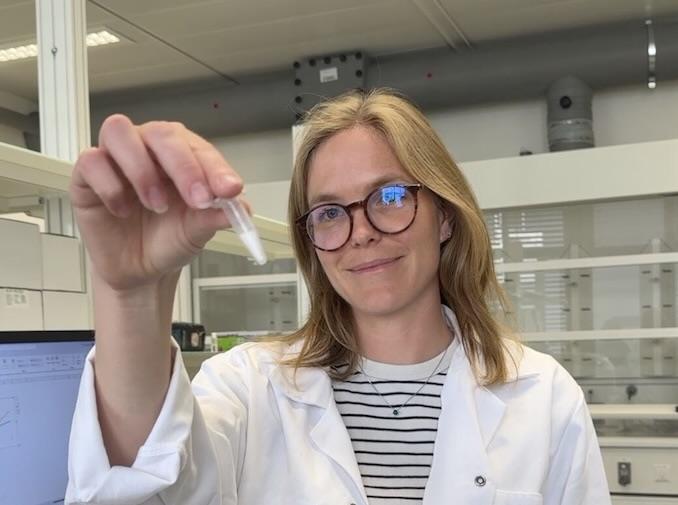
Dr Millicent Dockerill had not originally set out to become an entrepreneur. Trained first as a chemist at the University of Edinburgh, she spent a year in medicinal chemistry at AstraZeneca, an experience that gave her an early insight into both the power and the limits of modern medicine. Seeing how little control doctors have once a drug has been administered left a lasting impression on her and, years later, it was this same problem that prompted her to found her own company.
For most therapies, treatment follows a familiar pattern: the patient receives a drug that circulates through the body, and clinicians can do little more than wait for its effects to wear off. In many medical fields, this lack of control is simply accepted as an unavoidable constraint.
But what if medicines came with an on/off switch?

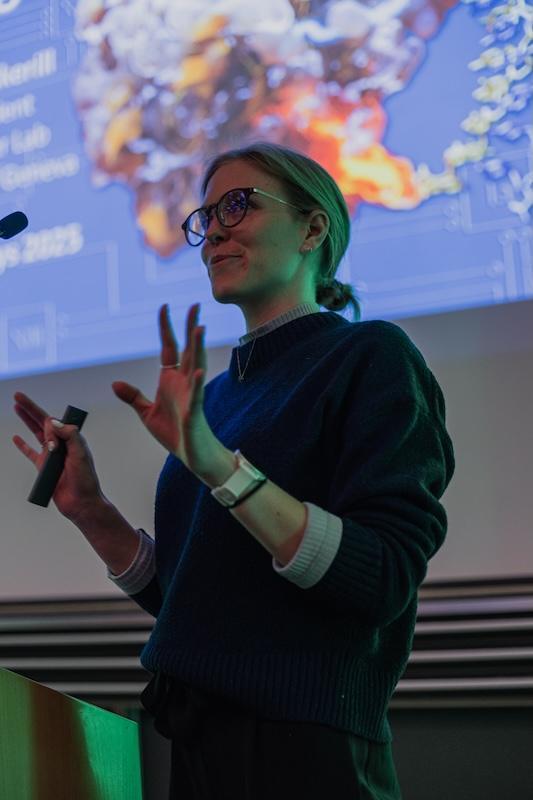
That question shaped Dockerill’s PhD in organic chemistry, completed in Professor Nicolas Winssinger’s laboratory at the University of Geneva. Rather than pursuing more potent molecules, she began exploring the possibility of designing “smart” drugs that could switch on when needed and switch off rapidly if the situation demanded it.
Anticoagulation became her testing ground. Anticoagulants, commonly known as blood thinners, are prescribed to patients at risk of potentially fatal clots, including those recovering from a heart attack or stroke, those undergoing surgery, and pregnant women. Because they prevent blood from clotting, they also carry an inherent risk of bleeding — a balance that a fully reversible treatment could redefine.
Working with her team, Dockerill developed an anticoagulant made up of two molecular fragments linked by what the researchers call a “chemical zipper.” When the fragments are joined, the drug remains active; in an emergency — such as unexpected surgery or a haemorrhage — an antidote “unzips” the bond between the two fragments, allowing clotting to be restored quickly. The findings were published in Nature Biotechnology.
The publication of those results could have been the end of the story. Instead, Dockerill chose to build a company around the discovery by founding Reverso Therapeutics, a University of Geneva spin-off created to take the technology beyond the laboratory. That meant acquiring a new set of skills far removed from her scientific training: pitching to investors and grant panels, bringing together a founding team and setting out a roadmap for building a business rather than answering a pure research question. It is a step many academic researchers consider, but very few ultimately take.
As founder, Dockerill has guided Reverso Therapeutics through its most fragile early phase. The company has secured CHF 1 million in non-dilutive funding from Swiss innovation programmes and grants — capital that does not dilute her equity or her control of the company — and is now moving towards preclinical development.
For Dockerill, anticoagulation is only the starting point. She believes the future of medicine lies not only in creating more effective drugs, but in designing intelligent molecules, treatments whose activity can be precisely controlled long after they leave the lab. Turning that conviction into a company, and then that company into approved therapies, is the entrepreneurial challenge she has set herself for the years ahead.
Find all our Parcours articles