What matters first and foremost to SMEs are the framework conditions, which are quite good in Switzerland. Yet those framework conditions rest on the country’s cohesion, and in a nation where several languages and cultures coexist, this deserves particular attention. Several fault lines are emerging — urban versus rural areas, centres versus peripheries, the generational contract underpinning social insurance — in an economic environment that is tending to deteriorate. In a world in flux, internal stability is essential for businesses. Cohesion and stability are two sides of the same coin.
That is why intensified communication between the two major Swiss regions is so important, even urgent, at every level, because a centrifugal trend has become apparent of late. The everyday media worlds, the “people” worlds on either side of the Sarine, have very little overlap, and even the business figures known to SME owners and executives are, with a few exceptions, different from one region to another.
It is therefore no surprise that the mobility of SME managers and employees remains very limited beyond their own region. Try attracting a German-speaking Swiss to Sion, or a French-speaking Swiss to Winterthur. It is already difficult with Lausanne or Zurich. This is not just a matter of language, nor is it perhaps even so much a cultural issue; above all, it is a communication problem — one of two worlds that are increasingly alien to one another in terms of everyday lived experience.

This bottleneck has several drawbacks. First, it worsens the shortage of skilled labour in Switzerland, because the allocation of human resources would work much better without regional barriers. To address this, incentives are needed — perhaps even a broad-based campaign from companies, their associations and the cantonal and federal authorities concerned.
In this way, Switzerland could finally make productive use of the effort young people are required to make in learning another national language, an investment that costs a great deal and yields little as long as the current fragmentation persists. If we give that language effort a clear purpose and real impact, young people, seeing the benefit they derive from it, will approach it with far more commitment than they do today. It is obvious that SMEs themselves have every interest in joining this drive to open up to other Swiss regions and thereby broaden their field of action and room for manoeuvre.
The result would be intensified economic and cultural exchange between the Swiss regions — a beneficial exchange, because it would help reduce imbalances not only between regions, but also between their centres and their peripheries.
Another factor that would strengthen cohesion and reduce the costs of redistributing goods. In the age of audiovisual communications and social media within everyone’s reach, unlocking the regions could indeed lead to a better distribution of productivity, which is too concentrated today in metropolitan centres, with all the problems that entails, including overstretched infrastructure and rising rents.
Against the backdrop of the current financial crisis, difficult times are being predicted. This is therefore exactly the moment to mobilise all our resources and work for the country’s cohesion. Both objectives are achieved through one and the same effort: overcoming linguistic and cultural prejudices in our dealings with the other Swiss regions.
It is to this effort that Le Forum PME/KMU is dedicated. The initiative’s vision is a Switzerland that is more permeable internally than it is today — in business, education and culture. Its practical aim is to create a permanent German-speaking/French-speaking bridge for SMEs. To this end, the forum’s website has just been launched, and it will be developed gradually according to demand from companies.
The Forum operates on the principle of subsidiarity; it is a meeting and communication platform for those who wish to develop German-speaking/French-speaking business. Duplication with existing organisations is avoided as much as possible, and cooperation is actively sought. The initiative is built on interaction: that is its leitmotif — interaction among regions, companies and business organisations, and finally among interested individuals, on both sides of the Sarine and beyond it.
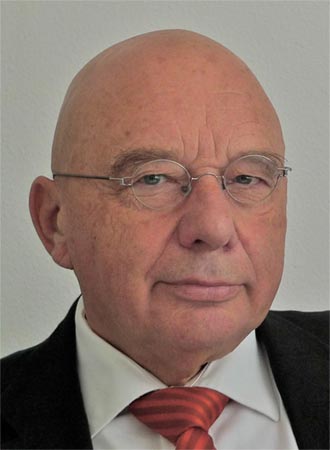
Dr. Peter Köppel, Consultant for Le Monde Economique and Chairman of the Board of Köppel+Partner