Cave de Genève
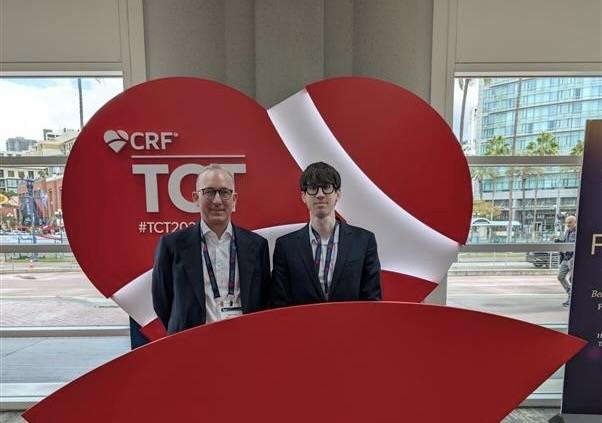
Photo: Marcel Fritsch et Lorenzo Zignani © Bellevue Asset Management
By Marcel Fritsch and Lorenzo Zignani, specialists at Bellevue Asset Management
Earlier intervention, real gains in quality of life and more efficient care pathways dominated the discussion at TCT 2026 in San Diego.
We attended TCT 2026 in San Diego to assess the latest clinical advances and innovations in cardiovascular medical technology. The congress strengthened our conviction about the scale of innovation in the field and its potential to create lasting value for patients, healthcare systems and investors.

Once again, TCT brought together clinical research, interventional expertise and emerging technologies. With data from major clinical trials, live case presentations and the MedTech Innovation Forum, it is a particularly good place to judge how new evidence may translate into clinical practice. Our view of this year’s meeting is positive. Several important studies strengthened the case for established technologies, and ongoing clinical programmes point to new growth opportunities.
Edwards Lifesciences’ PROGRESS study was one of the highlights. In 744 patients with moderate aortic stenosis and additional risk factors, early transcatheter aortic valve replacement (TAVR) cut the two-year incidence of death or heart-failure events from 23.9% to 16.7%. The benefit came from fewer heart-failure events; mortality did not fall significantly. Even so, the results give solid grounds for considering earlier intervention in selected patients. For investors, they support the case that TAVR can reach a broader patient population, although the pace of adoption will depend on regulatory decisions, reimbursement and how quickly clinicians take it up.
The economic analysis from the EARLY TAVR trial added weight to this debate. In patients with asymptomatic severe aortic stenosis, early treatment proved cost-effective from the perspective of the US healthcare system, at roughly US$14,700 per quality-adjusted life year gained. Lifetime costs were slightly higher, but so were the expected clinical benefits. This matters to investors too: when a technology can show its value to healthcare systems, clinically effective solutions are more likely to be widely adopted.
Tricuspid valve disease also saw progress. In the CLASP II TR trial, Edwards’ PASCAL repair system met its primary endpoint at six months, mainly because of improvements in quality of life. Patients had a substantial reduction in tricuspid regurgitation, although there was no significant difference in mortality or heart-failure hospitalisations at one year. For symptomatic patients with few treatment options, better day-to-day functioning is a meaningful gain. The results add to the clinical evidence for transcatheter repair and show how the range of treatments for structural heart disease keeps widening.
The P4 trial highlighted the role of imaging and procedural planning. CT-guided coronary intervention was non-inferior to intravascular ultrasound guidance, with one-year target-vessel failure rates of 4.1% and 4.6% respectively. Mean procedure time was 46 minutes, against 63 minutes. These findings suggest that better upfront planning can make procedures more efficient without compromising clinical outcomes. However, the reported procedure times exclude the prior scan and planning work, so the economic impact across the full care pathway has yet to be established. For investors, the study adds to the evidence for cardiovascular imaging and software.
Left atrial appendage closure continued to advance as well. Abbott’s VERITAS study reported favourable one-year results for Amulet 360, adding to the evidence on this next-generation device. The SIMPLAAFY study tackled a related question: how to manage medication after implantation. After successful, uncomplicated Watchman FLX Pro procedures, both aspirin alone and a reduced-dose anticoagulation regimen were non-inferior to dual antiplatelet therapy on the six-month composite endpoint. Taken together, these studies show progress in the devices themselves and in the care that surrounds them. Abbott’s PARADIGM study also showed the breadth of innovation in structural cardiology, with a treatment designed specifically for leaks around surgically implanted replacement valves.
The clinical pipeline remains busy. Medtronic presented the design and baseline patient characteristics of EXPAND TAVR II, which is testing early intervention in moderate aortic stenosis with the Evolut platform. There are no clinical results yet, but the trial could become an important source of data. Together with the new technologies shown in TCT’s innovation sessions, these programmes could produce further milestones, both clinical and commercial.
TCT strengthened our view that cardiovascular medtech combines established market leaders with new growth opportunities. Realising that potential requires careful assessment of clinical benefit, market uptake, reimbursement and valuation. We see particular promise in companies that can turn robust clinical data into treatments that physicians adopt and healthcare systems pay for. This year’s congress gave us good reasons for confidence in the innovation pipeline, along with useful input for a selective, long-term investment approach.
Retrouvez l’ensemble de nos articles Strategic Case