Cave de Genève
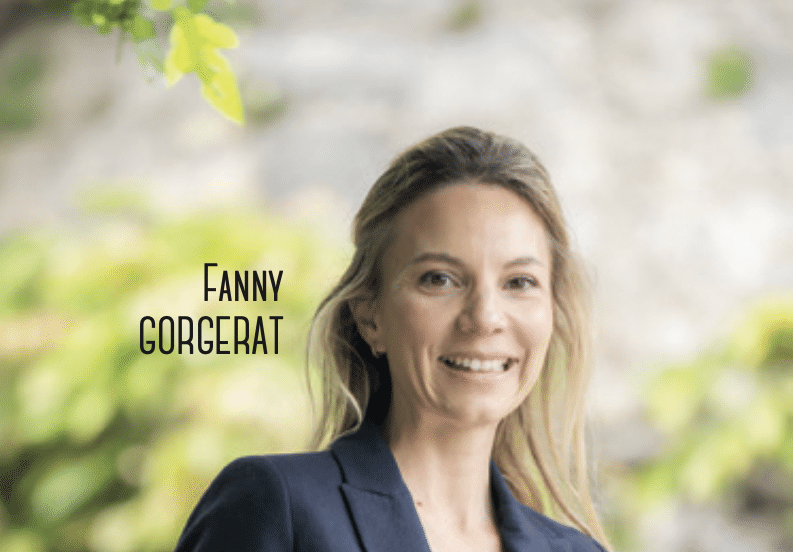
Photo © Yes We Lab
By Céline Roux
In an economy where organisational transformation has become a constant, Yes We Lab stands out as a distinctive player in the strategic and human side of business support. Founded and led by Fanny Gorgerat, the firm sits at the crossroads of consulting, facilitation and organisational development, with an approach firmly rooted in collective intelligence.
Yes We Lab operates in a market that is both crowded and fragmented. Between the large international consultancies, specialist HR practices and a host of independents with widely varying expertise, the support available to teams has broadened considerably in recent years. Yet behind this apparent abundance, Gorgerat sees a more nuanced picture: “There are plenty of players, but few offer an approach that genuinely connects strategic vision, team dynamics and concrete execution.” That is precisely the space in which Yes We Lab is building its credibility. “Our role is to steer the dynamic, creating the conditions that allow teams to move forward autonomously and sustainably.” This sets the firm sharply apart from the large consultancies, whose model still rests on top-down expertise. Yes We Lab, by contrast, is betting on solutions that emerge from the group itself.

Business support is nothing new. In the 1980s, it largely took the form of prescriptive consulting. Coaching then brought a more developmental approach, focused on individual skills. Over the past decade, collective intelligence facilitation has emerged as a third wave, one that places its trust in the group. Yes We Lab belongs firmly to this movement, in a market divided between large consultancies, small specialist firms and independents who band together in collectives. Gorgerat has followed this last path herself, gradually building a network of complementary facilitators who call on one another as needs arise, notably for workshops of up to 200 people.
Yes We Lab’s offering rests on three main pillars. The first is training: teaching teams the principles of collective intelligence, and training managers to act as facilitators rather than lone decision-makers. “A leader’s role is no longer simply to decide. It is also to create the conditions that allow teams to think together, learn together and find the best solutions together.” This calls for new skills: listening more, asking the right questions, drawing out ideas, facilitating discussion, recognising everyone’s contribution and guiding the process without dictating its content. It may well prove to be one of the defining leadership skills of tomorrow. “How do you become a facilitator-manager? That is one of the most fundamental questions I put to team leaders,” Gorgerat explains. The second pillar is strategic team building, a term she uses deliberately to distinguish it from the sporting or recreational kind. Here, the aim is to work together on vision, values and shared behaviours. She is working, for instance, with four partners at a law firm to define a shared strategy, and helps executive committees turn abstract ambitions into operational objectives that make sense on the ground. The third pillar is innovation support: faced with a concrete problem, Yes We Lab draws on the intelligence already present within the organisation to generate practical, actionable solutions.
Running through all of these services is a firm conviction about the importance of vision. “Without a vision, you’re heading straight for a brick wall,” Gorgerat says bluntly. At a time when artificial intelligence is redrawing the boundaries of work, she believes every organisation must ask itself what kind of world it wants to be part of. One pitfall she regularly encounters is the gap between leadership and the front line: “The leadership team puts together a beautiful slide with its five objectives for the next five years, and the teams simply don’t relate to it.” Translating vision into operational language is one of Yes We Lab’s specialities. The firm also stands out for its strongly human-centred approach. Gorgerat pays particular attention to psychological safety, the condition in which every participant feels free to speak without fear of judgement. She never forces anyone to speak, but designs a range of formats that allow each person to contribute in their own way.
“Everyone should feel free to be themselves: for me, that is non-negotiable,” she says. Modelling clay, Playmobil, role-play: her tools are deliberately playful, but never gratuitous. Each serves a purpose, an intention, an outcome. Yes We Lab is not a workplace well-being consultancy; it is a results-driven business with a clear sense of discipline. “Every session must lead to an action plan or a concrete decision.”
Looking ahead, Yes We Lab’s ambition is clear: to keep supporting organisations through transformation while raising its profile. “Word of mouth works very well, but it is also time to structure our communications so that we reach a wider audience,” Gorgerat acknowledges. It is a natural step for a firm that intends to broaden its impact without compromising its authenticity.
Ultimately, Yes We Lab does more than accompany change. It redefines how change happens, placing people, purpose and action at the heart of transformation. In a world in search of direction, that approach is gaining ground.
Meet Fanny Gorgerat and one thing strikes you immediately: her energy. It is infectious, and geared towards action, creativity and solutions. Yet behind the enthusiasm lies a deep conviction, forged over more than ten years working at the heart of organisations: the greatest challenges of our time cannot be tackled alone. “For a long time, we prized individual expertise. Today, the issues have become too complex to be solved by a single person or a single function. The real wealth lies in the diversity of perspectives.” That conviction is what gave rise to Yes We Lab, a Geneva-based laboratory for human and organisational innovation.
Find all our articles Business Culture