Cave de Genève
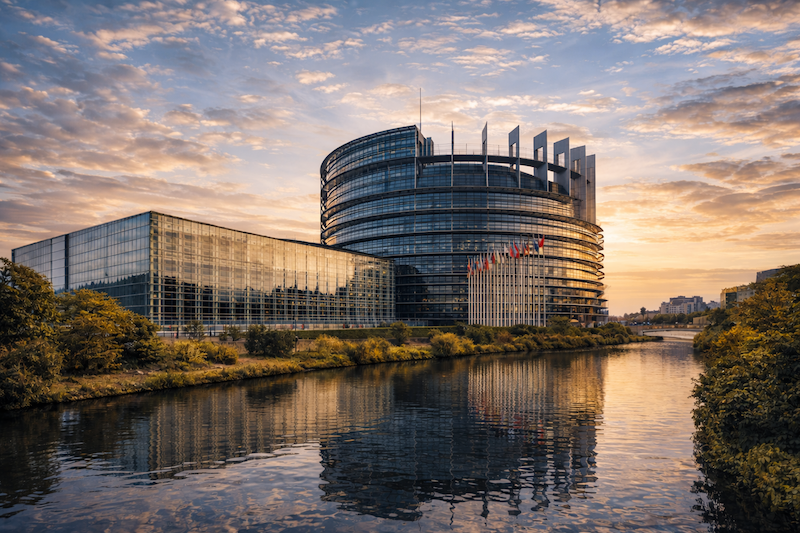
At every electoral cycle in Europe, the question comes up again and again: are foreign powers trying to influence the democratic choices of European states? Behind this question lies a broader debate, at the crossroads of international law, diplomacy and contemporary power relations. For while the principle of non-interference is clearly established, the reality of international relations is far more nuanced. In theory, the legal framework is unambiguous: the Charter of the United Nations enshrines the principle of state sovereignty and prohibits any intervention in their internal affairs, which implicitly but widely acceptedly includes electoral processes. No foreign government is therefore entitled to directly support a candidate or attempt to influence the outcome of an election, any action of this kind constituting interference, potentially condemnable on diplomatic grounds.
In practice, however, the line between legitimate influence and interference is less clear. The United States, like other major powers, has a set of tools that fall under soft power, this ability to influence without coercing. This takes the form of public statements, privileged relations with certain political leaders, or funding for programs in support of democracy, governance or civil society. U.S. public agencies such as the National Endowment for Democracy or USAID support initiatives in many countries, including in Europe. Officially, these actions aim to promote democratic values and are generally governed by bilateral agreements subject to local laws, but they nevertheless attract recurring criticism, with some seeing them as a form of indirect influence on domestic political balances. This debate is not new: during the Cold War, the United States carried out far more direct actions on the continent, notably in Italy, where funding was provided to certain political parties to counter communist influence, practices now documented by declassified archives. Since then, the methods have evolved considerably; political financing systems are now strictly regulated in European democracies, limiting direct foreign interventions, but the forms of influence have diversified and become more complex accordingly: they now pass through relationship networks, media, digital platforms and think tanks. The United States are not the only actors involved. Russia is regularly accused of interference in several European elections, accusations documented by the two special INGE committees of the European Parliament, whose final report adopted in June 2023 details Russian operations aimed at infiltrating and influencing the continent’s democracies. China, for its part, is developing a more economic and academic influence strategy, through investments, university partnerships and cultural initiatives.
The Hungarian legislative elections of 12 April 2026 offer a particularly striking case study. Donald Trump gave his declared public support, described as “total and unconditional,” to Viktor Orbán, while his vice president J. D. Vance traveled to Budapest in support in the final stretch of the campaign. At the same time, the investigative media outlet VSquare revealed in March 2026 the involvement in the Hungarian campaign of a team of Russian agents led by Sergei Kirienko, a senior official in the Russian Presidential Administration, tasked with interfering in the electoral process to favor a Fidesz victory. The Financial Times also documented a clandestine influence operation approved by Moscow, aimed at saturating social networks in Orbán’s favor. Moscow and Washington were thus simultaneously defending the same camp, each according to its own logic, in a country that is a member of the European Union and NATO. This case illustrates with rare acuity the question Europe struggles to settle: where does legitimate influence end, and where does interference begin? For the answer is not obvious. Does a public statement by a foreign leader constitute illegitimate pressure? Does funding a digital operation fall under diplomacy or destabilization? The answers vary according to sensitivities and national contexts, with no universal definition currently reaching consensus. For European states, the challenge is therefore twofold: to preserve the integrity of their democratic processes by strengthening transparency and oversight mechanisms, while navigating an international environment in which interdependence has become the norm. The European Union has gradually become aware of these challenges and introduced several mechanisms to combat external interference. The Digital Services Act, which entered into force for major platforms in August 2023 and has been fully applicable since February 2024, aims to strengthen the responsibility of digital platforms regarding disinformation, with the European Commission imposing its first fine under this regulation in December 2025, sentencing X to pay 120 million euros for three proven violations. Other initiatives focus on transparency in political funding and cybersecurity.
Ultimately, the United States, like other powers, have no right to support candidates in Europe. But they exercise, like any major actor, an influence that fits within diplomatic, economic and cultural logics. This influence, when it remains within the limits of the law, is part of ordinary international relations. When it goes beyond them, when it funds clandestine operations, floods algorithms or orchestrates destabilization campaigns, it becomes interference. In an interconnected world, sovereignty no longer means isolation: it implies the ability to resist, to regulate and to understand external influences. Europe is moving along this narrow line, preserving its democracies while remaining open to the world. An equation whose complexity will continue to intensify in the years ahead.

Find all our articles Analysis