Cave de Genève
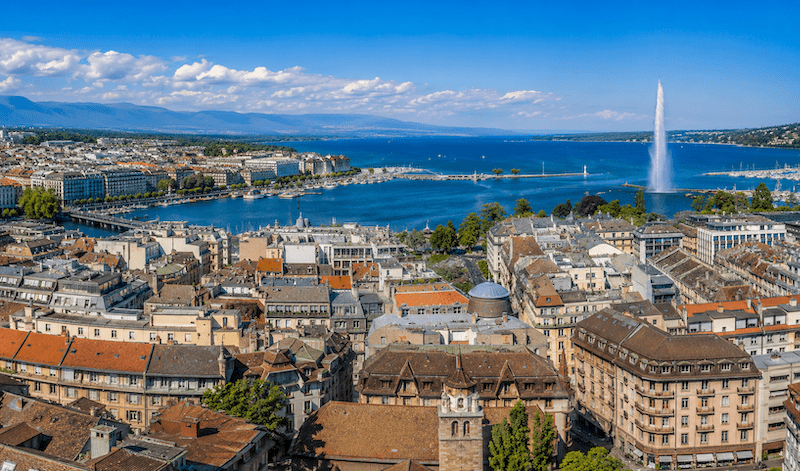
The upcoming G7 summit, set to take place from 15 to 17 June 2026 in Évian-les-Bains, is reviving painful memories in Geneva. Although the meeting of the world’s major economic powers will be held on French territory, a militant coalition called “NO-G7” — made up of associations, trade unions and left-wing parties — has already announced a large demonstration in Geneva on 14 June, the day before the summit opens. The prospect is causing concern among part of the city’s population, particularly downtown retailers, who still remember the violence that erupted during the previous summit held in the same spa town in 2003.
At the time, the G8 — which met from 1 to 3 June 2003 for its 29th summit — drew between 50,000 and 100,000 demonstrators from across Europe. With Évian sealed off, the protests shifted to Geneva, Lausanne and Annemasse. While many marches proceeded peacefully, the unrest left deep scars: on the night of 31 May to 1 June, members of the Black Blocs stormed the Rues-Basses armed with Molotov cocktails, smashing unprotected shop windows and setting fire to several storefronts; the following day, the main demonstration turned violent on the Coulouvrenière bridge, where barricades were set ablaze. Looted shops, damaged buildings, clashes with law enforcement: the city centre witnessed scenes rarely seen in a city renowned for its stability. For many residents and shopkeepers, those events remain associated with a sense of powerlessness in the face of urban violence — and with material costs that some have not forgotten. It is precisely this memory that is reigniting fears today, as new mobilisations are announced around a summit to be held at the same location. The question is once again being raised in local public debate: why protest in Switzerland when the summit is taking place in France? The answer lies as much in geography as in symbolism. Geneva remains a strategic gateway to Évian and a hub for international organisations, NGOs, diplomatic institutions and foreign media — a natural amplifier for demands relating to global inequality, climate change, migration policy and tax justice. Part of Geneva’s population, however, draws a clear distinction between the right to protest and the violence that may accompany it: while freedom of assembly is a fundamental right, the memory of 2003 fuels concern that radical groups could exploit the demonstrations to provoke clashes or commit acts of vandalism.
The authorities have drawn lessons from the past and are preparing an exceptional security arrangement. The Federal Council has classified the summit as an extraordinary event and approved a support-role deployment of the Swiss army that could involve up to 5,000 soldiers, with the Confederation covering 80% of the security costs borne by the cantons of Geneva, Vaud and Valais. A temporary airspace restriction over the Lake Geneva region is planned from 10 to 18 June, and border controls are to be tightened. The Geneva cantonal government has also decided to temporarily restrict major sporting, cultural and festive events in the city centre between 1 and 28 June. The balance nonetheless remains delicate: safeguarding the right to protest while ensuring the protection of people and property, without the security apparatus itself becoming a source of additional tension. The coming weeks will be decisive. The authorities will need to convince the public that they have the situation in hand. As for the organisers of the mobilisations, they will need to demonstrate their ability to keep gatherings peaceful — because if violence breaks out, it is their entire message that risks being discredited. Geneva, a city of dialogue and institutions, finds itself once again tested by its own contradiction: a setting for every diplomacy and, sometimes, for every storm.
Find all our Inside articles