Cave de Genève
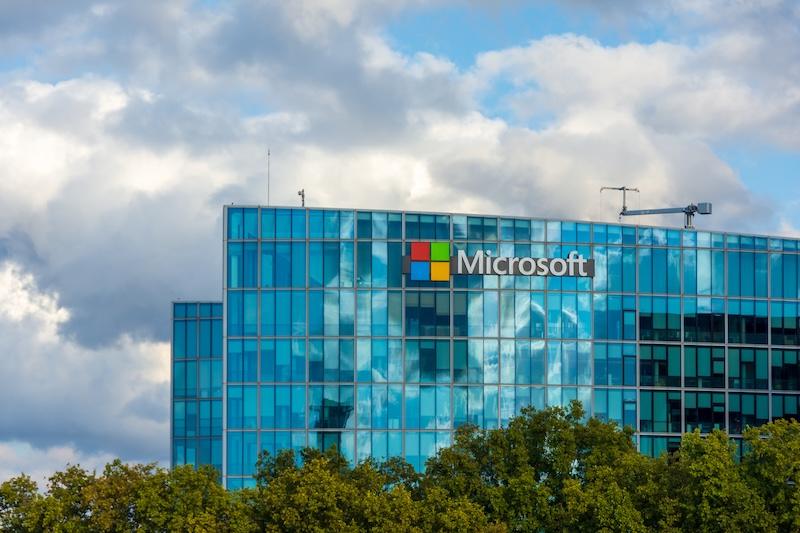
They employ millions of people, finance innovation and keep global trade moving. They also engage in aggressive tax optimisation, relocate without scruple and pollute on a vast scale. In half a century, multinationals have become both the architects and the gravediggers of globalisation. The debate is no longer about their existence, but about our collective ability to regulate them before they end up regulating states.
On 10 September 2024, the Court of Justice of the European Union ordered Apple to repay €13 billion in illegal tax benefits granted by Ireland, while simultaneously fining Google €2.4 billion for abuse of a dominant market position. Two rulings delivered on the same day, following proceedings launched in 2016 — eight years of showdown between European institutions and two of the most highly capitalised companies on the planet. This episode says much about the balance of power now shaping the global economy: multinationals occupy such a central position that they influence consumption patterns, industrial policy, financial markets and, at times, the decisions of states themselves.
Yet their contribution remains undeniable. These groups drive international trade, spur technological innovation and generate millions of direct and indirect jobs. In several emerging economies, they have helped develop infrastructure, support industrialisation and raise living standards. The healthcare, telecommunications and new technology sectors have benefited from massive investments that only companies able to mobilise considerable capital could afford. But this power also creates lasting imbalances. The constant pursuit of profitability pushes these groups to relocate to countries where labour is cheaper and regulations are less demanding, weakening employment in developed economies while keeping working conditions precarious in some producer countries. Added to this are tax-optimisation strategies that allow many of them to shift profits to low-tax jurisdictions: according to Oxfam, nine out of ten multinationals among the world’s 200 largest are present in at least one tax haven. On the environmental front, the record is scarcely more flattering: according to the Carbon Disclosure Project, 100 companies have been responsible for 71% of global greenhouse gas emissions since 1988. The oil, shipping, fashion and agrifood sectors are regularly singled out. Some of these groups do invest in renewables or the circular economy, but accusations of greenwashing — environmental messaging far more ambitious than actual action — remain stubbornly persistent.
The redistribution of profits is another major fault line in the debate. For several decades, an increasing share of large companies’ profits has been returned to shareholders in the form of dividends or share buybacks, fuelling controversy over how value is shared. Some economists argue that wealth creation disproportionately benefits capital holders rather than workers, contributing to widening inequality in many countries. Defenders of the system counter that investors play an irreplaceable role in financing the economy and innovation — a valid argument, but not enough to close the debate. These tensions sit within a broader reflection on the financialisation of the global economy, a phenomenon that has accelerated sharply since the 1980s: under the influence of the Chicago School and a belief in markets’ ability to self-regulate, Ronald Reagan and Margaret Thatcher set in motion a vast wave of deregulation, challenging all the barriers inherited from the 1929 crisis. In 1986, London experienced its financial “Big Bang”, with the abolition of fixed commissions, the large-scale computerisation of trading and greater openness to foreign investors. The quest for short-term performance has since guided corporate decisions to the detriment of long-term investment, employment and sustainability. Lehman Brothers’ collapse on 15 September 2008 triggered a stock-market panic unprecedented since 1929, exposing the fragilities of a system built on heavy leverage, speculation and interconnected markets, without the reforms introduced since then truly dispelling these structural risks.

The current model is not exhausted: it continues to finance innovation, businesses and global trade. But its limits are becoming increasingly clear. Recurrent crises, exacerbated inequality, social tensions and the climate emergency all point to a capitalism dominated by finance that is struggling to answer the challenges of the 21st century. The European court’s ruling against Apple illustrates what one possible exit path could look like: supranational regulation with the means to enforce its decisions on the most powerful players. But eight years of proceedings to recover €13 billion in back taxes also reveal the limits of the exercise. Any structural reform requires international cooperation, and recent history makes that difficult to take for granted, especially as states often compete to attract the very investments made by the same groups they claim to regulate. Multinationals thus embody, in all their ambiguity, both the achievements and contradictions of globalisation. The debate is no longer only about their existence, but about our collective ability to rebalance an economic and financial system that, in some areas, has drifted dangerously far from human and ecological realities.
Retrouvez l’ensemble de nos articles Décryptage