Cave de Genève
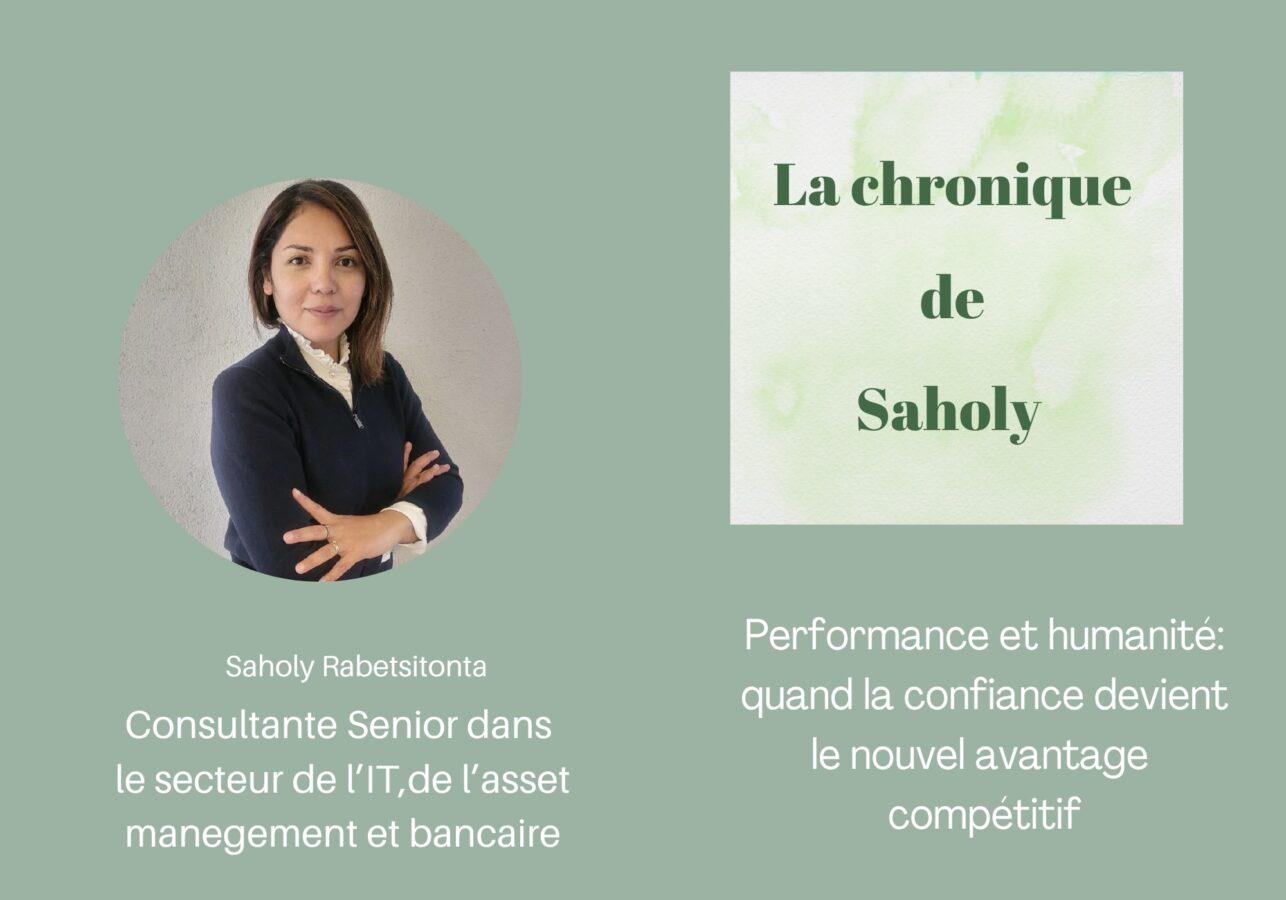
By Sahloly Rabetsitonta
In an environment shaped by geopolitical tensions, persistent inflation, the artificial intelligence revolution and a skills shortage, European executives face a complex equation: sustaining growth while strengthening the resilience of their organisations. For a long time, the control of costs, processes and performance was the main lever of governance. Today, that approach is reaching its limits: the real differentiator now lies in the ability to mobilise human capital.
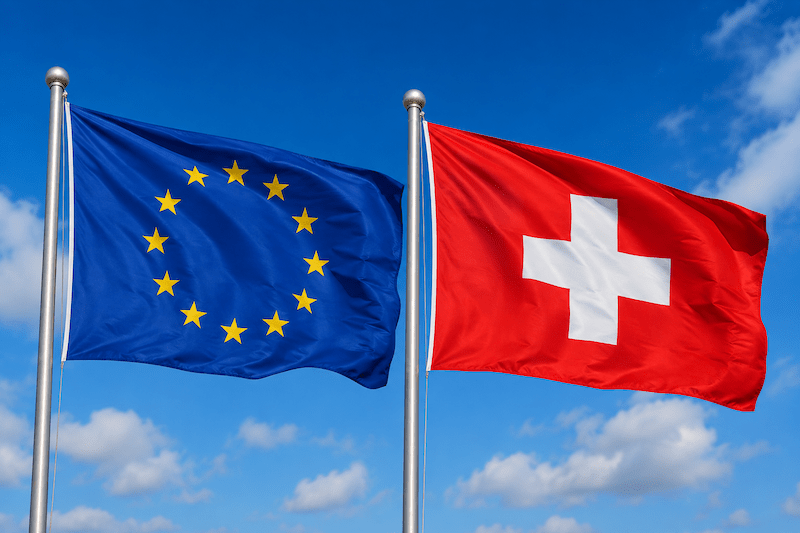
Switzerland offers a clear illustration of this shift. Ranked among the world’s most competitive economies, it combines high productivity, institutional stability, one of Europe’s lowest unemployment rates and research and development investment above 3% of GDP. Its financial sector manages several trillion francs in assets, while its network of export-oriented SMEs remains among the most efficient in the world. This success certainly rests on a favourable economic environment, but also on a management culture grounded in responsibility, autonomy and trust.
Control remains essential to any organisation: financial indicators, audits, internal procedures and compliance frameworks all help ensure sound decision-making and risk management. However, in an economy built on knowledge, innovation and high value-added services, excessive oversight can hold back performance rather than protect it. The economic data are telling on this point: according to the 11th edition of the Gallup Q12 meta-analysis, companies with highly engaged employees record, on average, 23% higher profitability and 18% higher sales productivity, along with significantly lower absenteeism and turnover. Conversely, according to Gallup’s latest State of the Global Workplace report (2026), employee disengagement costs the equivalent of nearly 9% of global GDP, or around $10 trillion in lost productivity every year. These figures show that the cost of distrust far exceeds the cost of investing in employee development.
Constant control also produces less visible effects: slower decision-making, fewer initiatives and diminished capacity for innovation. When every mistake is punished and every decision must pass through several layers of approval, employees tend to prioritise compliance over creativity. It is precisely this observation that has led a growing number of organisations to rethink trust — no longer as a mere management value, but as a genuine strategic asset. The principle is straightforward: set a clear framework, establish demanding objectives and give teams the autonomy they need to deliver results. Employees are then assessed on their contribution rather than subjected to constant monitoring.
The benefits of this approach are manifold. First, a culture of trust improves engagement and retention: at a time when recruiting qualified talent is becoming increasingly difficult, reducing turnover is a major economic advantage. Replacing an experienced executive can cost between one and two years’ compensation once recruitment, training and lost productivity are taken into account. It also fosters innovation: new ideas rarely emerge in organisations where failure is systematically penalised. By contrast, the most successful companies create environments in which experimentation is encouraged and mistakes become a source of learning rather than an offence to be punished.
Sika (Switzerland) — 2025 sales of CHF 11.2 billion; present in 102 countries. The group explicitly promotes a culture of delegation: decisions and responsibilities are assigned at the most relevant level of expertise.
ABB (Switzerland) — 2025 sales of $33.2 billion. Its official operating model, the “ABB Way”, is built on declared decentralisation: since autumn 2025, the group has been handing strategic mandates directly to its business-line managers to gain speed and accountability.
Roche and Novartis (Switzerland) — €16.1 billion and €9.3 billion respectively invested in R&D in 2024/2025 (EY “Top 500 R&D” study), placing the two Basel-based groups among the twenty most research-active companies in the world. Their capacity for innovation rests on scientific teams that enjoy broad autonomy and strong international collaboration.
UBS Asset Management (Switzerland) — Now includes the quality of human capital, governance and corporate culture among its criteria for sustainable value creation — factors that institutional investors increasingly weigh in their allocation decisions.
ASML (Netherlands) — Devoted around 14% of its 2025 revenue (€4.7 billion) to R&D, with highly skilled teams enjoying significant autonomy in tackling complex technological problems.
Sources: 2025 annual reports of the groups cited; EY “Top 500 R&D” study for the Roche and Novartis data.
This evolution is profoundly reshaping the role of the chief executive, who is no longer solely the person who controls execution, but the one who creates the conditions for collective performance. Their mission is now to provide a vision, clarify priorities, develop skills and foster cooperation — a shift that also meets the expectations of younger generations of employees, who seek autonomy, meaning and consistency between the values a company proclaims and its day-to-day practices. This does not mean the absence of control: on the contrary, trust requires clearly defined objectives, clear ownership of responsibilities and rigorous assessment of results. In short, the shift is from control through surveillance to control through coherence: no longer checking every action, but ensuring that teams have the means to reach their goals.
The rise of artificial intelligence is accelerating this transformation. Many Swiss companies are already investing in AI solutions, but only a minority have fully integrated them into their processes. Productivity gains will therefore depend less on the technology itself than on organisations’ ability to adapt their management models: the more repetitive tasks are automated, the more decisive human skills will become — creativity, critical thinking, cooperation, emotional intelligence and sound judgement. Trust thus emerges as the essential complement to digital transformation, not its opposite.
Sustainable performance can no longer be measured solely through quarterly financial results. The best-performing companies now incorporate indicators linked to employee engagement, management quality, diversity, social responsibility and long-term value creation — in an economy where a growing share of the value of large listed companies rests on intangible assets: knowledge, data, innovation, brands and human capital. Trust is becoming a genuine financial lever.
The challenge for leaders is therefore no longer to set economic performance against humanity, but to demonstrate that the two are inseparable. The organisations that succeed tomorrow will be those able to combine a relentless focus on results with team accountability, artificial intelligence with collective intelligence, and performance management with a lasting culture of trust. Trust is no longer a management ideal: it is now a measurable competitive advantage, and one of the main drivers of value creation for industrial, financial and asset-management companies, in Switzerland and across Europe.
Find all our Analysis articles