Cave de Genève
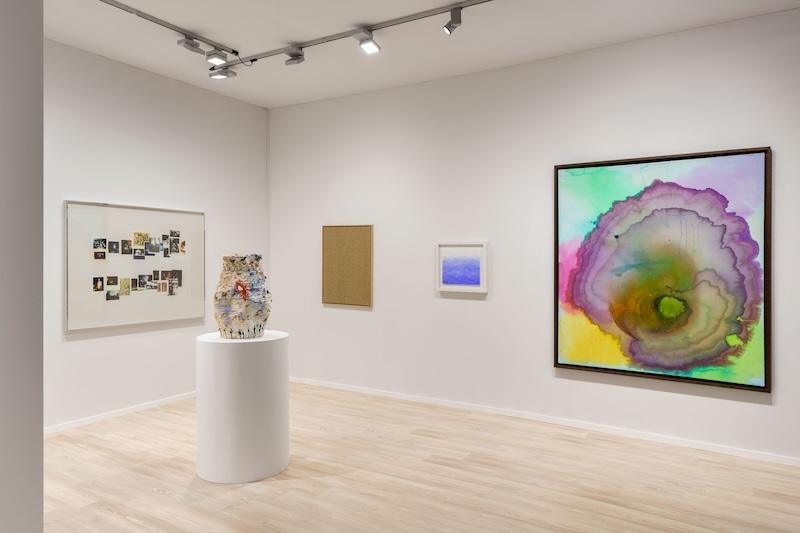
Photo: BRAFA 2026 – Almine Rech © Hugard & Vanoverschelde
Some gatherings tell us more than a market ever could. They speak to a way of being in the world, a sense of standards, a way of holding together beauty, rarity and durability. BRAFA belongs to that category. In Brussels, every January, the fair does more than open its doors: it sets a tone. For eight days, it brings collectors, dealers, curators and knowledgeable enthusiasts together around the same silent but decisive principle: trust.
In 2026, for its 71st edition, BRAFA confirmed what its history has long suggested. This is not just a prestigious fair. It is an institution that has understood that a premium event is built not on scale, but on coherence. Since 1956, it has moved forward without dramatic breaks, yet with remarkable consistency. It changes, yes, but never dissolves into motion. It renews itself without sacrificing clarity. This year once again, the selection spoke for itself. Of the 147 exhibitors from 18 countries, 24 were making their debut at the fair. Major names such as Almine Rech, Beck & Eggeling and Galerie La Ménagerie added depth to an already richly populated programme. The message is clear: BRAFA is not trying to grow for the sake of size. It is choosing to remain desirable.
In a world where so many events confuse expansion with excellence, that restraint feels like a higher form of luxury. Here, growth is measured not by volume, but by the precision of the gesture.
The scenography itself tells the story of this evolution. Halls 3 and 4 are now fully dedicated to art, while Hall 8 hosts a premium dining area ranging from a classic brasserie to Italian cuisine and sushi. This may seem practical. In fact, it is revealing. An art fair no longer sells works alone. It curates an experience. The visitor is no longer just a buyer in transit, but a guest to be welcomed, accompanied and retained. Art no longer ends with the gaze; it extends into the way people move, sit, talk and return. In this respect, BRAFA adopts the codes of leading luxury destinations, where service and content answer one another with precision. But what gives this edition its real depth is the question of trust. Before the fair opens, each work is reviewed by around a hundred international experts. Authenticity, quality, provenance: nothing is left to chance.
In an art market often marked by doubt, and at times by tension, this framework is anything but incidental. It underpins the fair’s credibility. It reassures collectors, gives institutions greater confidence and provides the market with a robust interpretive framework. In the premium universe, value never emerges on its own. It emerges within an environment that makes it credible.
That standard takes on another dimension when one looks at the works themselves. Gustave Moreau’s Triumph of Bacchus, presented by Galerie Perrin, is a striking example. Beyond its beauty and rarity, the work carries a broader, almost novelistic memory. Originally part of the Wildenstein collection in Paris, looted during the Second World War, recovered by the Monuments Men and returned in 1946, it is a reminder that the art market is never cut off from history. Every piece is also a story. And in a fair such as BRAFA, that story adds to value what technique alone cannot produce: depth, presence and resonance.
This year, the presence of the King Baudouin Foundation as guest of honour, on the occasion of its fiftieth anniversary, further reinforced that overall impression. BRAFA does not exist on the margins of the institutional world. It is in dialogue with it. It belongs to a broader ecosystem in which market, heritage and transmission speak to one another. It is precisely this connection between the commercial and the cultural that gives the fair its stability and its aura. It does not merely sell works; it produces legitimacy. Ultimately, BRAFA 2026 is a reminder that a great fair is not the one that shows the most, but the one that knows how to organise the gaze. It does not seek to dazzle through saturation; it seduces through balance. It does not pile on effects; it builds an atmosphere.
And perhaps that is its greatest achievement: offering, at the heart of a market that is often turbulent, a form of clarity. Edition after edition, BRAFA thus confirms its eclectic character, its maturity and its distinctive way of bringing eras, styles and sensibilities into dialogue within a single space of discovery.
Find all our Inside articles