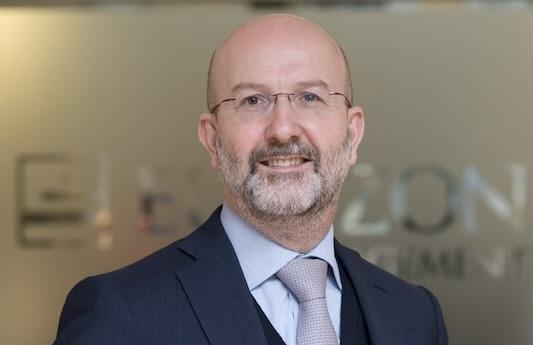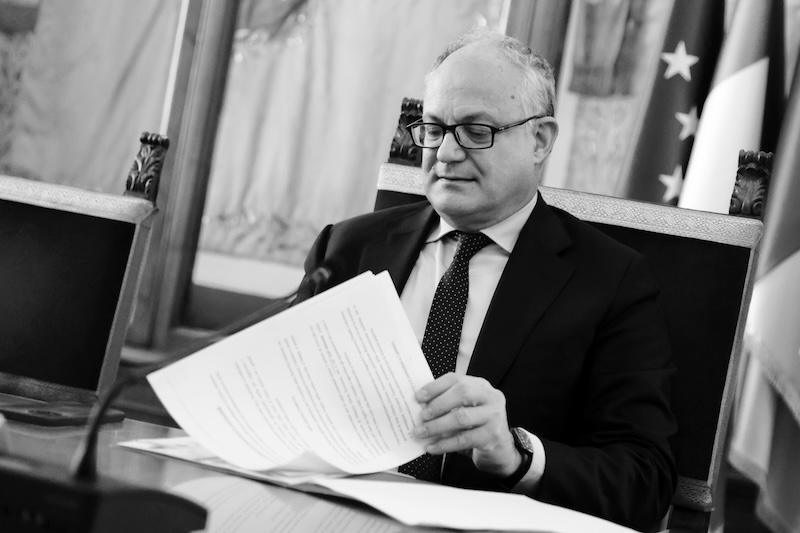
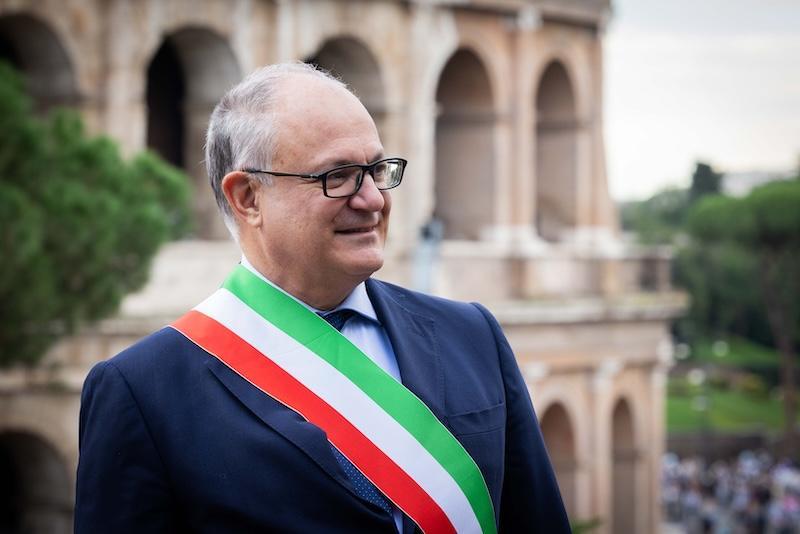
Photo: Roberto Gualtieri © Roma Capitale
Caught between economic strain and a crisis of confidence, Roberto Gualtieri won over a politically weakened city in 2021. Backed by his rallying cry, “Rome is transforming”, the man now seen as the capital’s driving force has taken the destiny of the Eternal City back in hand. Italy’s former Minister of Economy and Finance is everywhere at once: overseeing Herculean construction projects across the city and using social media to report on key dossiers while prioritising dialogue with citizens. Rome was not built in a day, but the Gualtieri era is well on track to leave a lasting mark on the city’s history thanks to the modernising turn driven by this all-round elected leader. Meeting with a charismatic figure determined to restore Rome’s mythical stature.
By Sabah Kaddouri
When you were elected in 2021, you inherited a city weakened politically and economically. How did you rebuild dialogue with Romans and restore the image and appeal of the Eternal City?
Roberto Gualtieri: We started from the principle that there was no longer any room for the “status quo” and that a profound transformation was essential. In other words, we had to begin again on a new footing: a new pact of trust with Romans, who deserve services and a quality of life befitting the city’s glorious history. I am driven by optimism and refuse to give in to fatalism or pessimism. We have launched a transformation at every level and, to date – as shown by the municipality’s dedicated website – more than 1,200 projects have been completed or are under way, 710 of which have already been delivered; if one adds those carried out by the various districts, the figure is even higher. Our goal is to modernise the city, improve residents’ quality of life and pursue a long-term vision for Rome’s transformation.
Admittedly, at the start of my term, the simultaneous multiplication of these projects may have been perceived as a source of inconvenience for Romans, who felt the effects in their daily lives. Very quickly, however, that perception began to shift, and residents were able to see the first benefits of this transformation.
“Roma si trasforma” (Rome is transforming) is exactly that: more green spaces and pedestrian areas, new metro stations, more social infrastructure serving Romans, better career prospects and a much broader cultural offer that is accessible to all. To cite just one example among many, we organised a citywide silent collective reading of a masterpiece by Dostoevsky, and participation was exceptional. Romans are looking for opportunities to come together and get involved; they want to feel fully part of city life. Our capital should not be reduced to a sumptuous backdrop for tourists: it is, above all, the city of those who live there every day.
Cleaning up public finances, reassuring the business community, championing social justice and solidarity, accelerating the ecological transition… The task is Herculean. How do you keep all these priorities in balance?
R.G: By fostering cooperation between public bodies, private-sector players and citizens. We want to awaken and strengthen a sense of belonging to a community in which everyone can play a role, all within total transparency, of course.
Let me mention, for this summer in particular, my actions on a sensitive issue: beach concessions and public access to the beaches. For years, former concession holders engaged in repeated abuses and monopolistic practices on the beaches. We reopened concessions to tender after setting aside a government regulation that ran counter to European directives; we increased the number of free public beaches; and, in cooperation with the judiciary and law enforcement, we began demolishing illegal structures that disfigured our seafront.
We were the first, in Rome as in Italy, to take on a very powerful lobby; but when it comes to enforcing the law and defending Romans’ rights, my hand does not tremble.
You are a mayor who stands out for your strong presence on social media. That has made you a target for attacks.
R.G: Transparency towards citizens lies at the heart of our vision of politics. Social media allows me to interact in real time with Romans, highlight projects under way and, at the same time, listen to the population. I want everyone to be able to access all information on public procurement awards, allocated resources and delivery timelines: everything is available and documented on an interactive map. This approach is also part of our broader vision of modernisation through support for Rome’s digital transition, a project that is a priority for us. We have invested more than €1 billion in digital technology to strengthen 5G coverage, roll out free Wi-Fi, improve CCTV and environmental and infrastructure monitoring, create a digital twin in every sector to optimise service quality, and deploy artificial intelligence on the basis of a fully public data platform.
One of the projects we are particularly proud of is “Julia”, Rome’s virtual assistant; unique in the world, it is designed to make life easier for residents and visitors alike. Let’s try it: if, for example, I ask “Julia” to find the most suitable hospital for immediate treatment while avoiding long journeys and endless waiting times, “Julia” is able to provide a personalised answer. Today, “Julia” can also guide citizens through administrative procedures, document management and access to services; it provides the necessary information and details the steps to follow to access various services or even to set up a business, such as opening an ice-cream shop.
To my knowledge, the only other city in the world with a comparable AI system is Dubai; however, “Julia” is more advanced in terms of citizen services, while Dubai has the edge in the business segment.
After the demonstration you have just given, I can indeed see how effective “Julia” is! But what about data protection?
R.G: “Julia” is a public service managed and supervised by the local authorities. This ensures the protection and confidentiality of data. Moreover, there is no provision for any commercial use of the data collected; it remains under the full and exclusive control of the public authority. In addition, “Julia” does not draw information from the web, but uses only certified and therefore reliable data.
Rome also has the particularity of coexisting with another state, the Vatican. How does the Holy See fit into your policy of transforming the city?
R.G: The office of Mayor of Rome requires close cooperation with the Vatican, in full respect of each party’s responsibilities and without interference in political or religious matters.
Rome is the world capital of Christianity and, at the same time, a place devoted to peaceful coexistence and dialogue between cultures and religions. Although the majority of citizens are Catholic, Rome is home to the largest synagogue and the largest mosque in Europe. We are a proudly multicultural city, founded on values of fraternity, universality and peace; as such, the presence of the Holy See is an exceptional asset, both spiritually and from a civic and cultural standpoint.
The 2025 Catholic Jubilee forcefully reaffirmed the values of hope, fraternity and peace, leaving a deep and lasting mark on the city while also contributing to its transformation. Pope Francis and then, subsequently, Pope Leo XIV invited us to welcome pilgrims in the best possible way and, at the same time, to promote the Jubilee’s values throughout the city. It was in this spirit that we launched numerous urban renewal projects, both in the city centre and in the outskirts.
We welcomed more than 33 million pilgrims, who mingled with the daily lives of Romans, creating an exceptional encounter between the city and people from around the world.
Pope Leo XIV was recently attacked by President Donald Trump, who told him to stay away from political issues. Italian Prime Minister Giorgia Meloni expressed her solidarity with the Holy Father. What do these tensions tell you?
R.G: Prime Minister Giorgia Meloni was absolutely right to express her solidarity with the Pope. Today, many forces are fuelling a warmongering and fundamentalist discourse. Rome, like the Vatican, instead stands for fraternity, interreligious dialogue and peace. I believe this must remain a firm response to those who would drag history backwards, returning to the logic of force, wars and invasions to govern relations between peoples.
Let us stay with this form of soft power that also characterises Rome. The Eternal City is a favoured destination for hosting major global events. After the success of the Jubilee, which files are now open?
R.G: We are adopting a long-term vision spanning at least a decade. The Jubilee was a key milestone, but certainly not the final goal. In the years ahead, major projects designed to structurally transform the city will be completed: from the expansion of rail public transport to the creation of green spaces, from the broad redevelopment of public areas to the full rollout of services based on the “15-minute city” model.
In this context, another event of capital importance is already on the horizon: 2033, which will mark the bicentenary of the Resurrection of Christ. Rome must prepare for it. It will be another major international event and, likewise, another opportunity to accelerate the city’s transformation, build new infrastructure and leave Romans a lasting legacy.
The Olympic bid also fits into this outlook. We want to seriously study the possibility of Rome putting itself forward to host the 2036 or 2040 Olympic Games. Rome has every asset needed to welcome the world’s biggest sporting gathering, and I believe the Olympics could represent an exceptional opportunity to complete this broad cycle of transformation.
Switzerland is a tennis nation — is it likely that Rome will become home to a fifth Grand Slam, as rumours suggest?
R.G: I will not venture into the sphere of responsibility of the president of the Italian Tennis Federation. What I can say, however, is that the Rome Masters, staged in the exceptional setting of the Foro Italico, continues to grow year after year; furthermore, work is due to begin soon to cover the centre court, a project that will allow the tournament to reach a new level of quality.
Jannik Sinner has opened the way to a new era of major successes for Italian tennis, alongside other outstanding players such as Lorenzo Musetti and Flavio Cobolli. This reflects the great vitality currently enjoyed by Italian tennis. I therefore leave it to the Federation to work on the idea of a fifth Grand Slam tournament, in whatever way it deems most appropriate. As mayor, I can say that Rome has every asset it needs to continue developing one of its most important international sporting events.
What legacy would you like to leave in a city as mythic as Rome?
R.G: My goal is to make Rome a more sustainable and more liveable city, increasingly attentive to the needs of its residents and to the major shifts shaping the world, starting with the climate challenge. We have launched a rigorous programme to manage our tree stock, because trees must not only be planted, but also maintained, monitored and made safe. At the same time, we are investing in the restoration and upkeep of Rome’s major historic parks as well as in the expansion of green spaces across every district. We are implementing one of the largest urban reforestation programmes in our history, with the aim of planting around one million new trees in five years and creating or renewing a hundred parks.
We want a greener Rome, where parks, trees and public spaces are fully integrated into the city’s environmental infrastructure and serve as a key lever in the fight against climate change while improving quality of life. There are also the major projects that will shape Rome’s transformation in the years ahead: work on Metro Line C, including the opening of the Piazza Venezia station; the waste-to-energy plant at Santa Palomba and the recycling facilities designed to close the waste loop; the rehabilitation of the Tiber; and the definitive revitalisation of Ostia and Rome’s coastline. We want to give Romans back two of the city’s extraordinary natural assets – the river and the sea – by making them ever more accessible, more conducive to urban life and more integrated into daily routines.
We also intend to focus with great determination on housing, one of the major challenges facing the world’s large metropolitan areas today. We need to increase the supply of affordable housing, especially for young people and families, while ensuring that it is accompanied by services, public spaces and places for social interaction that improve neighbourhood quality of life.
Finally, we want to keep investing in the future and in innovation. Rome has a leading scientific and academic ecosystem and is home to internationally renowned institutions in education and quantum-technology research. We want to strengthen this ecosystem through structural investments and make Rome an international centre of excellence in this field.
Rome must look to the future. For too long, it stood still, content merely to contemplate its extraordinary history. Yet a city with such a history cannot afford to live in the past; it must show ambition and continue transforming itself if it is to play a leading role in the future.
To close our conversation: which mayor or mayors would you like to pay tribute to?
R.G: It’s hard to name just one… I have many friends and I wouldn’t want to offend anyone! (laughs). I will leave Italian mayors aside, because there are so many of them and they are all brilliant.
In Europe, I can mention the mayor of Barcelona, with whom we have built a very strong partnership, especially on housing. On this issue, we have fostered a genuine European alliance of cities, which is influencing the European Union’s agenda to place access to housing at the centre of the debate. I also want to congratulate the new mayor of Paris, whom I hold in very high regard. I also consider London, Lisbon, Vienna, Warsaw and Athens to be very interesting urban laboratories.
Outside Europe, the mayor of New York is a major source of inspiration, particularly for his commitment to housing affordability and social justice; I also maintain excellent relations with the mayors of Chicago and Boston. I believe the bravest and most innovative democratic and progressive mayors can play a major role in renewing left-wing values, combining an approachable attitude with a global vision.
Find all our Interviews