Cave de Genève
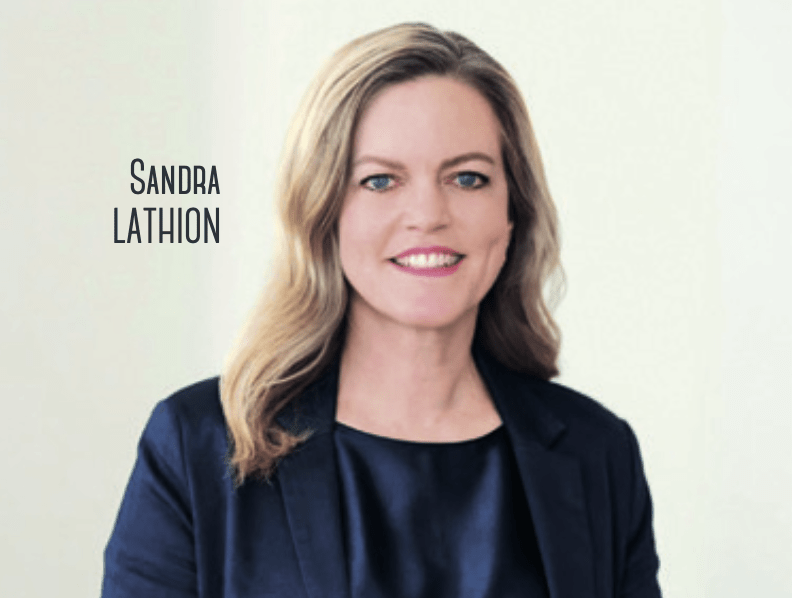
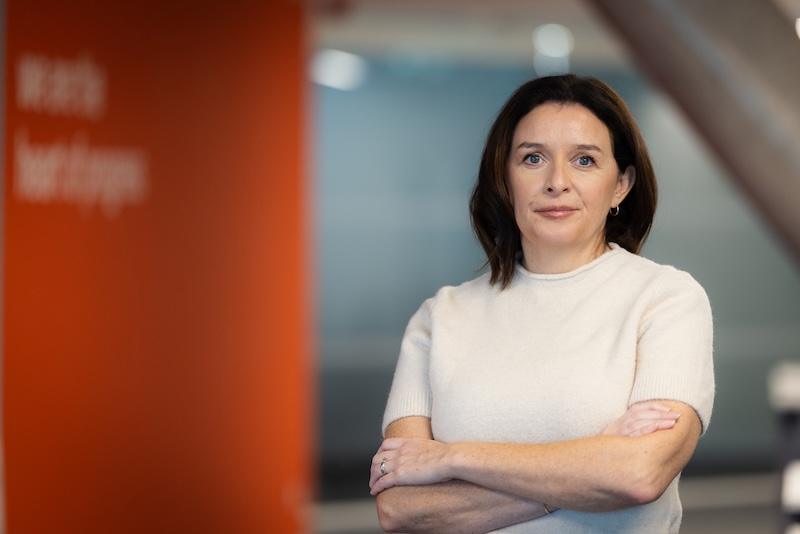
Photo: Sandra Lathion ©
As an independent board director serving on several boards in Switzerland, Sandra Lathion offers a rare perspective on a subject that is often underestimated: directors’ compensation. From the inside, she describes a mandate in which commitment, legal responsibility and the sheer volume of work call for a clear contract — and recognition that matches the role. Her testimony reveals what the numbers do not show: behind every strategic decision lie hours of analysis, risks taken on and a demand for lucidity that deserves to be fully valued.
There is something in the way Sandra Lathion talks about boards that stands apart from the usual script. No posturing, no corporate jargon. What motivates her to serve, she says without hesitation, is above all meaning. The company’s purpose — the reason it exists — is what convinces her to accept a mandate. “I join companies whose purpose has convinced me. I want to be part of the collective that defines strategy and guides the organisation toward an economically viable future.” That clear and consistent filter defines the profile of a director who does not accumulate mandates but chooses them. This selectivity is not a luxury; it reflects a deeper conviction about what a board should be — not a body of representation or rubber-stamping, but a space for intellectual diversity and collective intelligence. “Everyone brings their skills, their industry, their experience. It is the sum of these cross-cutting perspectives that makes a critical and constructive vision possible.”
On the question of compensation, Sandra Lathion offers valuable insight from the inside. The reality is both simpler and more complex than public debate often suggests. Simpler, because in the vast majority of cases remuneration is set before a new director even joins: it is laid down in internal rules, calibrated to the size of the company and to whether it is listed, and published in the annual report for companies subject to that transparency requirement.

More complex, because that apparent stability conceals very real adjustment mechanisms. The nomination and remuneration committee, whose workings Sandra Lathion knows well from having served on it, periodically reviews compensation levels for both executive management and board members. Adjustments are generally minor, except in the event of a structural break: an initial public offering, for instance, resets the framework entirely, because the transparency and governance obligations change in nature. “When a company goes public, the compensation system must be thoroughly reviewed and adapted.” Shareholding matters greatly in this respect. A canton, the Confederation or public-sector institutional investors impose constraints that family-owned companies with concentrated ownership do not face. According to Sandra Lathion, it is not liability risk that primarily determines compensation levels, but rather the industry, the governance structure and the nature of the ownership base.
The question of whether pay is proportionate to risk nonetheless deserves to be asked, and Sandra Lathion does not dodge it. “Clearly, the risks have increased. Regulation has become stricter, directors’ liability is more extensive, and behaviours that were not an issue twenty years ago are now being prosecuted.” Even so, she does not fall back on the simplistic idea of a direct equation between risk and pay: board compensation is determined primarily by the market, through benchmarking against comparable companies in the same sector, rather than by an actuarial calculation of individual risk.
If there is a mismatch, it is less a question of unfairness than of structural reality. Conditions have evolved, but governance practices have not all kept pace at the same rate. In heavily regulated sectors, pressure has risen sharply; in family-owned SMEs, the issue often remains taboo, or is simply overlooked for lack of a reference framework.
Sandra Lathion’s third major observation concerns the profound transformation of the director’s role under the impact of successive crises. Geopolitics, the pandemic and technological disruption have redrawn the contours of the mandate. “You feel as if you are managing a permanent crisis — and it is never the same crisis.” This endemic instability requires boards to be available and responsive in ways they never had to be before. Where six annual meetings may once have sufficed, emergency sessions during the week are sometimes now necessary. The time devoted to the mandate has increased, and with it directors’ exposure.
Sandra Lathion sees this very concretely in the boards where she serves. “We are clearly in a much more demanding dynamic than a few years ago,” she notes. Without overstating the case, she offers a clear-eyed assessment: the director’s role has become more intensive. It now requires a close and continuous reading of the geopolitical, regulatory and sectoral environment, as well as the ability to quickly connect these signals to strategic decisions. Far from a role of distant oversight, the board has become a genuine forum for anticipation and trade-offs. In this context, personal commitment deepens and decision cycles shorten, forcing directors to absorb ever larger volumes of information, often under tight deadlines. This shift is fundamentally reshaping the function: it demands not only stronger skills, but also intellectual discipline and stamina, pushing directors to carry out their mandate with ever greater commitment, preparation and strategic involvement.
For SMEs that have not yet formalised their remuneration framework, Sandra Lathion recommends a clear-eyed and pragmatic approach: “Before accepting a mandate, you need to find out the levels applied in comparable companies, in terms of size and sector — not to haggle, but to have a reference point, because a director’s remuneration is not negotiated like an executive salary.” By design, it is identical for all members holding the same position; the chair of the board, the vice-chair or the chairs of committees may receive more, because their remit is broader. But among members of the same rank, equality prevails. It is a governance principle, not a social convention. That clarity stands in contrast to the ambiguity some SME executives face when setting up their first board. Sandra Lathion reminds them of a reality that is often forgotten: you join a board to contribute collectively, not to assert individual claims. Compensation follows that logic of collegiality — and that is precisely what gives it coherence.
Throughout this interview, what emerges is ultimately a demanding and coherent vision of corporate governance. Sandra Lathion does not idealise the role, but she does defend it — provided it is exercised with seriousness, commitment and a keen sense of responsibility.
Find all our articles Business Culture