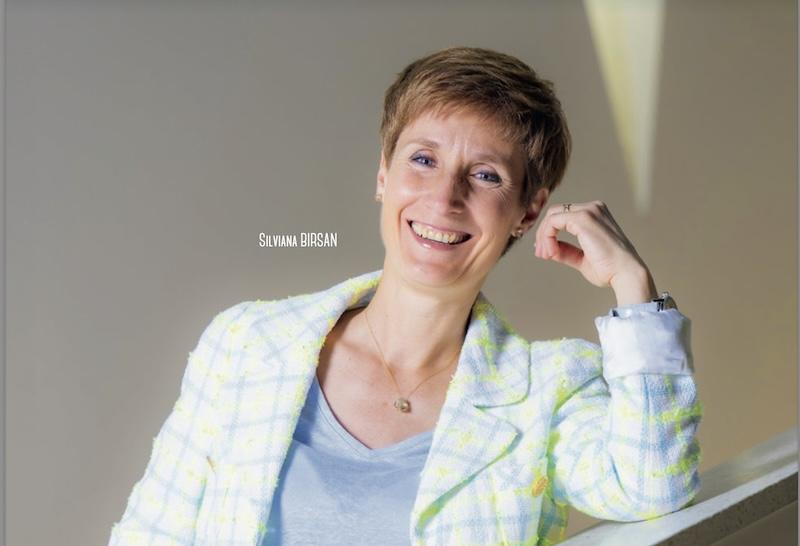
Photo © Olivier Evard
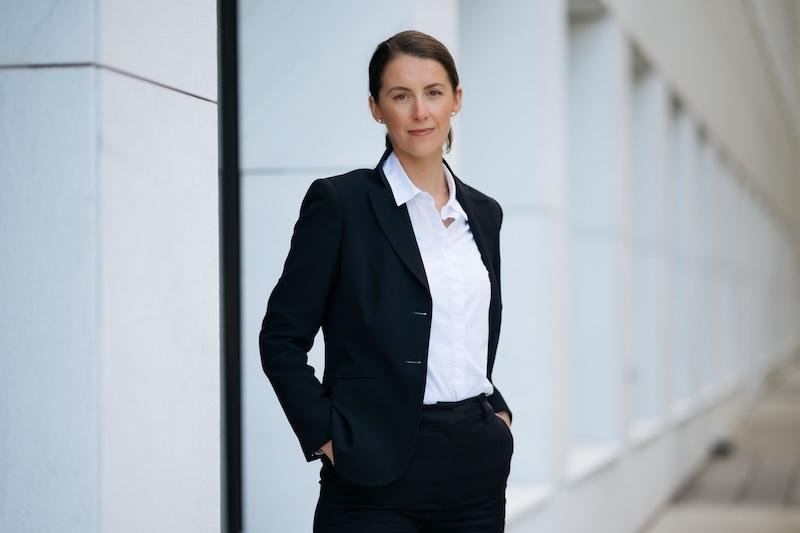
In a Swiss landscape shaped by concentration and standardisation, MGD Laboratory has spent more than fifty years cultivating a different path: one built on independence, agility and scientific relevance. At a time when medicine is shifting toward prevention and anticipation, Silviana Birsan, CEO of MGD Laboratory, advocates a renewed vision of the role of an analytical laboratory: no longer a mere technical service provider, but a central player in preventive health and human sustainability. In this extensive interview, she sets out the foundations of a model that is redefining the laboratory’s place in the care chain.
Monde Économique : Today, medicine is rapidly moving toward prevention and personalisation. In this context, where does MGD Laboratory stand?
Silviana Birsan : MGD Laboratory has historically been an independent Swiss player, founded in Geneva more than 50 years ago. But beyond this local anchor, our positioning rests on a strong conviction: medical biology should no longer be merely a diagnostic tool; it must become a lever for anticipation.

We continuously invest in cutting-edge technologies to meet the expectations of doctors, but now also those of patients themselves, because they no longer want simply to understand a disease once it has taken hold; they want to act beforehand. That is precisely where we come in, by turning medical analysis into a tool that supports individual decision-making. Our role therefore goes beyond the traditional laboratory: we are an active link in a healthcare ecosystem, interacting with doctors, therapists, insurers and institutions, with a shared objective: sustainably improving quality of life.
Monde Économique : Precisely, this shift toward preventive health is now at the heart of many debates. Why is it becoming unavoidable?
Silviana Birsan : Because healthcare systems are reaching their limits, both economically and humanly. We are facing a rise in chronic diseases, stress and burnout. Waiting for symptoms to appear is no longer viable.
Prevention makes it possible to identify imbalances long before they become pathological. Take stress, for example: with analyses such as salivary cortisol, we can detect very early either chronic stress or, on the contrary, an advanced state of exhaustion. This completely changes the timing of intervention. More broadly, we analyse markers linked to nutrition, deficiencies and silent inflammation. These data make it possible to act concretely on lifestyles. It is a medicine of clarity: giving individuals the means to understand their real state, which is often invisible.
Monde Économique : You mention a transformation in the role of the patient, now called upon to become an actor in their own health. Beyond the concept, how does this evolution materialise concretely in your practices and in the experience you offer?
Silviana Birsan : Analysis alone is no longer enough. For a long time, medical biology was limited to producing numerical data, often complex, sometimes anxiety-inducing, and left to the interpretation of the medical profession alone. Today, that approach has reached its limits. At MGD, we see every result as a starting point, not an end point. The value lies not only in the data, but in how it is placed in context. That means translating biological markers into concrete understanding, and then into action.
In practical terms, we provide an in-depth reading of results, contextualised according to the individual’s profile: their lifestyle, stress levels, eating habits and professional environment. This approach makes it possible to detect invisible imbalances, often silent, yet decisive in the medium and long term. From there, we structure genuine support pathways. We refer patients to a network of selected professionals (doctors, nutritionists, naturopaths, psychologists, therapists, movement or stress-management specialists, …) capable of providing targeted responses. The goal is not to multiply interventions, but to offer the right lever at the right time. This logic also extends into long-term follow-up. Patients can measure their progress, objectify the effects of the adjustments put in place, and thus enter a dynamic of continuous improvement. This is a key point: seeing the impact of one’s actions in concrete terms reinforces commitment and accountability.
Ultimately, this is a genuine paradigm shift. We are moving from reactive medicine to proactive medicine, from a treatment logic to a logic of anticipation. The patient no longer endures their health; they steer it.
Monde Économique : And behind this transformation lies a broader challenge: that of human sustainability. In your view, how does this concept redefine the balance between health, performance and responsibility, particularly for companies?

Silviana Birsan : Human sustainability is the idea that our physiological capital, our energy and our biological resilience are not fixed data points: they can be preserved, maintained and managed. Just as a company manages its assets to ensure longevity, an individual can and must manage their health proactively in order to remain high-performing over the long term.
This vision requires a radical shift in attitude from the patient. We do not want people to come to us because they are suffering. We want people to come because they want to understand their body, anticipate dysfunctions and act before the problem imposes itself on them. Some do not know it, or do not want to know it. They work relentlessly, accumulate the warning signs their body is sending them, and ignore the urgency until it is too late. Our role is to be that moment of objective truth, not to raise alarm, but to foster accountability. When I tell a patient that their dopamine level is low, that they are deficient in certain essential micronutrients or that their lipid profile reveals a worrying inflammatory state, I am giving them the means to become an active participant in their own health. It is a deeply humanistic act, and, in the current context of healthcare costs, it is also an economically rational one. “I remain convinced that without human sustainability, no performance lasts.”
Monde Économique : MGD Laboratory has developed a therapeutic partner ecosystem around its preventive analyses. How does this model work in practice, and how does it break with the traditional logic of an analytical laboratory?
Silviana Birsan : A conventional laboratory stops at the result. It produces a figure, sends it to the referring doctor, and its mission is complete. This model makes sense for routine tests — cholesterol, blood count, liver enzymes — where the prescriber knows exactly what to do with the information. But for preventive and functional analyses, the data alone is not enough. It must be interpreted, contextualised and translated into concrete recommendations.
We have therefore built an ecosystem of complementary healthcare professionals — nutrition doctors, psychologists, naturopaths, sophrologists, dietitians, sports coaches, etc. — with whom we work as a network. When a patient presents a chronic stress profile, we do not simply hand over a report: we direct them to the professionals best placed to support them, based on their specific issue and personal sensitivity. Two or three names for each type of functional condition, chosen for their real expertise in that field. The patient is never left alone with their results. It is this continuum — from analysis to interpretation, from interpretation to support, from support to monitoring — that forms our true value proposition. And it is perfectly measurable: patients who follow this process see real biological improvements within three to six months. For us, that proof through numbers is the strongest argument.
Monde Économique : You mention measuring salivary cortisol as a marker of chronic stress. For business leaders and executives under constant pressure, what does this kind of analysis actually bring?
Silviana Birsan : Stress is one of the silent scourges of our time. It is poorly measured, poorly understood and often identified too late, once exhaustion has already set in. Yet today there is a simple, non-invasive biological marker that makes it possible to objectify the state of the autonomic nervous system: morning salivary cortisol.
The principle is deceptively simple: the patient collects saliva upon waking, before even getting out of bed. This morning cortisol reflects the system’s response to awakening. If the level is high, it indicates a compensation system already under heavy strain: the body is on alert, stress is taking hold. If, on the other hand, the level is abnormally low, the signal is the opposite and even more serious: the system is exhausted, and the organism has stopped responding. We are then dealing with confirmed or imminent burnout. What we offer is the ability to intervene in the interval between these two states: when the warning signal is there, but the catastrophe has not yet occurred. For a business leader or senior executive, this information is strategically important in the literal sense. It makes it possible to arbitrate, adapt and prevent.
Monde Économique : This approach implies a profound transformation of tools and infrastructure. Recently, MGD Laboratory invested in new automated analytical lines. What does this technological choice reveal in concrete terms?
Silviana Birsan : Indeed, we recently integrated fully automated analytical lines, capable of processing up to 1’000 samples per hour and carrying out more than 150 different parameters. Beyond performance, these technologies deliver two major benefits: reliability and speed. What previously required five successive manual operations, with the risk of human error that implies, is now handled by a robotic continuous-flow system and then validated by humans.
But innovation does not stop at the laboratory. We are also developing a digital platform enabling patients and companies to access their results, accompanied by an initial AI-assisted interpretation validated by our experts. This hybrid model between technology and human expertise is essential to scale up while maintaining a high level of medical rigor.
Monde Économique : You are also developing a training offer for healthcare professionals. Why would an analytical laboratory invest in medical education, and what is the logic behind this positioning?
Silviana Birsan : Because our expertise has value only if it is shared. A doctor who is unaware of salivary cortisol testing or functional biology assays will never prescribe them, not out of negligence, but because they are not familiar with tools that were not part of their initial training. The medical sector is evolving much faster than training can keep up.
We organise around thirty training sessions a year, both in person and online, focused on helping with prescribing and interpreting advanced analyses. All our training is recorded and available on replay through a digital library, allowing healthcare professionals to learn at their own pace. We also partner with specialist schools and support certain programmes. The goal is to build a comprehensive educational body around the analyses we offer, so that every professional, whatever their speciality, can harness the full potential of functional biology in their practice.
Monde Économique : In a context of sector consolidation, growing pressure from insurers and the rise of personalised medicine, how does an independent laboratory like MGD manage to assert its distinctiveness?
Silviana Birsan : The medical biology market is undergoing a profound transformation, in Switzerland as across Europe. Consolidation is a reality: large groups are acquiring independent laboratories, standardising processes and optimising costs. This movement has its economic logic. But it also creates space for those who specifically want to cultivate another, more human vision of medicine.
More and more patients are experiencing what is known as therapeutic wandering: they have symptoms, they consult doctors, their conventional tests come back within normal ranges, and yet they do not feel well. It is this public that is looking for more holistic, more nuanced and more personalised care. On their side, doctors are increasingly moving toward integrative medicine, which incorporates nutrition, lifestyle and functional biology into a holistic view of the patient. We are the central link between these two demands.
The pressure from insurers on healthcare costs paradoxically works in our favour: if it can be shown that a preventive analysis costing 200 francs can avoid a 20,000-franc hospitalisation, the economic argument becomes irresistible. That is the direction the Swiss Confederation is taking with its national health strategies, and it is what companies concerned about their employees’ wellbeing are demanding. An independent laboratory such as MGD, agile, expert and rooted in a network of healthcare professionals, has an irreplaceable role to play in this reconfiguration.
Find all our Interviews