Cave de Genève

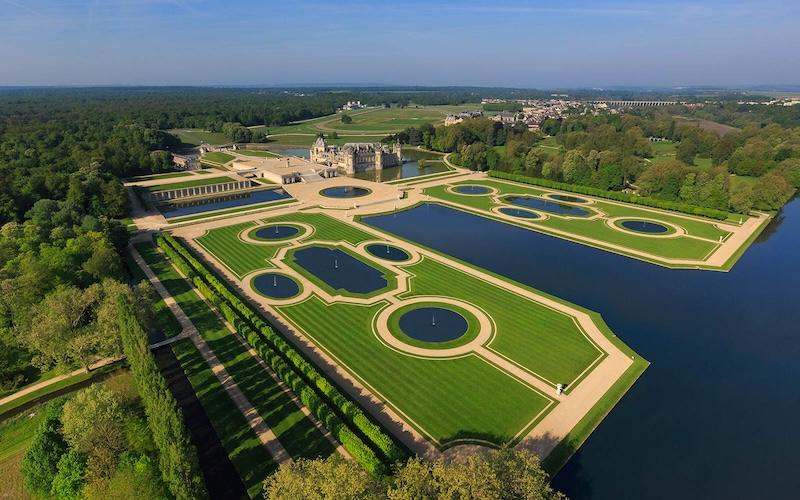
Photo: Valentin Vigier © LFDE
By Valentin Vigier, Head of ESG Research, LFDE │October 2026
Summer 2026, the hottest ever recorded in Europe, served as a stark reminder that water scarcity is no longer a distant risk. The United Nations estimates that we have entered an “era of global water bankruptcy”[1], while global water demand is expected to rise by 20 to 30% by 2050, driven by population growth, urbanization and industrialization.
Because agriculture accounts for nearly 70% of global freshwater withdrawals, it is on the front line. The entire agri-food industry is therefore exposed to lower yields, price volatility and increasingly fragile supply chains. While contractual hedges can temporarily soften the blow, they cannot eliminate it. Energy is vulnerable too: water shortages reduce hydropower generation and can constrain the operation of thermal or nuclear plants that rely on water for cooling. In logistics, lower river levels reduce barge loading capacity and increase costs. From the Panama Canal to Europe’s major inland waterways, water scarcity is becoming a driver of supply-chain disruption.

Although a large share of economic sectors depend heavily on water, long-term risks remain underestimated. The price companies pay rarely reflects water’s true economic value or the cost of a production outage. Reporting is often limited to direct withdrawals at company sites, yet the bulk of the footprint is frequently upstream, in raw materials, energy and suppliers. For the largest livestock companies, for example, this footprint is on average 132 times greater than the figures reported.[2]
For responsible investors, assessing water dependency across the entire value chain is therefore essential. Companies must measure the cost of water shortages, introduce an internal price for water in the same way as carbon, and accelerate circular-economy investments.
The reuse of treated wastewater, still limited to 11% globally[3], offers a promising response. In Argelès-sur-Mer, a facility designed by Veolia can recycle up to 1.3 million cubic metres per year and irrigate more than 650 hectares of farmland. Every cubic metre reused eases pressure on groundwater, secures economic activity and limits conflicts over usage. In the face of worsening water-related risks, implementing adaptation plans is as much an economic resilience imperative as it is an environmental responsibility.
[1] Report Global Water Bankruptcy, UN Institute for Water, Environment and Health
[2] FAIRR: The Global Livestock Sector Is Under-Reporting on a US$6.4 Billion Water Scarcity Risk
[3] Scaling Water Reuse Initiative — Half of every drop by 2045
Read all our Strategic Case articles