Cave de Genève
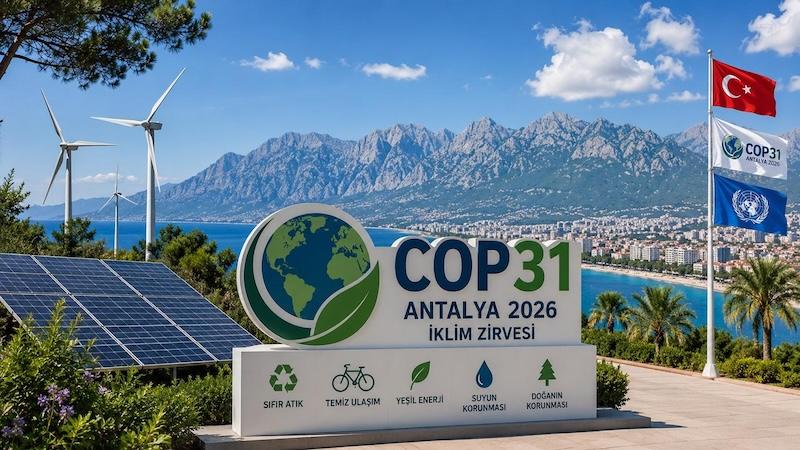
Photo © Turkish Embassy
(This opinion piece was written by the Embassy of Türkiye in Bern, on behalf of Türkiye, the host country of COP31.)
The 31st Conference of the Parties to the United Nations Framework Convention on Climate Change (COP31), to be held in Antalya, Türkiye, from 9 to 20 November 2026, comes at a decisive moment for global climate action. More than a decade after the adoption of the Paris Agreement, the international community faces a fundamental challenge: turning years of negotiations, commitments and ambitious targets into tangible, measurable progress.
As 2030 draws closer, the need to accelerate emissions reductions, expand renewable energy, strengthen climate resilience and mobilise adequate financing is becoming increasingly clear. The new generation of nationally determined contributions (NDCs), which set climate targets through 2035, marks an important transition: from defining ambition to delivering results.

At the same time, geopolitical tensions, economic uncertainty, energy security concerns and development challenges are placing growing strain on international cooperation. The effects of climate change are worsening, particularly for vulnerable communities and developing countries, many of which face significant financial and technological constraints.
In this context, COP31 is far more than a routine annual climate conference. It offers an opportunity to reaffirm faith in multilateralism, restore trust between countries and demonstrate that international cooperation can still deliver concrete solutions to shared global challenges. Türkiye enters its first COP presidency with a clear conviction: the next chapter in international climate cooperation must be defined not only by what countries promise, but by what they deliver.
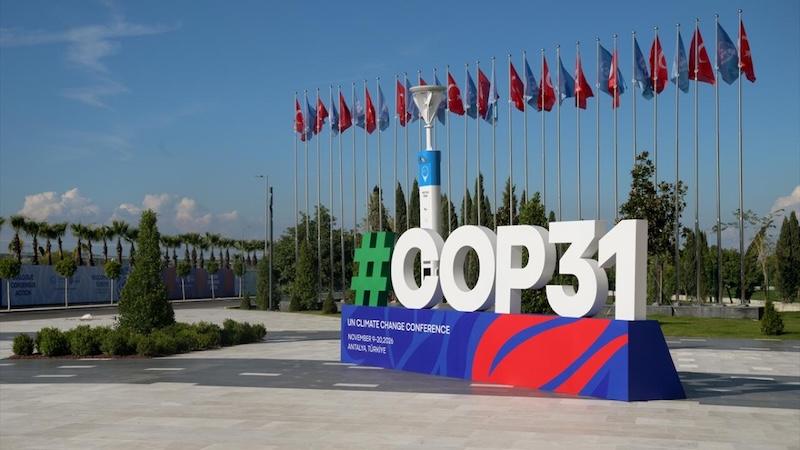
One of the most distinctive features of COP31 is the innovative partnership model developed between Türkiye and Australia through constructive diplomatic dialogue and mutual understanding. Under the agreed partnership arrangements, Türkiye will host COP31 in Antalya, chair the Conference under the leadership of the Minister of Environment, Urbanisation and Climate Change, Mr Murat Kurum, and lead the COP31 Action Agenda. Australia, represented by the Minister for Climate Change and Energy, Mr Chris Bowen, in his capacity as President of the negotiations, will lead the formal negotiations in close consultation with Türkiye. Australia will also lead the Pacific dimension of COP31 and contribute to shaping the Action Agenda.
The partnership also brings together complementary geographic perspectives. Türkiye’s position at the crossroads of Europe, Asia and the Middle East, along with its broad ties across regions and country groupings, provides a valuable foundation for inclusive diplomacy. Australia’s close engagement with Pacific countries adds an equally important dimension, especially by placing the concerns of climate-vulnerable island states at the forefront.
From the Mediterranean to the Pacific, this partnership provides an opportunity to connect different regional priorities, deepen mutual understanding and help build consensus between developed and developing countries. The effectiveness of this cooperation has already been evident in the preparations for COP31.
Throughout 2026, Türkiye and Australia held extensive consultations with international partners, including in the framework of the Petersberg Climate Dialogue, the Copenhagen Climate Ministerial and the sessions of the UNFCCC subsidiary bodies in Bonn in June. Climate exchanges in the Republic of Korea, London Climate Action Week and the Istanbul Climate Finance Summit also helped advance discussions on implementation, investment and international partnerships.
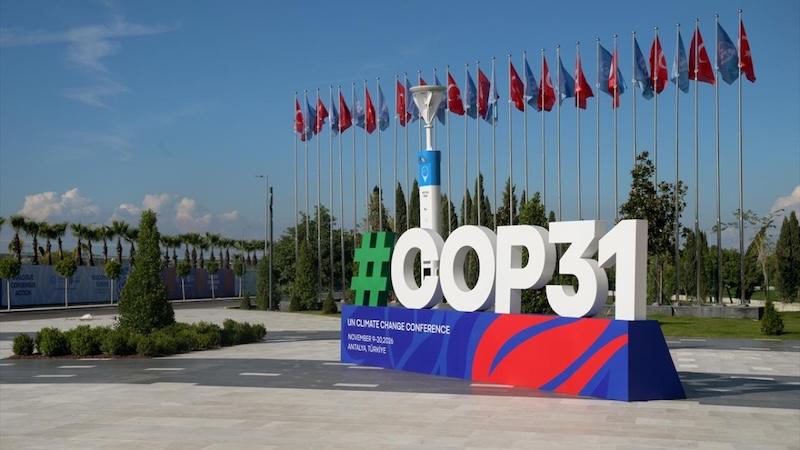
Türkiye’s COP31 presidency is guided by three core principles: dialogue, consensus and action. These principles reflect the determination to make COP31 an inclusive, transparent and results-oriented conference, while taking into account the national circumstances, development priorities and differing institutional capacities of participating countries. At the heart of this vision lies the concept of a “COP of implementation”.
Over the past decade, the international community has built a broad climate framework, adopted major collective goals and developed increasingly ambitious national climate plans. The main challenge today is to translate these commitments into concrete policies, investment-ready projects and measurable improvements for people, economies and ecosystems. Türkiye therefore sees COP31 as a conference that advances implementation rather than merely generating new declarations. This approach rests on two mutually reinforcing pillars: formal intergovernmental negotiations and the COP31 Action Agenda. While each has a distinct purpose, progress on one can strengthen the outcomes of the other.
Another equally important element of Türkiye’s vision is its commitment to a genuinely Party-driven process. All countries must have the opportunity to express their priorities, contribute to the discussions and participate meaningfully in shaping collective outcomes.
Climate action cannot follow a one-size-fits-all approach. Countries differ in their economic structures, energy systems, development needs and capacities. A successful global transition must reflect these differences while preserving a shared commitment to the goals of the Paris Agreement. That is why Türkiye places particular emphasis on the joint promotion of mitigation and adaptation, supported by adequate climate finance, technology development and transfer, and capacity-building. The aim is to foster a sense of shared ownership, strengthen trust among Parties and deliver balanced, consensus-based outcomes.
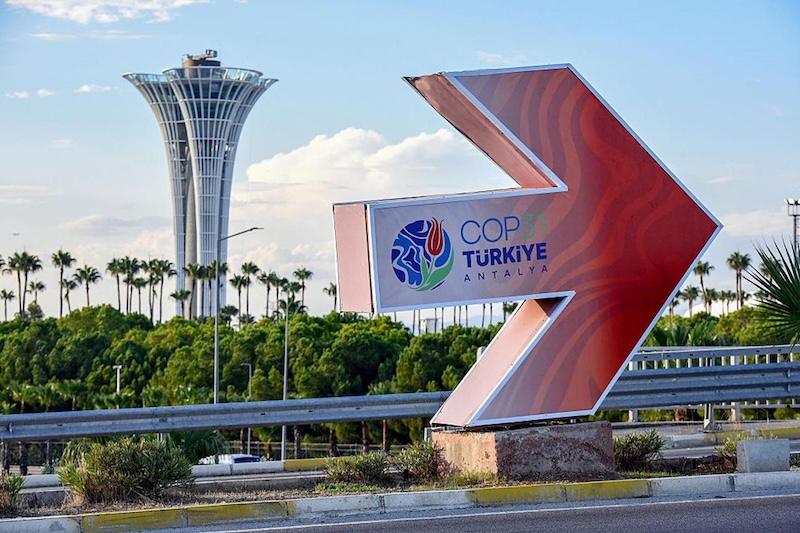
The COP31 Action Agenda is the practical cornerstone of Türkiye’s implementation-focused approach. Building on the progress achieved at previous climate conferences, including COP30, it seeks to accelerate the delivery of existing climate commitments by bringing together governments, international organisations, financial institutions, businesses and civil society around concrete initiatives.
The Action Agenda is structured around ten priority themes, six global objectives for 2035, sixteen initiatives and thirteen complementary outcomes. Its priorities cover the clean energy transition and electrification, zero waste and the circular economy, climate-resilient cities, green industrialisation, climate finance, youth and education, food security, oceans and seas, resilient health systems, and stronger cooperation among the Rio Conventions.
The Agenda also sets tangible targets for 2035, including raising electricity’s share in final global energy consumption to 35%, halving the projected increase in municipal waste generation, reducing the energy intensity of buildings by at least 25% and increasing the circular use of materials to at least 15%. These targets reflect the conviction that climate action must go beyond emissions reductions alone. It must also promote resource efficiency, sustainable urban development, resilient infrastructure, innovation and more sustainable production and consumption patterns.
Importantly, the Action Agenda is designed as a platform for voluntary cooperation. Its initiatives create no legal obligations, reporting requirements or additional commitments for participating countries. Rather, they offer an opportunity to turn existing priorities into concrete projects and scalable solutions.
Türkiye’s COP31 presidency is closely linked to its own long-term climate and sustainable development objectives. After ratifying the Paris Agreement in October 2021, Türkiye announced its commitment to reach net-zero greenhouse gas emissions by 2053. That target now provides the overarching direction for its national green transition. Türkiye’s first updated NDC, announced in 2023, set a goal of reducing greenhouse gas emissions by 41% by 2030 compared with the business-as-usual scenario. Its second NDC, submitted to COP30, aims to cap greenhouse gas emissions at 643 million tonnes of carbon dioxide equivalent by 2035. Covering all major sectors and all greenhouse gases, this target is aligned with the country’s longer-term path toward net zero.
The country has also taken significant steps to strengthen its long-term policy framework. In November 2024, Türkiye submitted its long-term climate strategy to the UNFCCC secretariat, setting out the pathway towards the 2053 net-zero target. This strategy is underpinned by the climate change mitigation and adaptation strategies and action plans for 2024–2030, which include 89 strategies covering key sectors such as energy, industry, buildings, transport, waste, agriculture and forestry.
A major legislative milestone followed with the adoption of Türkiye’s first Climate Law in 2025. The law provides a legal basis for strengthening national climate governance, developing an emissions trading system and advancing the country’s green transition. The national emissions trading system is currently in its pilot phase, with the aim of introducing a market mechanism to support greenhouse gas reductions.
Another important development was the publication, on 24 September 2026, of Türkiye’s Green Taxonomy Regulation. The regulation aims to establish common criteria for environmentally sustainable economic activities, encourage green investment financing and prevent greenwashing. Together, these measures are designed to create a more predictable institutional and regulatory environment for Türkiye’s transition to a low-carbon economy.
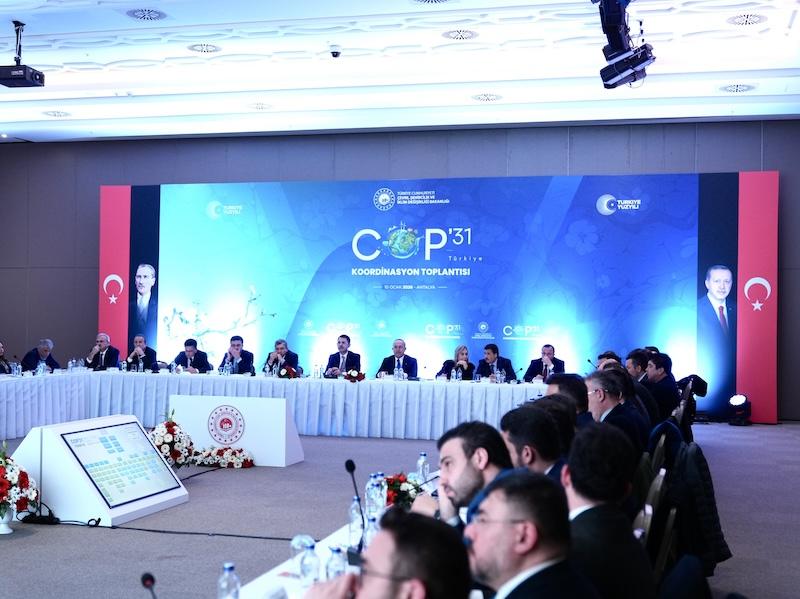
With dialogue, consensus and action at the centre of its approach, Türkiye’s ambition is to make COP31 in Antalya a turning point in the shift from climate promises to concrete progress – demonstrating that multilateralism can still deliver meaningful results for people and for the planet.
Ultimately, COP31 will succeed if it can strengthen trust, mobilise resources and accelerate implementation. The international community does not lack climate goals. What remains essential is the political will, institutional capacity, financial resources and international cooperation needed to achieve them.
Türkiye’s COP31 presidency offers an opportunity to address these challenges through an inclusive and pragmatic approach that links climate ambition to sustainable development, energy security, economic resilience and social well-being.
Find all our Inside articles