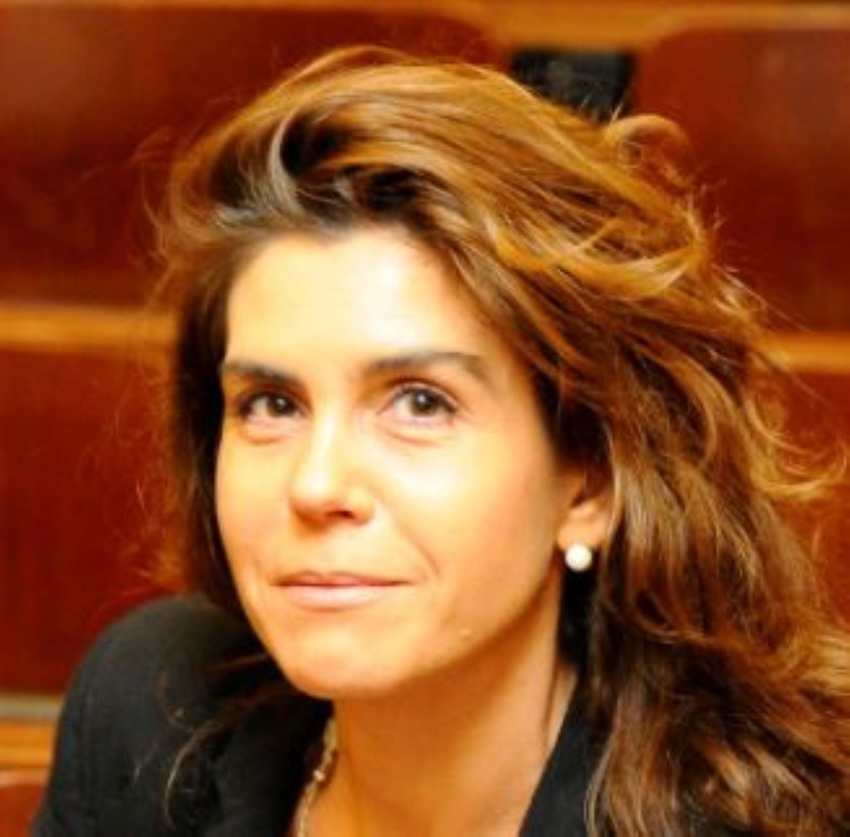
Photos © S.Prunier-Poulmaire
The idea of decreeing happiness at work sparks lively debate in professional and academic circles. As the pursuit of workplace happiness has become a priority for many organisations, the question of whether happiness can be imposed or decreed remains complex and open to interpretation. On the one hand, advocates of this approach point to the potential benefits of a supportive work environment, arguing that a corporate culture focused on employee well-being can foster productivity, loyalty and innovation.
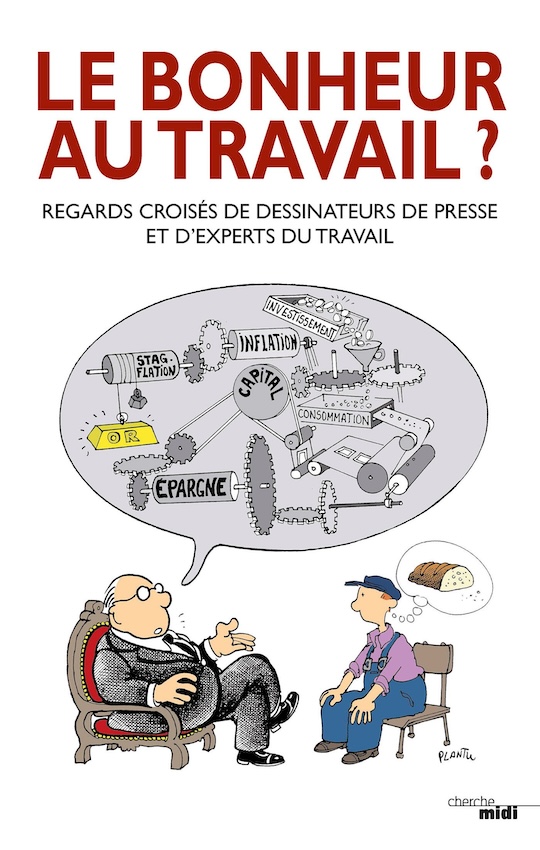
On the other hand, some voices raise concerns about the intrinsic nature of happiness, suggesting that it cannot be dictated authoritatively and that each individual’s own will plays a crucial role in their experience of happiness at work. The question of whether happiness at work can be decreed therefore raises fundamental issues about the nature of well-being, the role of the employer and the limits of organisational intervention in employees’ private sphere. We spoke with Sophie Prunier-Poulmaire, Associate Professor in Work Psychology and Ergonomics and author of Le Bonheur au Travail ?
Monde Economique: In light of the rapid evolution of the world of work, what are, in your view, the main reasons why happiness at work has become such an important issue today?

Sophie Prunier-Poulmaire: The global pandemic we went through has profoundly changed our relationship with work, far more deeply than we could have imagined. Beyond the new organisational models we had to put in place at short notice, such as teleworking, which became emblematic, we also distanced ourselves from our professional sphere, and that distance proved to be not merely spatial. We stepped back… We questioned the broader meaning of our lives, in which work occupies a central place. We asked ourselves whether what we do every day in the service of a company has a deeper meaning, whether it is aligned with who we are and with our own values. In other words, we re-examined the central place of work in our lives. The pursuit of happiness in the professional sphere has therefore become legitimate.
More than a source of income, a place for social interaction, recognition, and a vector for knowledge and expertise, we are now looking more than ever to flourish at work. Young generations even more so than older ones.
Monde Economique: In your book Le Bonheur au Travail ?, could you share with our readers the main conclusions or ideas you developed on this subject?
Sophie Prunier-Poulmaire: This original book brings together 25 researchers in the humanities and social sciences, specialists in work-related issues, and 35 of the most talented press cartoonists in France. Through a dialogue of perspectives, it sets the cartoonists’ work against the researchers’ expertise. Each, in their own way, invites us to see contemporary work differently. Drawing on complementary disciplines — economics, sociology, philosophy, work psychology, ergonomics, and more — it encourages reflection and questioning around work, its challenges, its meaning, its future, what it has become for us, in our relationships with others, and the way it can serve as a resource for the individual. For just as work can be a source of “psychosocial risks,” a topic widely discussed in recent years, it can also — under the same acronym — be a “psychosocial resource,” a source of lasting fulfilment and well-being.
We therefore asked ourselves which new paths should be taken to meet this challenge. How can work itself contain some of the drivers of happiness? What resources should be mobilised? What actions should be taken? What reflection should be pursued?
Monde Economique: Could you explain how you would define happiness at work and how it differs from mere job satisfaction?
Sophie Prunier-Poulmaire: Happiness is something highly subjective, intimate and personal. Each person probably has their own definition. But in the world of work, being happy requires a few essential conditions that we can share here. For instance, having the chance to fully commit to one’s work with the feeling that what one does has meaning, that what one produces is useful to others, that one can identify with it proudly, without having renounced one’s own values or personal ethics. That this work, whatever it may be, allows us to “learn” every day — beyond learning about ourselves and others — and enables us to mobilise our knowledge and skills, which can then be developed and strengthened throughout our career. That these skills are useful here and now, but also tomorrow, perhaps elsewhere, as part of a considered career progression.
That we receive feedback on what we produce, that we are encouraged and supported in our initiatives, and in the daily efforts we make to carry out what is entrusted to us. Knowing that it is possible to share, within an established collective, the difficulties of work, the ingenuity we deploy to overcome them, and the pleasure we find in doing so. Being assured that we are helping to produce, together, goods and services that are useful to others and, ultimately, to society as a whole. If not happiness, then something very close to it… somewhere between well-being and quality of work life.
Monde Economique: In recent years, new roles such as the “Chief Happiness Officer,” the “Wellbeing Manager” and the “Director of Employee Experience” have emerged. In light of these trends, can happiness at work, in your view, be decreed?
Sophie Prunier-Poulmaire: That is an excellent question, and it calls for a simple answer: no, happiness cannot be decreed, neither in business nor in the other spheres of our lives. It depends above all on work organisations that respect the women and men who do the work, on management rooted in trust, and on giving everyone room for manoeuvre and creativity so they can put something of themselves into what they do and take pride in it. Work must be thought through at human scale, as close as possible to those who carry it out, those who create wealth every day and who, ultimately, are the company’s most valuable asset.
If a “Chief Happiness Officer” is needed to organise this kind of workplace happiness, it is probably because the organisation alone is not enough… and, unfortunately, this immense responsibility cannot rest on the shoulders of one man or one woman. It implies a collectively designed project and daily attention. This trend may simply be an admission of failure. But it is never too late to make the pursuit of Workplace Happiness a realistic objective beyond a utopian quest.
Monde Economique: Do the emergence of these new trends in the world of work not, ultimately, invite us to take a different view of contemporary work?
Sophie Prunier-Poulmaire: It is indeed urgent to do so, to rethink organisations collectively, and to raise together essential questions that are rarely debated. The emergence of recent phenomena is pushing us in that direction: record absenteeism rates across Europe, unprecedented attraction problems in certain sectors (hotels, restaurants, cleaning services), difficulties in retaining employees, and so on. The phenomenon of the Great Resignation in the United States is also worrying and underlines the need to rethink work urgently — its content, meaning, value, centrality and the relationship we maintain with it. This is a major collective challenge that we must address quickly.
This requires imagining new production models, reconciling economics with ecology, ethics and altruism. It is also an opportunity to integrate these new expectations from citizens by defending values capable of bringing people together and providing fertile ground for trust — among employees, users and customers. This may be a moment to reinvent organisations, management practices and working methods, through an open debate on what a “well-done job” might be: one that is of quality and gives meaning to everyone’s commitment.
The company of tomorrow should not simply play a role in the gears of economic activity, but stand as a driving force that helps us “make society.” Major companies have led the way by adopting a “purpose” that goes far beyond their core business and specific missions: it commits them socially, societally and environmentally. Yet the central issue of ecology must be able to blend harmoniously with that of the ecology of human work. This is undoubtedly one path toward thinking about a world of work that could foster Happiness? — one that is at once fairer, more equitable and safer…
Retrouvez l’ensemble de nos Interviews