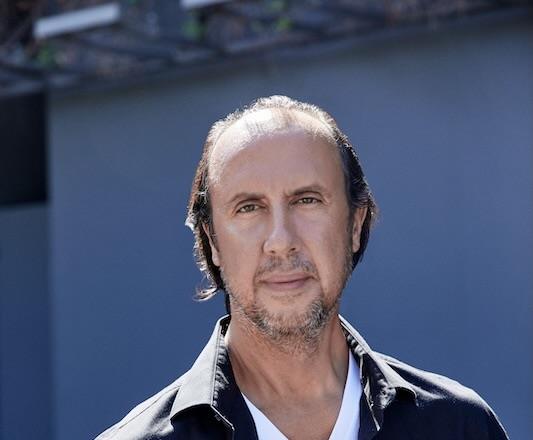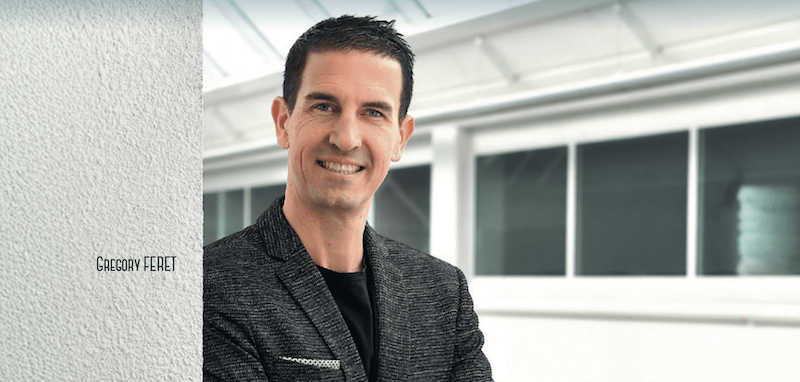
Photo Gregory Feret ©
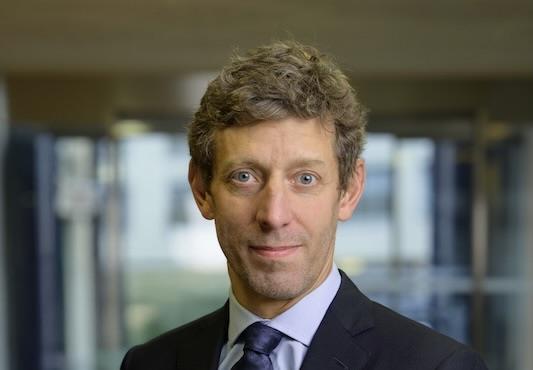
Gregory Feret, President of Silicom
A seasoned entrepreneur and M&A specialist, Gregory Feret took the helm of Silicom in January 2024 with a clear ambition: to make the company the benchmark IT services provider for SMEs in French-speaking Switzerland. Founded in 2017 by entrepreneurs, Silicom today generates CHF 20 million in revenue and employs more than 80 people across several cantons. In this exclusive interview with Le Monde Économique, Gregory Feret analyses the major challenges of digital transformation, decodes trends in the Swiss IT market and shares his outlook for the years ahead.
Monde Économique: Silicom was founded in 2017 with an atypical approach in the IT sector. What was the original ambition?
Gregory Feret : Silicom was born out of a simple observation: the language of IT companies had become too technical, too focused on IT for IT’s sake. Together with Silicom’s founders, we saw that SMEs – those that are not technology companies – needed a partner able to understand their business priorities before talking about servers, networks or software. We therefore created Silicom as a company of entrepreneurs, serving other entrepreneurs. Our mission is to support Romandy SMEs in a field that has become critical, but is not their core business.
Monde Économique: You describe yourselves as the “Raiffeisen of IT.” That analogy suggests a very deliberate positioning strategy. Can you explain this model and the competitive advantages it offers?
Gregory Feret: The Raiffeisen analogy is highly relevant. Just like that bank, we strongly believe in a local model built around proximity, with offices in Geneva, Lausanne, Fribourg and Sion, while also benefiting from sufficient scale to deliver professional-grade services, expertise, continuity in support requests and a high level of security. It is a delicate balance, but strategically crucial because, on the one hand, our SME clients do not want to be a small file lost inside a giant like Swisscom or Microsoft: they are looking for proximity, a contact person who responds quickly and understands their regional specificities. And on the other hand, the increasing complexity of the IT business requires critical mass. Our partners’ certifications, for example with Microsoft, are becoming more demanding, skills are becoming more specialised, and cybersecurity requires dedicated teams. An IT company with just 5 to 10 people can no longer provide the depth of service needed.
That is where our model proves its strength: we have the scale to attract and retain top-tier specialists while preserving the proximity that sets us apart. Our offices in Geneva, Lausanne, Fribourg and Sion are not sales outposts; they are genuine local centres of expertise.
Monde Économique: According to a recent study, the Swiss IT market is expected to grow by more than 5% in 2026, with services accounting for nearly 75% of spending. How do you assess the current needs of Romandy SMEs in light of this trend?
Gregory Feret: Romandy SMEs are at a critical crossroads. Their needs can be broken down into three distinct layers. First, utility IT: a stable, secure environment that simply works. This has become the bare minimum, like electricity. When you arrive in the morning, everything must work. A blocked PC or Outlook that no longer responds, and productivity collapses. That is what I call “basic IT” – essential, yet invisible when it works well.
Second, modern, high-performing tools. Employees use Zoom, Teams, and Google or Microsoft cloud solutions in their personal lives. They expect the same level of quality at work. The problem is that these tools are overwhelmingly American. European alternatives struggle to match them in terms of features and user experience. This technological dependence raises strategic questions, particularly in light of European regulatory developments.
Third, and most critical, strategic IT. How can the customer journey be digitised end to end? From quote to invoicing, from order to delivery, how can you create seamless, automated processes? Most SMEs have accumulated disconnected solutions over the years – an accounting package here, a CRM there, Excel files everywhere. This technological patchwork is becoming a major drag on growth. The challenge is no longer simply to have tools, but to have a coherent digital ecosystem.
And finally, cutting across all three levels, the issue of security. Cutting across them because it is the main concern for business leaders when it comes to ensuring business continuity. What happens when there is a failure linked to a cyberattack and potentially your entire IT infrastructure is brought to a standstill? The technological dependence of business operations, and consequently of SME productivity, puts security at the centre of the equation.
Monde Économique: You refer to the paradox of artificial intelligence: companies want to “drive a Ferrari” without mastering “the Twingo.” That metaphor captures a gap between technological ambition and digital maturity. How do you interpret this phenomenon?
Gregory Feret: It is probably the biggest challenge right now. LinkedIn is full of content on generative AI, ChatGPT and intelligent automation. Conferences talk about radical transformation. But on the ground, reality is very different. We have clients whose employees still struggle to open an application properly or fix a basic printer issue. And we are asking them to use complex generative AI tools? That seems difficult to me.
Before talking about AI, you need to ask the right questions: are my core processes digitised? Is my ERP robust and properly integrated? Is my data clean and usable? Are my teams trained on the tools they actually use today? At Silicom, we first rebuilt our entire technology stack (ERP, CRM, project management) before even thinking about AI. Everyone asked us why we weren’t integrating artificial intelligence straight away. The answer is simple: without solid foundations, AI brings nothing. It amplifies existing dysfunctions. I believe there is real educational work to be done. SMEs need to understand that there is a hierarchy in digitalisation. First consolidate the basics, then optimise processes, and only then introduce artificial intelligence for specific, measurable use cases. It is less sexy than grand talk of disruption, but it is the only approach that truly works.
Monde Économique: The reliance on American suppliers (Microsoft, Google, Amazon) that you mentioned earlier: do you see it as a major strategic risk? How do you view the balance between technological performance and digital sovereignty?
Gregory Feret: We are in a near-monopoly situation. Microsoft dominates enterprise infrastructure, Google and Amazon dominate the cloud, and productivity tools all come from the United States. And these players have considerable pricing power. When Microsoft announces a 5% price increase, you say “yes, sir” and pass it on to your clients. You have no room to negotiate. That is structurally unhealthy.
The regulatory risk is real. The European Union could, at any time, tighten data protection rules or impose constraints that make it more complicated to use American solutions. We have seen this with the Cloud Act and the discussions around the Digital Markets Act. Swiss companies, especially those working with the EU, could find themselves caught in the middle. The problem is that European or Swiss alternatives are not yet up to standard. There are interesting initiatives, but they are significantly behind. End users do not want downgraded solutions in the name of sovereignty. They want the best possible experience. We believe this segment will grow significantly in the coming years, driven by security and compliance concerns.
Monde Économique: With an announced target of CHF 40 million in revenue by 2030 – compared with CHF 20 million today – Silicom’s growth strategy is mainly based on acquisitions. How do you ensure the cultural and operational integration of these successive deals?
Gregory Feret: Growth through acquisition is a delicate craft. I have experience of more than 25 mergers and acquisitions across different sectors; I have seen what works and what fails. The first success factor is cultural alignment. We do not buy just anyone. We look for entrepreneurs who share our values: customer service, proximity and technical excellence. If the DNA does not match, no matter how strong the technical quality is, integration will be a nightmare. Then you have to respect the teams. When we acquire a company, we do not arrive arrogantly to change everything. Those people have built something, they have loyal customers, methods that work. Our role is to give them the resources they did not have while preserving what makes their local strength. Finally, operational integration must be gradual but structured. We have proven processes: harmonising management tools in the first few months, cross-training teams, pooling certifications and expertise. The goal is for each entity to become stronger through the group while retaining its autonomy and local responsiveness. It is a complex balance, but it is what makes the difference between a successful acquisition and an expensive failure.
Monde Économique: To conclude, what are your five-year prospects, for the market and for Silicom?
Gregory Feret: The IT market will continue to grow, driven by the irreversible digitalisation of the economy. Margins will come under pressure, but volumes will increase. For Silicom, our ambition is clear: to become a benchmark player for Romandy SMEs in our two core businesses: IT services provider and Microsoft Business Central ERP integrator. We want to keep strengthening our regional presence, consolidate the market intelligently, and offer a clear, readable and sustainable vision of IT in the service of business performance. Because in the end, technology is never an end in itself. It is a tool in the service of strategy, management and value creation.
Find all our Interviews