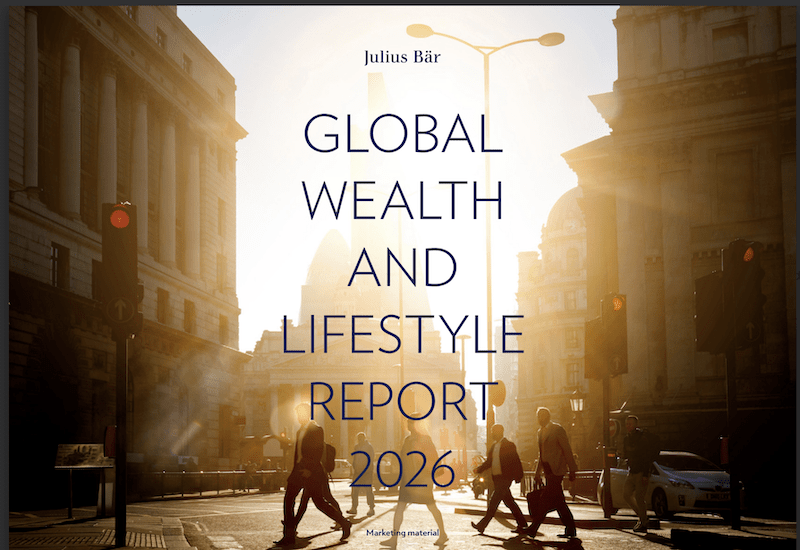
Photo © Juliue Baer
The Julius Baer Lifestyle Index shows a significant 10.2% increase over the past 12 months in the cost of sustaining a “premium standard of living,” measured in US dollars. Singapore remains the world’s most expensive city for high-net-worth individuals, while Zurich rises to second place and Monaco enters the top three for the first time. The report highlights the growing importance of currencies and mobility in a fragmented global economy.
Julius Baer’s “Global Wealth and Lifestyle Report 2026” is being released against a complex and rapidly shifting global backdrop. The past year has been marked by heightened geopolitical volatility, changing trade flows, exchange-rate swings and renewed inflation concerns. While financial markets have proved resilient, these factors have a tangible impact on the cost of living for high-net-worth individuals (HNWIs) around the world.
It should be noted that data collection for the index ended at the end of February and fieldwork for the survey was completed in early March 2026. As a result, the impact of the current situation in the Middle East was not reflected in the findings. The report therefore focuses on the broader environment, what it means for internationally mobile individuals and how it is shaping wealth-management strategies. The trends observed in both the Lifestyle Index and the Lifestyle Survey remain valid and, in many cases, will have been amplified by current geopolitical turbulence, making this year’s report all the more relevant.
In 2026, the cost of maintaining a premium standard of living rose by an average of 10.2% in US dollar terms. Yet this overall figure captures only part of the picture. As this year’s report shows, much of the increase is not simply the result of local inflation, but of sharp currency movements. Cities linked to appreciating currencies, notably the Swiss franc and the euro, have climbed up the ranking, while those whose currencies are more closely aligned with the US dollar have slipped.
The city ranking is based on the Julius Baer Lifestyle Index, which measures the cost of a basket of 20 goods and services representative of “maintaining a premium standard of living” across 25 cities worldwide. For globally mobile individuals and families, the index offers valuable insight into currency, residence and lifestyle choices that can affect purchasing power and the long-term preservation of wealth.
Key regional takeaways
Singapore retains its position as the world’s most expensive city for HNWIs for the fourth consecutive year. This is driven by the high cost of residential property and cars, as well as the strength of the Singapore dollar. Although local price changes have remained relatively moderate, the strength of the Singapore currency has pushed costs up in line with the global average when expressed in US dollars. The city’s political stability, economic resilience and international connectivity continue to reinforce its appeal in an uncertain environment.
Zurich climbs three places to become the second most expensive city in the index. This advance is explained less by domestic price increases than by the appreciation of the Swiss franc against the US dollar. Monaco also breaks into the top three for the first time, helped by the strength of the euro and exceptionally high residential property prices. Hong Kong slips to fourth place, while London falls to fifth after being in contention for the top spot in 2025.
Asia-Pacific remains a global wealth hub, with five cities in the top 10. Alongside Singapore and Hong Kong, Shanghai, Sydney and Bangkok all rank among the ten most expensive cities in the index. Sydney is this year’s biggest climber, rising six places to eighth, supported by the strength of the Australian dollar and the high cost of imported premium goods. Even so, average prices in the Asia-Pacific region rose by just 7.4% in US dollar terms, below the global average.
Europe remains one of the most expensive regions in the world. Price increases in European cities averaged 14.1% in US dollar terms, well above the global average, largely because of the strength of the euro and the Swiss franc. Zurich, Monaco, Paris, Milan and Frankfurt all moved up the ranking, while Barcelona remained stable. London, by contrast, dropped to fifth place, with sterling following a similar path to the US dollar, limiting the city’s relative price increase compared with continental European cities.
In the Middle East, this year’s “Global Wealth and Lifestyle Report” is more about context than outcomes. Dubai drops to 14th place in this year’s index. While that is a notable decline, it is driven more by other cities becoming more expensive than by any fall in Dubai’s cost of living. The dirham is pegged to the US dollar, which had a significant impact on the city’s ranking. It is important to note that data collection ended before the outbreak of the conflict with Iran. Consequently, the current situation in the Middle East is not reflected in the results.
For the first time in three years, no city in the Americas appears in the global top 10. New York, the region’s highest-ranked city, rose to 12th place, followed by São Paulo. Santiago de Chile and Mexico City also moved up, supported by sharp domestic price increases and currency fluctuations. The Americas remain highly heterogeneous: North America recorded strong wealth creation and stable investment behaviour, while Latin America was more cautious and more focused on preserving purchasing power.
Notable price developments in the index
Exchange rates are the key driver of this year’s index, but they are not the only force behind the changes. Commodity costs have also played a significant role. Notably, the price of gold has more than doubled since 2024, driving up the cost of luxury products such as jewellery and watchmaking. Jewellery prices rose by 16.4%, while watch prices increased by 15.5%.
Luxury goods prices rose across the board, with an average increase of 12.3%. This reflects both higher input costs, including leather and precious metals, the cost of highly skilled labour and the strategic pricing policies of global luxury brands. Many luxury houses are based in Europe and set their prices in stronger currencies such as the euro or the Swiss franc, which exerts an additional influence on prices worldwide. Goods prices rose more sharply than services prices, reversing some of the trends seen in previous years.
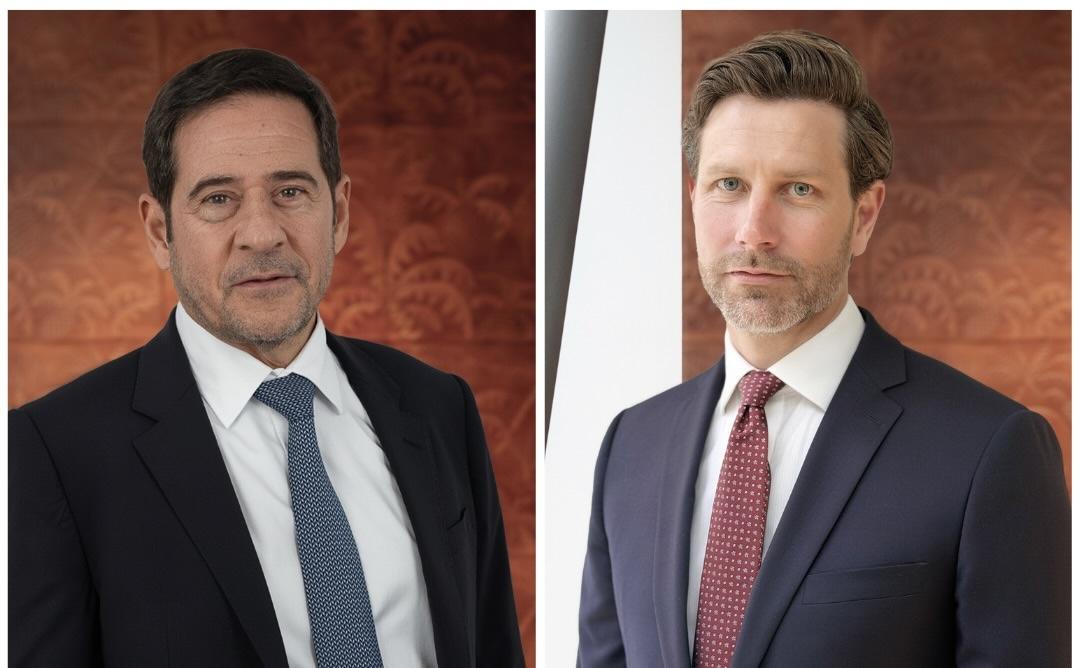
Christian Gattiker, Head of Research at Julius Baer, says: “Once again, currencies are taking centre stage — but it is the interaction between currencies, assets and behaviour that defines reality.”
Insights from the Lifestyle Survey
The Lifestyle Survey examines the lifestyle and spending habits of high-net-worth individuals (HNWIs) in Europe, Asia-Pacific, the Middle East, North America and Latin America. It also tracks changing consumption patterns and attitudes toward global uncertainty, sustainability and financial needs. In doing so, it provides a broader picture and delivers insights and data that significantly enrich the Lifestyle Index.
After twelve months marked by turbulence, this year’s survey shows that geopolitical uncertainty has become almost universally viewed as a concern. Across all regions, between 82% and 95% of respondents said they were concerned or very concerned about the geopolitical situation. This new global reality is influencing how HNWIs spend, plan their wealth and invest.
While respondents’ wealth continues to grow in every region, regional spending habits have crystallised into a two-speed luxury economy. Spending in Asia-Pacific and the Middle East is well above that in Europe, North America and Latin America, with Europe showing the sharpest contraction in spending. Experience-led spending remains a priority across all regions, driven by strong demand for luxury hospitality and high-end dining.
Healthcare spending has also surged and is one of only two categories, alongside leisure travel, to post growth in every region. This confirms the continued relevance of the “health is wealth” trend, with HNWIs increasingly viewing health and longevity as essential components of their overall wealth.
The survey also shows that HNWIs are adapting their spending behaviour in response to tariffs, currency fluctuations and global uncertainty. At least one in three respondents has already changed the geographic origin of some of their luxury purchases. More than half would now consider travelling abroad to buy luxury goods and bypass tariffs, while around one in four already does so.
Investment behaviour is changing too. The vast majority of respondents across all regions have adjusted their portfolios in response to rising macroeconomic and political risks. While traditional assets remain the foundation of portfolios, HNWIs are increasingly turning to defensive strategies, including precious metals, geographic diversification and higher cash holdings.
Investors in Asia-Pacific are leading the way in adaptation: 73% are strengthening diversification, including 53% increasing their exposure to precious metals and 46% broadening geographic coverage. Middle Eastern investors also maintain well-diversified, long-term portfolios, with a marked interest in alternative investments and collectibles.
Europe remains more conservative, favouring wealth preservation and portfolios heavily weighted toward funds, while North America shows the greatest consistency in financial attitudes and the strongest reported growth in assets. Latin America sits in the middle, with investors focusing on income generation and wealth preservation while also showing interest in future trends.
Overall, the “Global Wealth and Lifestyle Report 2026” shows that wealth today is no longer defined solely by financial assets. It encompasses lifestyle, security, health, mobility and intergenerational harmony.
To download Julius Baer’s “Global Wealth and Lifestyle Report 2026”, visit:
Find all our Press Releases