Cave de Genève

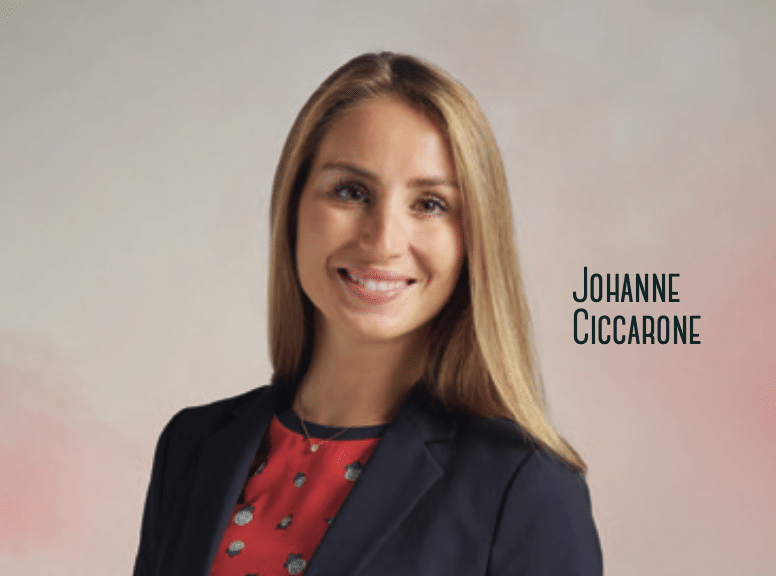
By *Céline Frey, CEO of Firstcaution

Working conditions are often discussed as a technical issue. We talk about hours, flexibility, office layout and remote work. All of these elements are important, of course. But they are not enough to define what truly makes for good working conditions because, at its core, this is not something that can simply be decreed; it is built every day through very concrete choices, driven by a strong conviction on the part of the leader and the entire management team.
The post-Covid era has fundamentally changed the way work is conceived. Remote work became a given, with many benefits in terms of flexibility and life balance. But it also raised a key question: what role should the office play? For me, the answer lies not in opposition, but in balance.
At Firstcaution, this reflection has evolved over time. For several years now, we have been adapting our workspaces, with particular attention paid to employees’ physical comfort. This involves very concrete choices: height-adjustable desks to allow people to alternate positions, work on lighting, ventilation and available space. We recently expanded our premises to avoid excessive density and rethought the layout with an architect, in order to create a more pleasant, more fluid environment that is better suited both to concentration and to exchanges. But reducing working conditions to their material dimension would be insufficient. You can offer the most beautiful offices and the most modern equipment, and still create a toxic environment. What makes the difference is the atmosphere, the values and the way relationships are organised on a day-to-day basis. Respect, trust, the quality of interactions, the ability to speak up, and yes, to laugh too because, indeed, one should be able to laugh in a company, are fundamental elements. They are not listed in any specifications, yet they profoundly shape the working experience.
This intangible dimension, often overlooked, is nevertheless decisive. We are increasingly seeing that employees leave less because of a job than because of an environment: a lack of recognition, poor communication, badly managed pressure or even an implicit culture that rewards urgency at the expense of meaning. Conversely, some organisations, sometimes more modest ones, manage to create genuine commitment by cultivating a sincere team spirit, active listening and a healthy relational framework. What is at stake here is fundamental: the quality of human connection becomes a competitive advantage. In a context where expectations are evolving and younger generations place greater importance on purpose, balance and quality of life at work, companies no longer have any choice but to integrate this dimension into their strategy. The goal is no longer simply to “work well together”, but to build an environment in which everyone can find their place, express themselves and contribute within a framework of trust because it is in this space, both demanding and supportive, that lasting engagement, creativity and, ultimately, performance are born.
However, none of this can exist without a strong conviction at the very top. If the issue of working conditions is not embodied by the CEO and management, it remains an intention with no real impact. Conversely, when it becomes a strategic priority, it naturally permeates the entire organisation. But this responsibility must not be understood as purely top-down because the best ideas do not come only from above. They also emerge from the field, from employees themselves.
This shift inevitably raises the question of cost. When discussing working conditions, many executives’ instinct is to think in financial terms. That perspective is understandable, but it remains incomplete because working conditions should not be seen as an isolated expense, but as a long-term strategic investment. And adopting a sustainable vision means precisely changing perspective. It means understanding that every effort made to improve the working environment helps strengthen the company’s stability, the quality of relationships and teams’ ability to perform over time. The return on investment is not always immediately visible, but it shows up in employee loyalty, in their day-to-day commitment and in the strength of corporate culture. In the long run, these are the elements that make the difference between an organisation that is forced to endure change and a company that is able to anticipate it and adapt to it with confidence.
In the end, working conditions are neither a luxury nor a constraint. They are about sustaining a momentum. A constant attentiveness. A genuine commitment. The companies that will succeed will not be those that invest the most, but those that have understood that a high-quality workplace rests above all on one choice: recognising that performance goes through people. But the success of such a shift also depends on shared responsibility because a company can create the framework, invest and raise awareness, but it cannot do everything. It is also up to each individual to take part in this dynamic, to contribute to this environment and to help sustain its quality.
*Céline Frey, CEO of Firstcaution, a Swiss company specialising in rent guarantee solutions
Find all our Inside articles