By Stéphane Gaspoz*
Young people are saving for retirement earlier and earlier, often through modest monthly contributions. Over time, their incomes rise and they will want to adjust their savings accordingly. But how should savings and cash flow be structured, and what should be done with an existing contract? The first step is to assess the client’s ongoing ability to pay, taking into account planned purchases in the short, medium and long term. It makes no sense to invest all one’s savings for the long term if a car needs to be bought in three years’ time. Drawing up a plan for future commitments and/or financial needs therefore makes it possible to invest in the best possible way the funds that will not be required in the short or medium term.
Starting early makes it possible to benefit from significant compounding. If the client already has a contract and wants to increase their savings, a detailed analysis of the existing policy is required. The remaining term and the contractual guarantees are decisive in making the right decision. For most contracts signed more than 10 years ago, the guarantees are such that it is advisable to keep them until maturity.
Admittedly, one could offer a more dynamic product, but guaranteeing a client that they would come out ahead by cancelling an existing contract is purely theoretical, and it is better not to venture into such speculation. This may therefore be the right time to put in place a high-yield complementary solution.

Across Europe, and for several years now, insurers have stopped offering products with capital guaranteed at contract maturity. Only the Swiss, known for their conservative approach, are still persisting with capital-guarantee products. So what should one choose?
The cost of the guarantee is high: around 8-20% of the annual premium, due to negative interest rates. The capital guaranteed at maturity represents around 70-80% of the premiums invested. The return potential is therefore limited, because the insurer has little room to invest the remaining savings portion. Thus, a 30-year-old man investing CHF 6,883 per year until age 65 would benefit from a guaranteed capital of CHF 200,224, having invested CHF 240,905. He could therefore expect to receive capital of CHF 278,777, taking into account surplus distributions and returns.
The term “high yield” is usually associated with the notion of “risk of loss”. Investing in such a product is recommended if the horizon is longer than 15 years. Retirement is a serious matter, and one must take into account the possibility of a stock market crash and the product’s costs! This type of product allows savings to be built up while benefiting from the cost-averaging effect to “smooth out” stock market fluctuations over time. The savings are invested in investment funds or other investment products, up to 100% in equities.
Thus, with an assumed average return of 6.3%, the projected capital would be CHF 647,308. A 30% stock market crash before retirement would still allow CHF 453,115 to be paid out. Under a low-return scenario of 3.2%, the result would be CHF 334,068, well above the guaranteed or projected capital in the first example. In addition, certain products make it possible to secure assets during the final years of the contract.
From the age of 50, a more traditional savings approach is generally preferable. Tax optimisation is what will generate the real return on this savings, with pillar 3a being deductible from taxable income.
The “Total Expense Ratio” refers to the total costs of an investment fund or a fund management strategy. These fees are generally between 0.18% and 1.5%. The impact of fees on final capital is significant: from CHF 50,000 to CHF 100,000 in the above example. To simplify, a gross performance of 4% with a TER of 1.5% would yield a net return of 2.5%. With a TER of 0.3%, the net return would be 3.7%, or almost 50% higher. This is therefore a decisive factor in choosing the desired product.
The importance of the pension and wealth specialist
A professional presentation of the solutions, with clear and precise explanations, is necessary to enable the client to broaden their perspective and move ahead with a high-yield product. Retirement is not the time to start investing in equities if one has never dared to do so before. That is the real challenge in my day-to-day work in the field.
Retirement is not the time to start investing in equities

* about the author
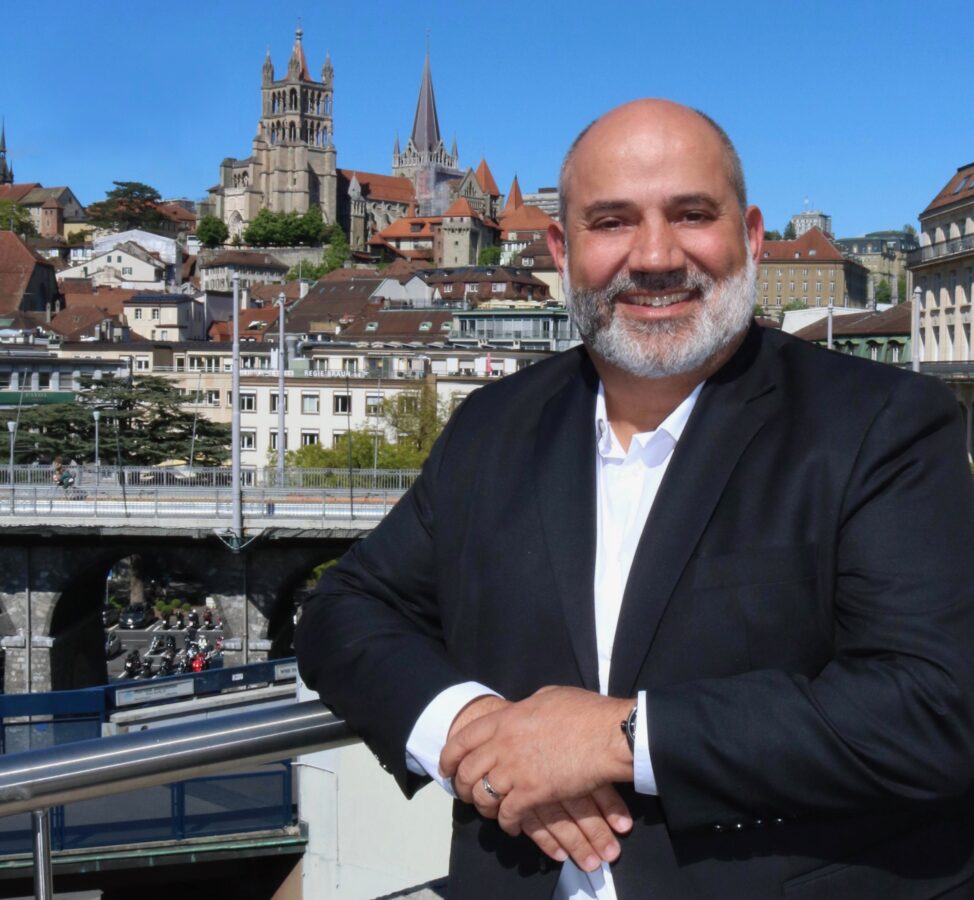
Stéphane Gaspoz, certified IAF financial adviser, Team Manager for FCG.
Find all our Inside articles here