Cave de Genève
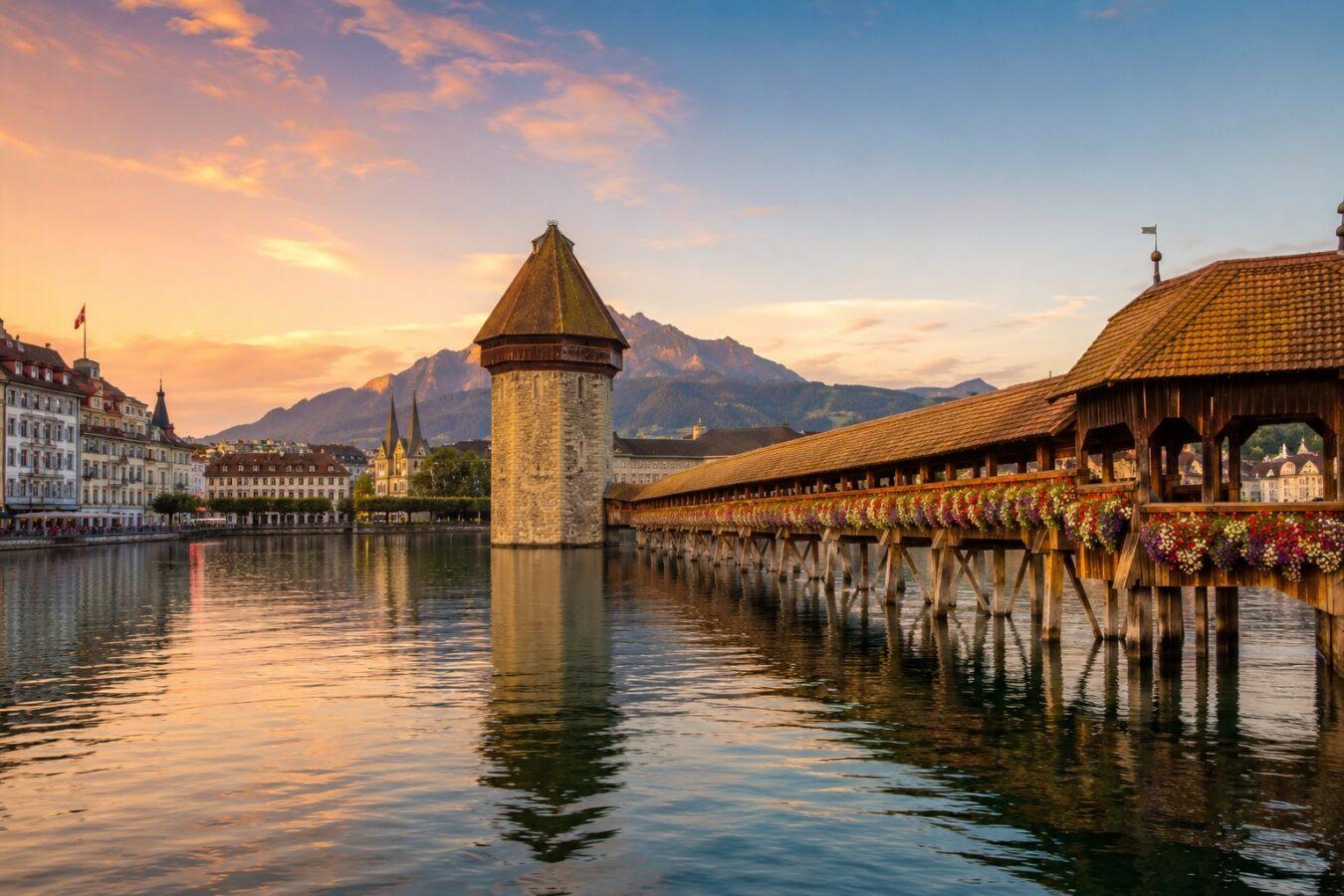
Swiss tourism entered 2026 at the height of its powers. Then war broke out in Iran, and the deck was reshuffled. Between absent visitors, disrupted air corridors and nearby markets stepping in, the Swiss sector is now facing a season of reckoning.
Only a few months ago, the numbers were dizzying for all the right reasons. For the third consecutive year, Swiss hospitality posted an all-time high: 43.9 million overnight stays in 2025, driven by foreign demand at record levels and a surging US clientele, with 3.7 million overnight stays, up 5.4%. The domestic market reached 21.1 million overnight stays. Switzerland Tourism communicated with the polished restraint of those who know they have won but prefer not to boast, speaking of “targeted management”, sustainability and a better distribution of flows, while sharpening its strategy for a world it believed to be stabilised. At the end of February 2026, war broke out. The joint US-Israeli strikes on Iran, within days, redrew the map of the skies: Dubai, Abu Dhabi and Doha — airport hubs that act as strategic nodes for tens of millions of travellers between Asia and Europe — found themselves at the centre of the turbulence. Airspace was closed or rerouted, jet fuel prices surged, mechanically making long-haul flights more expensive, and Asian travellers, faced with uncertain itineraries and difficult planning, began to cancel, postpone or give up altogether. What Switzerland suffered was not a direct blow, but something more insidious: a systemic shock transmitted through the invisible arteries of global air transport. In Geneva, the impact was felt quickly: since the end of February, cancellations of flights from the Middle East have triggered a 5% drop in passenger traffic at the airport, and hoteliers are forecasting an 8.5% contraction in summer overnight stays if the conflict drags on. Adrien Genier, director of Geneva Tourism & Conventions, did not mince his words: two major segments had been hit at once — UN agencies, already weakened by budget cuts in 2025, and now visitors from the Gulf and Southeast Asia. The city, which had built part of its visitor base on these international flows, is exposed as rarely before. For the country as a whole, KOF is forecasting a 1.6% decline in overnight stays for summer 2026, to 24.8 million — a modest drop in volume, but one that lays bare the structural fragility carefully masked by the post-Covid years of euphoria.
What this shock reveals is the geography of dependence. Swiss tourism has been built on two solid pillars — domestic travellers and nearby European markets — but also on a third, more fragile one: long-haul visitors whose routes run precisely through the hubs now under strain. And this clientele is not merely distant in kilometres; it is distant in resilience. A Japanese or Indian traveller who was due to transit via Dubai will postpone the trip. A German or French visitor takes the train. The difference is structural, not cyclical. Yet there is a quiet paradox. While the conflict empties some hotels, it fills others: unsettled by instability in the Gulf, major regional fortunes are turning to Switzerland — the ultimate safe haven — to move assets there and, in some cases, to relocate themselves. This ultra-luxury segment, insensitive to ticket prices and impervious to ordinary turbulence, will not reverse the trend, but it will soften its edges.
The real question raised by this episode is not the number of overnight stays lost this summer. It is the model itself. Even before the conflict erupted, Switzerland Tourism had begun a strategic shift away from volume and towards quality: longer stays, a more balanced spread across regions and seasons, and less dependence on peak periods. The crisis stemming from the Middle East does not invalidate that trajectory; it validates it, harshly. A destination that relies on depth of experience, the loyalty of nearby markets and the strength of its domestic offer is, by design, less exposed to the shocks of an airspace closed on the other side of the world. KOF is in fact expecting a slight rebound in 2027, driven by the gradual return of long-haul markets if uncertainty eases. Switzerland will get through this summer as a season of truth. Not a catastrophe, but a revealing test of its strengths and its blind spots.

Retrouvez l’ensemble de nos articles Inside