By *Ivan Reusse, Director, Leadership Development at Grant Alexander
For a long time in Switzerland, transition management was reduced to a single, narrow idea: temporary cover for an absent executive, a stopgap while a permanent hire was being finalised. That reading is now obsolete.
Transition management is not managerial temp work. It is a strategic discipline in its own right — one designed precisely for situations in which organisations no longer have the luxury of time.
In Germany, the Netherlands, the United Kingdom and France, this approach has long been embedded in governance practices. Companies call on transition managers when they need to transform an organisation rapidly, absorb hypergrowth, restructure a business unit, navigate a crisis or recover control of a situation that has begun to drift. These are not marginal scenarios. They are the defining challenges of modern business life.

The distinction from a conventional hire is fundamental. Where a standard recruitment process allows time for onboarding and acclimatisation, a transition manager must deliver impact from day one. That is precisely why transition managers are often overqualified relative to the formal scope of the role they occupy. And it is exactly that surplus of experience that makes the discipline so effective.
Consider a concrete example. A Swiss industrial company with nearly 500 employees abruptly loses its chief operating officer at the very moment several strategic clients are threatening to walk. Production delays accumulate, teams come under strain, middle managers retreat into silos and the executive committee gradually loses visibility over operational priorities. The board is alarmed. Shareholders demand answers. The organisation enters a turbulence zone.
The board appoints a transition manager with deep experience in complex industrial environments. In under three weeks, he secures critical operations, restores clear governance, reorganises production priorities, rebuilds the connection between teams and management, reassures key clients, introduces simple and legible steering indicators, and delivers concrete decision scenarios to the steering committee. Above all, he restores psychological stability across the organisation.
Because in situations of this kind, the real danger is never purely operational. It is also human: erosion of confidence, managerial fatigue, internal tension, paralysis in decision-making, the slow emergence of political manoeuvring. Left unaddressed, these dynamics can prove more destructive than the original crisis.
The transition manager’s role in this example was therefore not to hold the post. It was to regain control of a high-risk situation swiftly enough to allow governance to recover both clarity and the capacity to act. Not every assignment involves a crisis in the strict sense — but almost all of them respond to an urgent need rooted in complexity.
That, in essence, is transition management: the ability to enter complex environments without a period of comfort. The capacity to make consequential decisions on imperfect information. A form of leadership grounded in credibility, execution and demonstrable impact.
It demands a very specific set of capabilities:
The good news is that Switzerland is beginning to take note.
The pressure is real and structural. Organisations today face continuous transformation — digitalisation, restructuring, economic headwinds, talent shortages, shifting management models, compressed decision-making cycles. In this environment, the ability to deploy senior operational expertise immediately is no longer a luxury. It is a competitive advantage.
Transition management is not a fallback. It is a strategic response — one that comes into play precisely when time is scarce and execution cannot wait.
And in a world where everything is accelerating, that capacity to act on complexity without delay may prove to be one of the most valuable organisational assets of the years ahead.
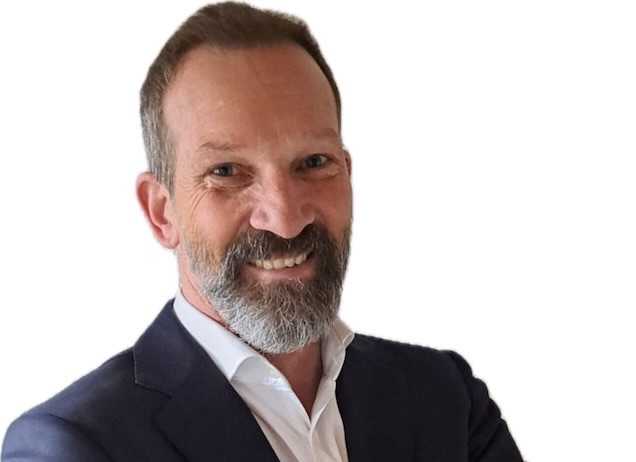
About the author: Trained as a sociologist and economist, Ivan Reusse has 18 years’ experience within multinational companies, where he led industrial operations first in the perfumery sector and then in pharmaceuticals, with significant expertise in the EMEA region. He subsequently moved into strategy consulting and is now Switzerland Director of the Leadership Development practice at Grant Alexander, a consulting and HR services group that supports companies in executive search and leadership development. Driven by a deep interest in the complexity of the human factor and the strategic dynamics of organisations, he works with executives on developing their leadership and transforming their structures.
Find all our Business Culture articles