THE SOLITUDE OF THE LEADER
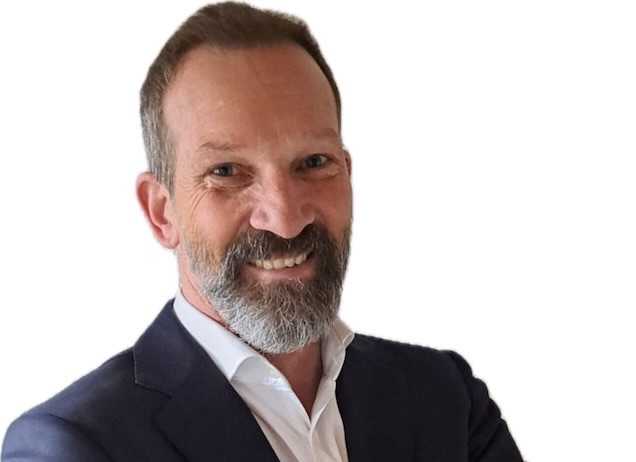
By *Ivan Reusse, Director of Leadership Development at Grant Alexander
We often talk about strategy, growth, and innovation. We talk much less about what leaders actually experience. And yet, one observation keeps coming up systematically, in very different contexts: leading an SME today has become an exercise in solitude. Not a visible solitude. A silent, diffuse, almost structural solitude.
The leader is everywhere. Constantly in demand, expected on all fronts, exposed to human, financial, technological and organizational issues that intertwine. They are the one who must decide when decisions are unclear, arbitrate when tensions rise, reassure when uncertainty sets in. And at the same time, they have less and less room to truly think. They act, they respond, they absorb. But they rarely take the time to step back.
A manufacturing executive recently confided in me: “I have a strong team, but I feel like I’m the only one who sees the real issues. I can’t say everything to my employees, I have to reassure them. I can’t say everything to my board, I have to stay in control. Result: I think alone… and I often decide alone.” This situation is far from isolated. Many leaders are surrounded, but very few are truly supported in their thinking. The entourage exists, but the space for confronting ideas is gradually disappearing.

This solitude is not only uncomfortable, it is risky. The decisions to be made are increasingly complex, cross-functional, and uncertain. Yet they still very often rest on a single person, within a constrained timeframe, with necessarily partial vision. The problem is not so much making a mistake. The real risk lies in the accumulation of decisions made under pressure, without sufficient perspective. Over time, clarity becomes blurred, decision fatigue sets in, and a form of strategic isolation appears.
In response, some leaders are evolving. Not by working more, nor by multiplying meetings. But by changing the way they operate. They deliberately recreate spaces to think. They accept not carrying reflection alone. They structure their ability to step back.
A leader in the services sector had adopted a simple habit: every week, he blocks out an hour and a half, without his phone, without operations, with a single goal: to clarify his key decisions. He was not looking for immediate answers, but to define the right questions, challenge his assumptions, and organize his trade-offs. Very quickly, the effects became visible: decisions that were more fully owned, less dispersion, and above all, reduced internal pressure.
In this logic, some leaders go one step further by surrounding themselves with a structuring outside perspective. Executive coaching, when used properly, plays a particular role here. Not as an additional space for advice, but as a space for bringing clarity. A place where the leader can lay down what they do not say anywhere else, confront their reasoning, test their options without political stakes. It is neither an executive committee nor a board of directors, but a rare space where one can both gain perspective and return to the essentials.
Leading today is no longer just about knowing how to decide. It also requires creating the conditions to decide well. That means accepting that some questions deserve to be asked aloud, challenged, sometimes even reformulated before being resolved. It also means recognizing that solitude, while inherent to the role, must not become the only space in which decisions are built.
So the issue is not to eliminate this solitude, but not to endure it passively. The strongest leaders are not those who have all the answers. They are often those who have managed to create, around them, the conditions to no longer be alone with their questions.
Find all our Inside articles
*About the author: With a background in sociology and economics, Ivan Reusse has 18 years of experience within multinational companies, where he led industrial operations in the fragrance and then pharmaceutical sectors, with recognized expertise in the EMEA region. He then moved into strategy consulting, and today holds the position of Swiss Director of the Leadership Development department at Grant Alexander, a consulting and HR services group that supports companies in direct search recruitment and leadership development. Driven by a deep passion for the complexity of the human factor and the strategic dynamics of organizations, he supports leaders in developing their leadership and transforming their structures.