Cave de Genève

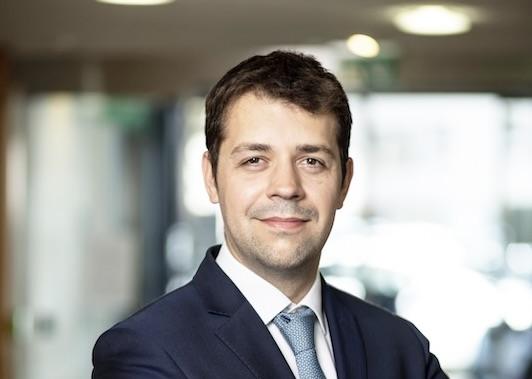
By Alessandro De Vita Zublena, Executive Coach and neuroscience expert

We talk a great deal about working conditions: working hours, tools, workload and organisational structure. And of course, these factors matter. But they are not the root cause of the dysfunctions companies are experiencing today. The reality is more demanding, and at times uncomfortable: working conditions are largely a reflection of management. The same environment can generate commitment or exhaustion, clarity or confusion — it all depends on how it is embodied, directed and experienced. When management is flawed, unstable or under pressure, it spreads those tensions throughout the organisation, whereas clear, aligned and controlled leadership profoundly improves the quality of day-to-day work.
In my practice, I have often supported executives convinced that their difficulties stemmed from a lack of resources, poor organisation or an overly demanding market. Yet, when working with them, another reality quickly emerges: it is not the environment that creates the pressure, but the way they respond to it. A leader who is mentally overloaded and constantly operating in emergency mode eventually imposes that pace on the entire organisation — teams adapt, speed up, lose clarity and, ultimately, efficiency. By contrast, I have seen profound transformations take place without any major structural change: a leader learns to slow down at the right moment, clarify decisions and manage their energy more effectively, and within a few weeks, teams become more autonomous, exchanges run more smoothly and pressure eases.
Working conditions may not have changed on the surface, but the way they are experienced has been deeply transformed. This is where a key point lies: working conditions are not defined solely by objective parameters; they are shaped by behaviours, habits and internal states. Burnout, for example, is almost never linked to a single event. It emerges as the result of an accumulation of micro-dysfunctions — a lack of clarity, an inability to set boundaries, an implicit culture of overload. These mechanisms take root in leadership and spread, often remaining below the surface, throughout the organisation.

Improving working conditions therefore means tracing the issue back to its source: the leader themselves, because when the leader changes, everything changes. This first requires identifying one’s own automatic patterns — recognising that one is influencing others at all times: every decision, every reaction, every emotional state has an impact. Even when it is not voiced, uncertainty shows through. Teams immediately sense whether a leader is aligned in what they say, or whether there is a gap between what they say, how they say it and the inner state behind it. A leader who is uncertain creates uncertainty; a leader who fails to step back sustains urgency. Conversely, a leader capable of regulating their internal state and embodying what they express becomes a stable reference point for their teams.
Deep transformations do not always require reorganisations rather, they require clearer leadership.
This work is not about theory, but about practice. It involves identifying one’s automatic patterns, assessing their consequences under pressure, interrupting them with the support of professionals, and putting new, concrete behaviours in place. In my practice, I see that simple changes can produce rapid results: learning to break a stress spiral, make decisions more clearly and create moments of perspective. When these adjustments are embodied by the leader, they immediately alter the collective dynamic.
It is also essential to rethink our relationship with performance. Too often, performance is associated with intensity, speed and the ability to do ever more. Yet this logic has its limits: the executives I support realise that what they lack is not skill, but balance. Sustainable results are not built on permanent tension, but on the ability to alternate commitment and recovery, demand and clarity. Investing in leadership development is therefore not a luxury; it is a strategic necessity — an aligned leader does not merely improve their own functioning, they raise the standard of the entire organisation. That is where true performance is now determined.
More info: mycoaching partners
Find all our Inside articles