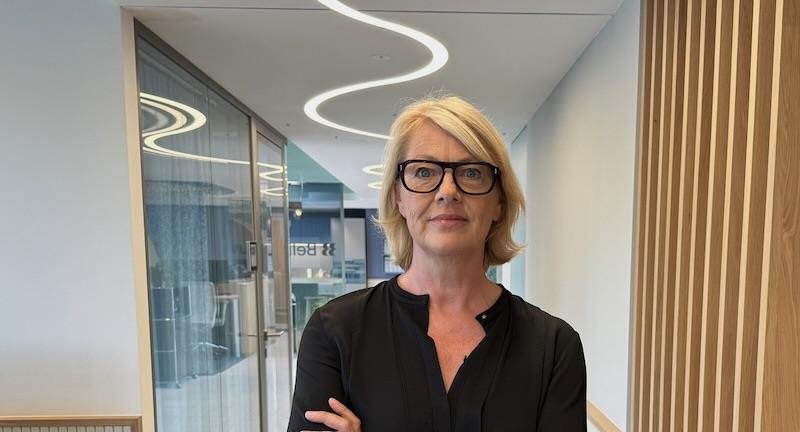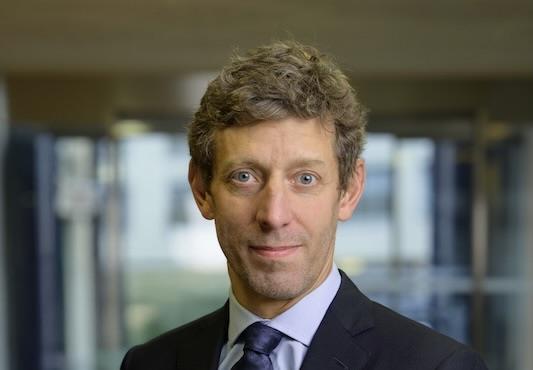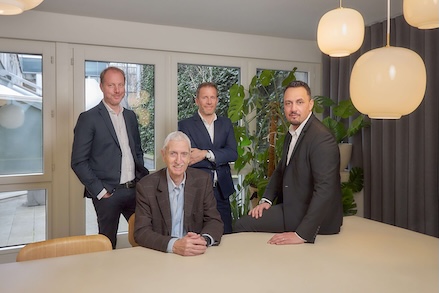
Photo Chevalley – Berney ©
By Thierry Dime
Passing on a business is far more than selling an asset: it means entrusting a legacy, values and, sometimes, a whole part of one’s life. That is the human journey André Chevalley, founder of the well-known local SME, experienced when he sold part of his company to its current management team, Jean-Baptiste Colin (CEO) and Damien Debureau (COO). This transition, successfully led by Berney Associés, perfectly illustrates how an internal succession can reconcile economic performance with the preservation of the identity of a group employing more than 300 people in French-speaking Switzerland.
Created several decades ago by André Chevalley, the group bearing his name has established itself as a key player in the Geneva and Vaud automotive markets. Official distributor of prestigious brands such as Mercedes and Bentley for many years, Groupe Chevalley has also diversified successfully, meeting the expectations of its loyal customers by distributing Hyundai, Mazda, Nissan and Volvo as well. Indeed, the company has built a solid reputation by combining service excellence, innovation and close customer relationships. But, as in many family-owned businesses, the founder’s retirement raised a crucial question: who would take over? “My daughter, Aurélie, quickly made it clear that she did not wish to take over the management of the company. We therefore had to find another path, one aligned with the group’s values and trajectory,” André Chevalley says.
At first, the natural solution considered by André Chevalley was a sale to an external group. Surrounded by his operational management team and supported by Berney Associés, he launched a structured and discreet sale process, targeting several potential buyers, mainly French groups active in automotive retail. The approach was rigorous: detailed documentation, due diligence, advanced negotiations… everything was put in place to secure a transfer to a strong and experienced player. Yet, as discussions progressed, a series of doubts emerged. The exchanges revealed a cultural mismatch, a vision sometimes too distant from local realities and, above all, a growing concern about the company’s future and that of its employees within a group that could, in time, restructure, absorb or dilute what makes Groupe Chevalley what it is. It was precisely this assessment that led stakeholders to question the original direction. “The main obstacle was cultural and human: selling to a foreign group would probably have diluted the DNA of a local SME deeply rooted in its territory,” explains Raphaël Leveau of Berney Associés. The risk was not merely economic; it was one of identity. Groupe Chevalley is not just a string of figures or a portfolio of brands: it embodies a culture, proximity to customers and a strong bond with its employees. Against this backdrop, a simple truth eventually emerged: what if the best successor was already inside the company?
Internal succession was by no means a foregone conclusion. Raphaël Leveau, who handled the file, recalls: “The biggest obstacle was psychological. Selling externally meant risking the loss of the company’s DNA.” The firm first supported negotiations with potential buyers before pivoting to an unprecedented solution: a management buy-out (MBO). It was a bold financial structure, combining bank financing (LBO) and the buyers’ own contribution, made possible by the company’s strength and the banks’ confidence in the two executives. “The banks looked at our ability to generate cash flow, but also at our legitimacy in taking over the group,” Damien explains. It was a successful bet, thanks to their knowledge of the business and the unwavering support of André Chevalley, who remained a co-shareholder to ensure a smooth transition at shareholder level.
As operational directors responsible for the group’s management for many years, Jean-Baptiste Colin and Damien Debureau know the business inside out. Better still, they already embody it on a day-to-day basis. They were the ones who came up with the decisive proposal: to take over the company through a management buy-out (MBO). “As soon as André Chevalley mentioned a possible sale, I thought: I do not want to see this group end up in other hands. Damien and I immediately knew we had to put forward an alternative that seemed more relevant to us,” says Jean-Baptiste Colin. The challenge was immense: they had to convince the founder and, above all, secure the funding needed for a sizeable financial transaction. “We relied on our knowledge of the market and the group, on the strong results of recent years, on the confidence of our banking partners and the brands we represent. It was by no means guaranteed, but resilience paid off,” adds Damien Debureau.
Structured with the support of Berney Associés, the takeover was built around a mixed financing package, combining bank debt (LBO), vendor financing and the founder’s partial retention in the share capital. A pragmatic and reassuring formula. “This type of transaction is very healthy, because those taking over are already in charge. There is no break in continuity. It is a model that should inspire many other companies,” says Raphaël Leveau. “We had to prove that our business plan was not a dream, but a reality,” Jean-Baptiste stresses. Their achievements in 2023 (2nd largest Swiss group at Mercedes) and 2024 (1st among the large Swiss groups) ultimately dispelled any remaining doubts.
This entrepreneurial journey perfectly illustrates the drivers of a successful succession. Faced with obstacles and uncertainty, the two buyers showed remarkable resilience, never abandoning their project despite early setbacks. Their operational credibility and the trust built over many years within the company played a decisive role in convincing financial partners and reassuring stakeholders. This foundation of credibility, coupled with a clear and shared vision, enabled them to move through every stage with determination. But beyond perseverance, this success also owed much to a favourable alignment of factors: the seller’s support, continuity with suppliers and the confidence granted by the banks were all key elements they managed to seize at the right moment.
Today, Groupe Chevalley is enjoying strong momentum: results are on track, debt is being repaid faster than expected and, above all, the team of 330 employees has been preserved. “We have kept our culture, and that is our greatest pride,” says Damien, one of the buyers, noting that the success of an MBO is measured not only in numbers, but also in the human values preserved along the way.
The story of André Chevalley, Jean-Baptiste Colin and Damien Debureau is much more than a financial success story. It is a tribute to loyalty, boldness and entrepreneurial passion. It reminds us that a successful succession is measured not only in francs, but in lives preserved, jobs saved and values passed on. To leaders uncertain about the future of their company, Raphaël Leveau offers this advice: “The solution is not always an external sale. Sometimes, the best buyers are already in your ranks.” A fine lesson in humility and foresight to reflect upon.
In a Management Buy-Out (MBO), or a company buyout by its employees, costly mistakes often stem from a lack of anticipation or strategic preparation. To avoid them, it is essential to plan sufficiently far ahead — ideally five to ten years before the transfer. This foresight makes it possible to optimise tax, wealth and financial aspects, notably through intelligent structuring of income (dividends, pension buy-backs, mechanisms linked to the sale price, etc.). Regular business valuation, legal and tax compliance, and the gradual preparation of the buyers are also key steps in securing the transaction.
A Management Buy-Out (MBO), or company buyout by its employees, presents several recurring pitfalls that can weaken the success of the transaction. One of the first challenges lies in a sale price that is sometimes lower than what an external buyer would pay, due to a “discount” granted out of loyalty to employees. Added to this are financing challenges, since employees generally do not have sufficient capital. Vendor financing can partially bridge this gap, but it may create a prolonged interdependence between seller and buyer, a potential source of tension. Moreover, personal proximity between the parties, while sometimes beneficial, can make negotiations harder by introducing an excessive emotional burden. It is therefore strongly recommended to call on external advisers to ensure a neutral and professional framework.
In a Management Buy-Out (MBO), the presence of an independent expert is essential to secure every stage of the succession process. An experienced specialist can act as a neutral third party, facilitating communication between the seller and the buyers, particularly where pre-existing personal or hierarchical relationships may undermine the transparency of discussions. They help structure the transaction, assess the business objectively, negotiate the terms of the takeover, and put in place and negotiate the most suitable tailor-made financing solutions, especially in contexts where the buyers’ own resources are limited. With this 360-degree view, the succession expert ensures that the transaction is not limited to a simple change in ownership, but is part of a logic of continuity, sustainable performance and value creation for all stakeholders.
Find all our articles Business Management