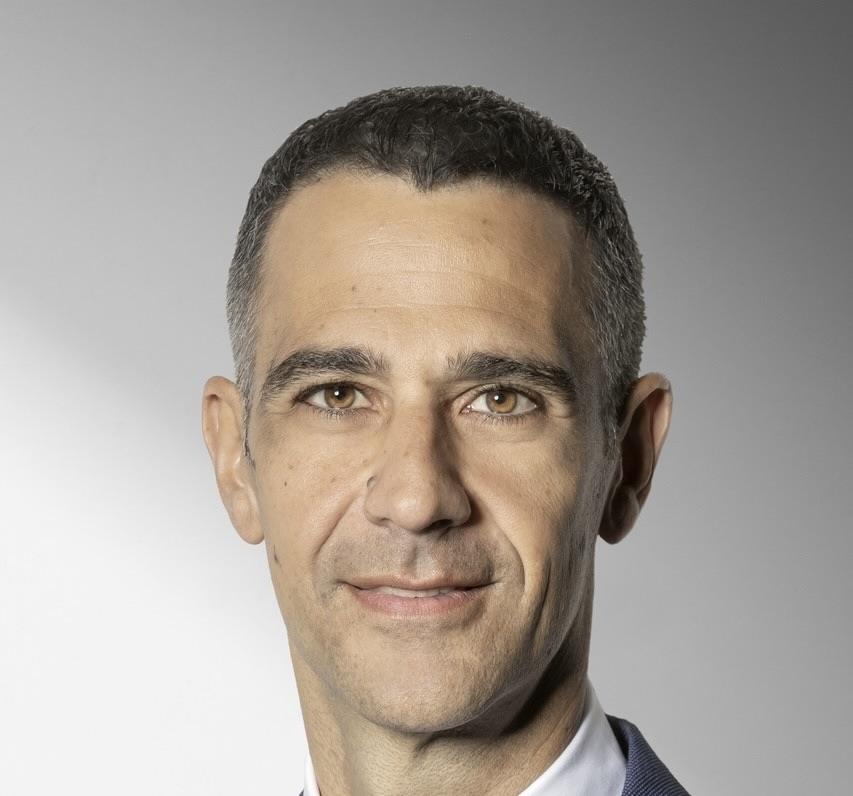
Photo Massimiliano Marini Massimiliano Marini © REYL
By Massimiliano Marini, Chief Risk Officer at Reyl Intesa Sanpaolo
Today’s world is more economically interconnected than ever, while at the same time experiencing significant geopolitical fragmentation. In this context, geopolitical risks are among the top three challenges banks will have to confront in the years ahead.
Historically, geopolitical risk has often been defined rather vaguely as the full range of additional challenges and opportunities associated with investing in foreign markets, particularly from the perspective of US investors. In my view, this definition is too narrow, as it fails to account for the fact that even purely domestic portfolios can be heavily affected by global political and economic upheaval.

A more precise definition was proposed by Dario Caldara and Matteo Iacoviello, who describe geopolitical risk as the threat, realisation and escalation of adverse events such as wars, terrorism and political tensions that disrupt international relations. I fully subscribe to this broader definition, as it encompasses not only the events themselves, but also the anticipation of these risks, which influence investment decisions, market behaviour and global macro-financial cycles.
Geopolitical instability has once again become a major driver of market volatility, shaping investment strategies and corporate decisions worldwide. At a time marked by fragmented global governance, shifting alliances and rising protectionism, understanding these dynamics has become essential for risk managers and investors alike.
The current geopolitical environment is becoming increasingly unpredictable. Geopolitical threats and actions are shaping markets and continue to play a decisive role in wealth management, guiding investment decisions around the world.
Switzerland’s financial centre is facing major challenges amid growing global uncertainty. With the conflicts in Ukraine and the Middle East continuing, tensions between the United States and China intensifying, cyber threats mounting and tariff disputes returning, Switzerland’s long-standing political and economic stability is being put to the test. For the Swiss financial sector, this environment creates both new risks and opportunities to strengthen its reputation as a safe haven for investors and companies.
Geopolitical risks and wealth management are closely intertwined, with global events shaping investment landscapes. Successful wealth managers stay ahead by continuously monitoring political and economic trends, adapting to regulatory changes and relying on data-driven strategies to protect their clients’ assets.
Ongoing conflicts in Eastern Europe and the Middle East continue to disrupt energy supply chains and commodity markets. The risk of escalation, whether through direct state action or proxy wars, remains a major potential tail risk for global markets.
The decoupling of major economies, particularly between the United States and China, is reshaping global trade flows. Export controls on technologies and critical minerals are creating supply chain vulnerabilities, while regional trade blocs are gaining in importance.
Elections in major economies, the rise of populist movements and fiscal strains are heightening uncertainty. The unpredictability of public policy, from sanctions to capital controls, can trigger sudden dislocations.
Geopolitical risks can materialise as credit, market, operational and funding risks. Geopolitical shocks can affect banks and their operating environment through several channels. A geopolitical shock can affect banks via three main factors: financial markets, the real economy, and safety and security.
Geopolitical risks can feed through to banks via credit risk, liquidity and funding risk, market risk, business model risk, operational risk and governance. Banks are therefore also required to take geopolitical risks into account when identifying and managing all their risks.
In my view, the ability to manage these risks proactively will be a key differentiator between leading wealth and asset managers and the rest, as clients increasingly demand data-driven expertise to protect their portfolios. Consequently, wealth and asset managers that successfully integrate geopolitical analysis into their investment frameworks will be better positioned to protect and grow their clients’ assets, while reinforcing their reputation in an unpredictable environment.
Find all our Economy articles