Cave de Genève
By Christian Rom, manager of the DNB Fund Renewable Energy

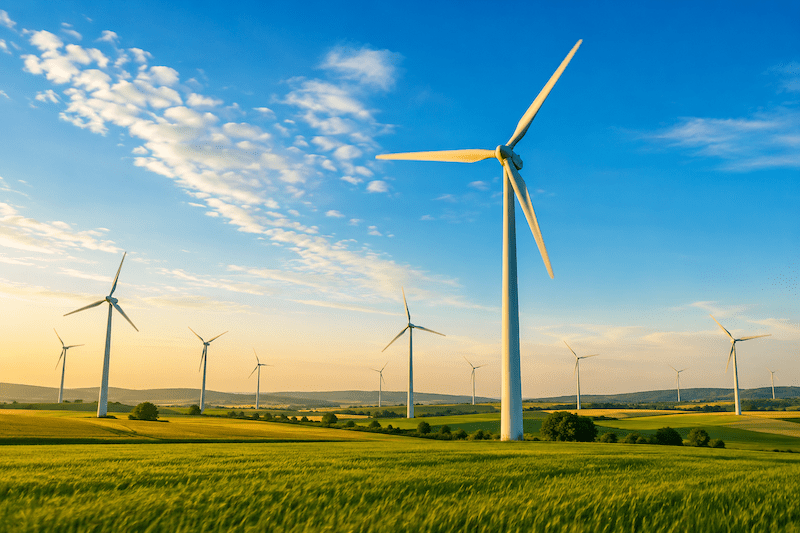
The energy shock has reignited tensions around inflation and interest-rate expectations. Even so, this backdrop does not call into question the appeal of renewable energy. Heightened attention to energy security, together with the sector’s enduring competitiveness, continues to argue in its favour.
We see opportunities in particular among engineering software providers. The rise of AI has weighed on software valuations, but these solutions benefit from strong customer loyalty: they are used in specialised environments, rely on proprietary data and must meet exacting standards of reliability and security. They also account for only a limited share of industrial users’ costs.
We recently invested in PTC Inc. and Bentley Systems, two engineering software providers that we believe are well positioned. We also see potential in heat pumps, building materials and smart grids, through NIBE, Kingspan, Beijer Ref and Itron.

The rise of AI is already translating into a sharp increase in computing needs, and therefore in electricity demand, especially for data centres. Against this backdrop, the lead time required to secure power supply has become one of the main constraints on their expansion. Off-grid mobile gas engines, combined with storage capacity, are therefore among the preferred solutions, while gas turbine order books are now full through the end of the decade.
This situation highlights the mounting pressure on ageing electricity grids. They must absorb the proliferation of grid-connection requests, changing consumption patterns, the growing penetration of solar and wind — whose output varies with weather conditions — as well as the return of demand growth.
Investment needs in power infrastructure are therefore expected to rise sharply over the next decade, even if financing will remain a sensitive issue.
We hold several names exposed to this theme: Monolithic Power and onsemi in semiconductors, Amphenol in sensors and connectors, Prysmian in cables, Schneider Electric in electrical equipment, Ørsted and EDPR in generation, as well as CATL in battery storage.
Falling prices are opening new opportunities for solar, storage, corporate energy solutions and emerging flexibility models. By contrast, segments with low barriers to entry are facing sharper margin pressure.
According to Volta, BESS installations rose by 79% in 2025, and 40% of global cumulative capacity was installed that year alone. Conversely, overcapacity in solar modules has driven prices sharply lower. Providers of differentiated technology and services are therefore likely to be best positioned.
Finally, fuel cells and certain electrical equipment suppliers in Taiwan and South Korea have surged on the back of the AI and data-centre boom. We remain cautious on these segments, however, as we consider them riskier and more cyclical, with competitive advantages that appear less clearly established.
China represents both an economic advantage and a strategic risk. Its scale lowers costs for developers and consumers, but it also creates trade and logistics dependencies, as well as the risk of overcapacity.
BYD and CATL stand out for their innovation in electric vehicles and batteries, their integrated industrial processes and their rapidly improving product platforms. Both companies are part of our portfolio.
About DNB AM
DNB Asset Management is a leading Nordic asset manager offering products in Nordic asset classes and selected themes. DNB Asset Management is 100% owned by DNB ASA, which is listed on the Oslo Stock Exchange and is one of the largest Nordic financial groups.
Find all our Strategic Case articles