By Anthony Lebrun
Many SMEs begin with a gesture, an intuition, a particular mastery: that of a founder who, before creating a business structure, already embodies a skill set. This starting point is far from incidental. It shapes, over the long term, the way the company grows, recruits, innovates and positions itself in its market. Where large organisations sometimes build expertise through the accumulation of capabilities and layers of hierarchy, an SME is born out of an initial expertise. That origin leaves a lasting mark on its culture. It sets a standard of excellence, a relationship to the craft and a distinctive way of approaching clients’ problems, even before the first contract is signed.
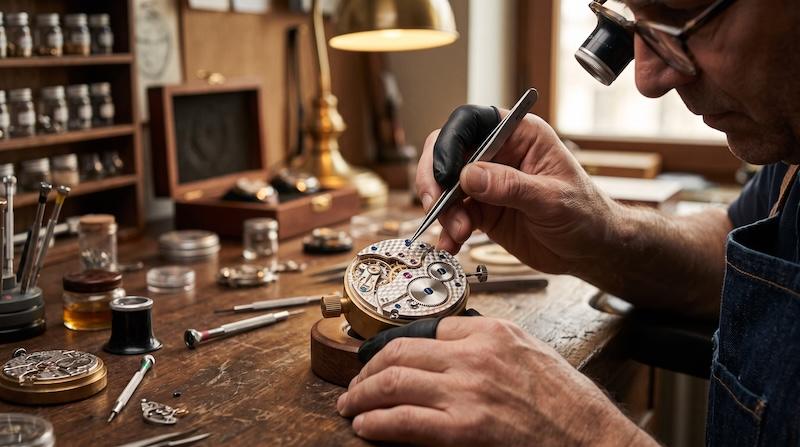
In many cases, this expertise is rooted in a long personal journey, often shaped by experience inside large organisations and the frustrations they create. A watchmaker who spent fifteen years with a leading name in the industry before opening his own workshop. An IT specialist in industrial cybersecurity who, tired of group-level trade-offs and vague priorities, decides to offer a surgical approach to manufacturing SMEs overlooked by the giant consulting firms. A businesswoman who, after running procurement for a major retailer, launches a bespoke structure to support SMEs struggling with the growing complexity of global supply chains. In each of these cases, expertise comes before the company. It is the condition for its existence, and it stands out for an almost artisanal dimension in the noblest sense of the word: refined, embodied knowledge that goes beyond written procedures and is expressed in the ability to assess a situation, adapt an answer and anticipate what the client has not yet articulated.
This phenomenon is structurally different from what happens in large organisations. In a multinational group, expertise is fragmented, distributed across teams and often diluted in processes designed to reduce dependence on any one individual. It belongs to the company, but it is not its face. In an SME, by contrast, competence is embodied. It has a first name, sometimes a family name that merges with the brand itself. It is visible in the way a difficult client is received, in how an out-of-standard order is handled, in the ability to refuse a contract that does not match what the company truly knows how to do, because reputation matters more than this quarter’s revenue. This embodiment is both the SME’s greatest strength and its structural vulnerability. It is a strength because it generates authenticity, responsiveness and a client relationship that large groups cannot fake. It is a vulnerability because it makes the company dependent on one individual, a small team, sometimes even a single guiding mind whose absence weakens the entire edifice.
The SMEs that have managed to turn this fragility into lasting resilience are those that have understood that expertise is not something one owns: it must be deliberately cultivated, rigorously documented, generously shared and, above all, passed on before it is too late.
Transmission may be the ultimate test of an expert SME’s maturity. As long as competence rests with one person, it is precious but as fragile as crystal. Once it becomes a shared practice, a common language, a way of solving problems that every member of the team has internalised to the point of applying it without instructions, expertise truly becomes identity-defining. It ceases to belong to an individual and becomes part of an entire corporate culture. It is in that culture, not in patents or pricing, that a company’s true DNA resides. SMEs that have understood this — and there are many in French-speaking Switzerland, in precision craftsmanship, specialised consulting, engineering and business services — know that they do not sell products or services like everyone else. They sell a way of approaching problems, a discipline in execution, and years of accumulated know-how that competitors cannot simply replicate by hiring staff away or by copying a commercial offer.
This self-awareness is not arrogance: it is an SME’s first strategic asset. Before talking about positioning, sales strategy or brand recognition, one must answer a question that seems simple but is demanding in practice: what can we do better than anyone else, and why us rather than someone else? The answer is not a slogan to place on a website. It is a deep operational conviction that guides every daily decision, every hire, every refusal of a mismatched contract, every investment in skills development. It determines who one wants to resemble in five years’ time. An SME unable to answer that question clearly is still looking for its DNA. It exists, certainly, but it has not yet decided what it wants to be. And in a competitive environment where large groups have vastly greater resources, an SME that does not know what makes it irreplaceable condemns itself to competing on price, a terrain on which it will always lose.
The real question, then, is not how to grow, but why one exists. The SMEs that have answered it honestly are the ones clients never leave.
Find all our articles Decryption