Photo © Atlantic Airways
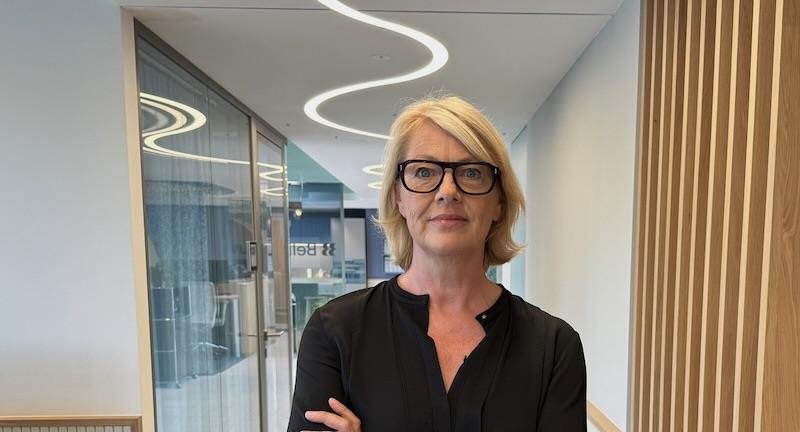
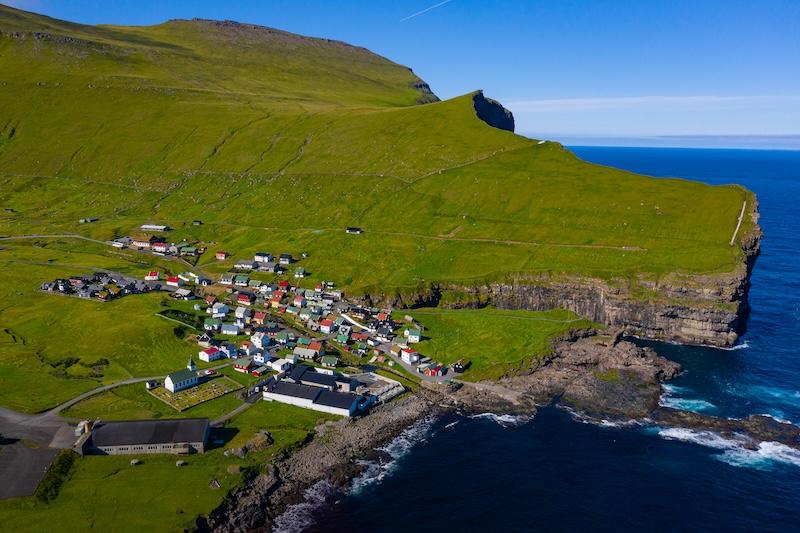
The summer of 2026 will go down in the record books. For many holidaymakers, finding somewhere cool came before anything else. The “coolcation” trend – holidays in cooler climates – has accelerated sharply in response to something beyond anyone’s control: climate change. Once a destination for insiders, the Faroe Islands are now riding a powerful wave of interest. Backed by its foremost ambassador, Atlantic Airways, the North Atlantic archipelago intends to stay the course and preserve its delicate balance between openness and protection. We spoke with the airline’s CEO, Jóhanna á Bergi, to take the temperature.
By Sabah Kaddouri
This autumn, you are turning your attention to Italy, with ticket sales opening for a Milan–Vágar route. Europe lies at the heart of your seasonal business model. What is your initial assessment of the summer season?

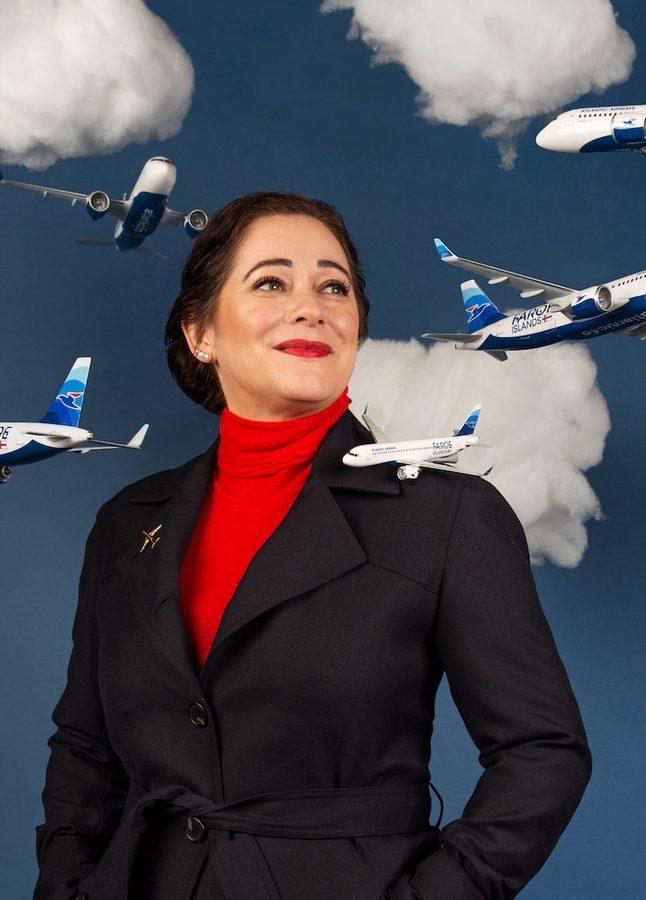
Jóhanna á Bergi: Our assessment of the summer season is very positive and in line with expectations. July set a new passenger record, with more than 60,000 travellers on our scheduled services, plus more than 20,000 passengers on our charter flights. Our Paris service is growing steadily: it is attracting an increasing number of international tourists, whereas it was previously used mainly by Faroese travellers.
Next year, we will launch a new route between Vágar and Milan, our twelfth direct connection from the Faroe Islands. As with several of our other destinations, Milan will be served seasonally during the peak travel period. We are already seeing a significant number of passengers travelling to the Faroe Islands from Italy, and we believe Milan has the potential to become a strong market for us, both for inbound tourism and for Faroese travellers heading to Italy.
Summer 2026 was the hottest on record, and climate is redrawing the tourism map more than ever. Are the Faroe Islands – which have always struck a balance between openness and preservation – ready for exponential growth in tourism?
The “coolcation” trend is gaining momentum: we are seeing growing interest from tourists looking to escape the summer heat of Central Europe for destinations with a cooler climate. We work closely with tourism stakeholders to support the sustainable development of this segment across the archipelago, while constantly monitoring passenger numbers and demand in our various markets. It should also be noted that the number of flights to the Faroe Islands, as well as accommodation capacity, remains relatively limited. These factors naturally constrain visitor growth and help ensure that tourism does not exceed the destination’s carrying capacity.
Have you seen any unexpected new markets emerge?
We are seeing an increase in international passengers on our direct routes, and that is where much of this growth, which is exceeding our forecasts, comes from. Our relatively recent services to Paris and London, as well as the new Milan route launching next year, reflect this trend. Overall, rising demand from international travellers strengthens the potential for inbound tourism in the Faroe Islands.
By contrast, the destination remains largely off the radar in winter, unlike its Nordic neighbours. Is that deliberate?
There is no doubt that we could attract more visitors during the shoulder and low seasons, which would also make tourism more economically sustainable for us. However, travel habits are hard to change, and most people still tend to travel in the summer months. As I mentioned, we are working closely with various stakeholders to attract more visitors outside the peak season, particularly in the MICE segment.
A very good example took place in May, when the University of the Faroe Islands hosted a major international conference with more than 1,000 participants in the new Tjarnir multipurpose arena. Working with the university, we were able to secure sufficient capacity on our scheduled flights for delegates travelling from around the world. Events like this show how we can boost tourism outside the summer high season and make better use of our existing capacity throughout the year.
Air transport is as vulnerable to geopolitics as it is to weather. What impact has the spike in jet fuel prices linked to the conflict in the Middle East had?
Like most airlines, Atlantic Airways has been affected by the current geopolitical climate, particularly the conflict in the Middle East, which has driven fuel prices up significantly in recent months.
Atlantic Airways still does not offer a business class. Are you still not planning to segment your product into low-cost and premium offerings?
At present, we do not intend to introduce a premium cabin or divide the cabin into different classes. However, we do offer a degree of product segmentation through our fare types. Just last week, we introduced a new fare structure, including a new Light fare, which includes hand luggage only, while our higher fare categories offer additional benefits and greater flexibility, such as lounge access and Fast Track. Passengers can thus choose the product that best suits their needs and preferences, but as far as the onboard experience and cabin configuration are concerned, we have no plans to introduce separate classes.
You have invested heavily in training excellence, and you are proud of it. Is the goal to make Atlantic Airways Aviation Academy a global champion by winning market share in training?
Our ambition is to establish Atlantic Airways Aviation Academy as a leading international player in aviation training. We have made substantial investments to create a modern training environment in the Faroe Islands, with Level D full-flight simulators (FFS) for the A320 and the AW139, highly qualified instructors and specialised training capabilities. These facilities include our mixed-reality hoist simulator, which we regard as the world’s most advanced hoist-training solution, enabling highly realistic training for complex search and rescue (SAR) and hoist operations. The next step is to make the most of this investment by attracting more operators and clients from outside our home market.
For us, however, the issue goes beyond market share. It is about building a strong reputation for high-quality, flexible, skills-focused training. If we can combine this teaching and operational excellence with competitive wet-lease and dry-lease simulator solutions, we are convinced that Atlantic Airways Aviation Academy can establish itself as a key player in the international aviation training market.
Find all our Interviews