Cave de Genève

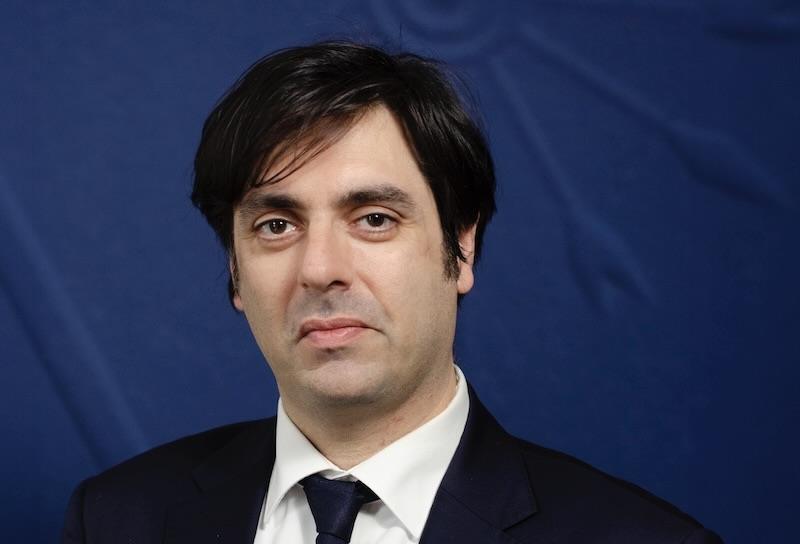
Photo: Alexis Bienvenu © LFDE
By Alexis Bienvenu, Portfolio Manager, La Financière de l’Échiquier (LFDE)
The coming months will be pivotal for the European Central Bank.
The first major milestone is the appointment of a successor to Christine Lagarde, who will step down as president on 7 February 2027. Her successor could be named at the European summit on 26–27 November or, failing that, at the one on 17–18 December.

The two declared candidates are Pablo Hernández de Cos and Klaas Knot, and the choice between them is far from neutral. The former governor of the Bank of Spain has a markedly technical, consensus-building profile. Deeply involved in international financial institutions, he now heads the Bank for International Settlements, often dubbed the “central bank for central banks”. He has thus worked at the highest level to forge agreement on major financial issues. Regarded as more attentive to the risks facing growth in his approach to monetary policy, he could win the backing of some of the euro area’s southern members.
Klaas Knot, who led the Dutch central bank for fourteen years, also brings extensive international experience, notably as chair of the Financial Stability Board. His candidacy, however, looks less consensual. Long seen as a standard-bearer of fiscal rectitude among the northern countries, he could struggle to win support from the most heavily indebted member states. Recently, though, he has softened his stance, endorsing the creation of common financial instruments in the event of a crisis, subject to strict conditions. This shift could help move his image closer to the centre.
Either way, a balance will have to be struck between the different camps. If the former Spanish governor is chosen, the so-called “frugal” countries may seek guarantees of orthodoxy when other key posts within the institution are filled — notably that of the next chief economist — and vice versa.
Such a compromise will be essential to meeting the euro area’s immediate challenge: bringing inflation sustainably back to around 2% without unduly holding back growth. The ECB expects inflation to remain above target, averaging 3.0% in 2026 and 2.5% in 2027, while growth stays subdued at 0.9% and 1.4% respectively. Calibrating monetary policy against such a weak growth backdrop will be particularly delicate.
The search for balance within the institution will also be crucial in tackling another challenge looming on the horizon: French borrowing costs. The outcome of France’s forthcoming presidential election — and possibly of the legislative elections that may follow — will go some way towards determining the country’s fiscal credibility. Should French yields come under heavy pressure, the ECB may judge that this threatens the transmission of its monetary policy. The question would then arise of activating the Transmission Protection Instrument (TPI), created under Christine Lagarde’s presidency. Yet assessing whether the conditions for its activation have been met could reopen divisions between the different camps on the Governing Council — divisions that would ultimately have to be reconciled.
Finally, the next president will have to take up several projects left unfinished by Christine Lagarde. Four stand out. The first is the gradual reduction of the ECB’s balance sheet, swollen by fifteen years of quantitative easing. This must be achieved without placing undue strain on financing conditions across the euro area.
The second concerns the integration of climate risk into monetary policy. Since June 2026, the ECB has applied a climate factor to certain bonds pledged by banks as collateral. The mechanism is due to be extended, by the end of 2027 at the earliest, to certain loans to non-financial corporations that are pledged as collateral with the ECB. The precise implementation details will be decided by the next Governing Council, under the influence of its new president.
The third is the digital euro, with full-scale testing scheduled for the second half of 2027, ahead of a possible first issuance, subject to certain conditions, in 2029.
Lastly, over the longer term, the next president will need to keep supporting the deepening of the Savings and Investments Union and the Banking Union, two projects Christine Lagarde has actively championed. Their progress depends first and foremost on European legislators, but it is also key to the effectiveness of monetary transmission and to Europe’s ability to channel its savings into financing its growth.
With sensitive issues piling up — not to mention crises yet to emerge — the choice of the next ECB president will resonate far beyond Frankfurt. The strength of Europe’s response to future crises will depend in part on its ability to forge difficult compromises. Let us hope the summit makes the right choice.
Disclaimer: The data and opinions in this article, as well as any sectors and companies mentioned, are provided for information purposes only. They do not constitute an offer to buy or sell securities, nor investment advice or financial analysis. The opinions expressed are those of the author and in no way engage the responsibility of LFDE. Past performance is not a reliable indicator of future results.
Find all our articles Strategic Case