Cave de Genève

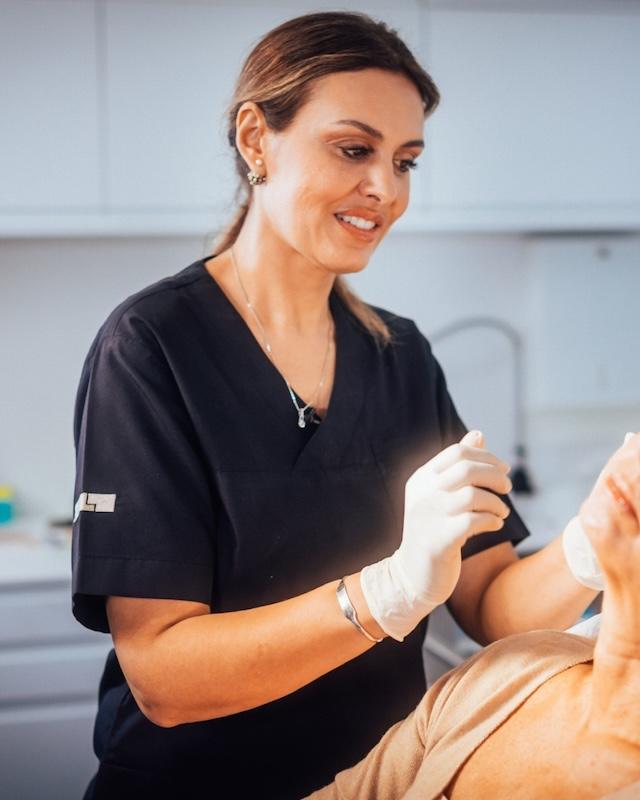
Photo Dr Sarah Fadli ©
This is the reality for millions of people, carried in silence by women who are insufficiently informed about this period heralding the arrival of a new cycle. Perimenopause is not a disease, nor a battle against age: it is a stage of life that deserves to be understood, supported and experienced as serenely as possible. Le Monde Economique sought the insights of Dr Sarah Fadli, who works with an international patient base seeking compassionate listening and tailored expert care. A two-part interview.
By Sabah Kaddouri
First, let’s define perimenopause and menopause to understand the difference.

Dr Sarah Fadli : It’s a question almost all my patients ask me, often somewhat confused. Perimenopause is the transitional period that begins well before menopause itself, sometimes several years in advance. The ovaries do not simply stop overnight: their activity becomes irregular, with hormones rising and falling rather than declining in a gradual, linear way. That is why symptoms can appear, disappear and then return, which is often very destabilising for the women experiencing them. You can very well still have your periods and already feel the effects of this transition.
Menopause, by contrast, is a precise point in time: the definitive end of menstruation, confirmed after twelve months without any cycle. In both Switzerland and France, it occurs on average around the age of 51.
What are the first, sometimes subtle, signs?
Dr Sarah Fadli : The first sign is usually a change in the cycle: it shortens, then spaces out, and becomes unpredictable. Sleep becomes lighter, night sweats appear, a kind of fatigue sets in that feels unlike any other, and mood becomes more fragile. Hot flushes, contrary to what is often believed, are not always the first signal. Some women first notice skin that feels tight, more intimate dryness, or a silhouette that changes without them having altered their habits.
What I always tell my patients is this: do not attribute everything to stress, but do not explain everything by hormones either. Persistent fatigue, a cycle that goes off track — these deserve close attention.
Why does fat seem to “move” to the abdomen?
Dr Sarah Fadli : This is a question I hear very regularly, often with a great deal of frustration. In reality, fat does not migrate from the hips: what changes is the way the body stores it. The combined drop in oestrogen and progesterone alters fat distribution: the body shifts from a gynoid shape (hips, thighs) to an android shape (more concentrated around the abdomen). This redistribution is often accompanied by increased insulin resistance and a slowing of basal metabolism, which explains why this abdominal fat is harder to mobilise than the peripheral fat of earlier years.
I want to say this clearly to my patients: this is not a lack of willpower. Fat mass can increase while muscle mass declines, so the body changes shape even when the number on the scale does not move much. And this issue goes far beyond appearance: abdominal fat is also associated with a higher cardiovascular risk.
What role do oestrogens play in collagen, elasticity and bones?
Dr Sarah Fadli : Oestrogens activate fibroblasts, the cells that produce collagen, the true structural support of our skin. When they decline, the skin becomes thinner, drier, less toned, with collagen loss that can reach 30% in just the first five years after menopause. That is a general benchmark, not an inevitability for every woman: years of sun exposure also play a major role.
As for bones, I like to explain to my patients that this is a living tissue, in constant renewal. Old bone is broken down, new bone is rebuilt. Oestrogens maintain that balance. When they fall, the equation tips the wrong way, and the risk of osteoporosis rises. It is often invisible, silent, until the day a fracture occurs. That is why I always urge my patients to look beyond the mirror.
What medical and aesthetic options are available?
Dr Sarah Fadli : For me, everything begins with a real conversation, not with choosing a treatment. I take the time to listen to what is truly bothering my patient, what it is changing in her sleep, her daily life, her medical history. It often starts with her primary care doctor or her gynaecologist, on the front line. When indicated, menopausal hormone therapy remains the most effective treatment for hot flushes and night sweats, and it also helps protect the bones. But it is never automatic: every woman, every story is different, and the decision is made together, weighing benefits and risks, with regular follow-up.
How can aesthetic medicine be used judiciously?
Dr Sarah Fadli : This is a question that matters deeply to me, because my approach is clear: I am not here to transform my patients, I am here to support them. And I always stress this point — the earlier you start, the better the results. Anticipating laxity before it becomes established always delivers something more natural, more durable, than trying to correct everything at once years later. In my practice, I like to combine several approaches rather than rely on a single technology, because skin ageing never plays out on just one front. I work with radiofrequency and ultrasound to firm, peels and LED therapy to improve skin quality, hyaluronic acid and collagen stimulators to restore volume and firmness, pigment laser for spots, and cryolipolysis to sculpt certain areas.
The goal remains the same: to address each woman’s specific needs — laxity, loss of elasticity, but also loss of volume, lack of hydration and pigmentation spots — with a bespoke treatment plan, never a one-size-fits-all protocol. The foundation, as I always remind my patients, remains simple: gentle cleansing, good hydration and daily sun protection. Skin that is drier or more reactive does not need more products, but better-chosen care.
Biostimulators, such as polylactic acid or calcium hydroxyapatite, gently stimulate collagen production and restore tissue support over several weeks. Hyaluronic acid, meanwhile, actually meets two different needs: restoring certain lost volumes (cheekbones, facial hollows) or improving the skin’s hydration and texture, with different formulations depending on the objective. These are genuine medical procedures, which can cause bruising, swelling and, more rarely, more serious complications; that is why patient information and practitioner experience matter enormously.
On exosomes, I prefer to be transparent with my patients: they are tiny vesicles that our cells naturally release to communicate with one another. The idea in aesthetic medicine is that, when applied to the skin, they could transmit signals that stimulate regeneration. I find this avenue very interesting, but it is still young, still under construction. I prefer to say so honestly rather than present it as a miracle solution.
I also use high-intensity focused ultrasound (HIFU) in my practice, which delivers energy precisely and deeply, to the dermis and the supporting tissues. This heat causes an immediate contraction of the fibres, then over several weeks stimulates new collagen production, hence the firmness effect that builds gradually, with no incision at all. I can also mention skinboosters, which are injections of very fluid hyaluronic acid, distributed in small amounts under the skin. The aim is not to create volume, but to provide deep, long-lasting hydration while gently reactivating fibroblasts, which restores radiance and suppleness to the skin as a whole.
Read all our Interviews