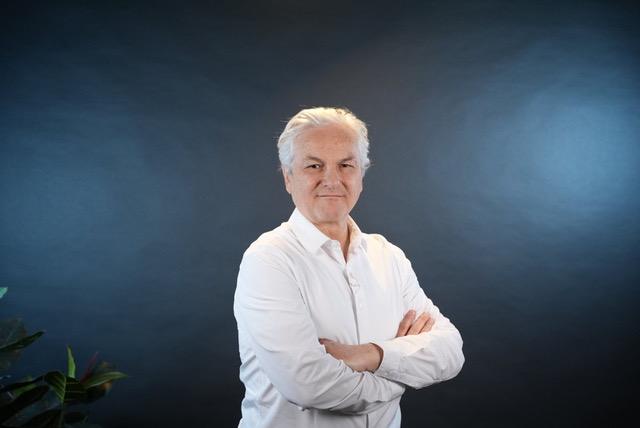
By Daniela Casetta, Corporate Networking Strategist & Keynote Speaker
Only one employee in five says they are truly engaged at work: 20% worldwide in 2025, down from 23% three years earlier, according to Gallup’s latest State of the Global Workplace report. The trend is heading the wrong way, and the figure no longer surprises anyone. That is precisely the problem. We have come to accept it as an inevitable feature of modern working life, when it ought to alarm us as much as a near-zero vacancy rate or a shortage of healthcare staff.
Companies have hardly stood still. Continuous feedback platforms, quarterly satisfaction surveys, talent management software, automated recognition schemes: the market for HR tools has never been more crowded. Engagement is measured, segmented and displayed on dashboards, complete with colour coding and arrows pointing up, or not. The trouble is that no dashboard has ever held anyone’s hand on a difficult Monday morning.
Pay matters, of course, but it is not enough. The quality of relationships, the line manager and a sense of belonging all play a decisive part in how attached people feel to an organisation. Organisational research has confirmed this for decades: the strength of social ties at work is one of the most reliable predictors of retention, yet most HR strategies still underestimate it.
In the Swiss economy, where certain skills are scarce and losing an employee can be very costly, this relational dimension is anything but secondary. That holds for banking, pharma and watchmaking, and just as much for the family-owned SME competing with multinationals for the same talent. When retention is on the table, relationships deserve the same attention as pay or career progression.
That is the whole idea behind the method I developed, FUNdamental Networking, and the name is more than a neat pun, even if I admit I enjoyed coming up with it. F stands for Focus: genuinely active listening, the kind that does not rehearse its reply while the other person is still talking. U stands for Unlock: the courage to be authentic rather than play a polished, interchangeable professional role. N stands for Nurture: tending the relationship over time, not only when you need something. And the FUN is there as a reminder that all of this should remain a pleasure, not one more chore on management’s to-do list.
This is not wishful thinking. It rests on a well-defined mechanism, which David Maister, Charles Green and Robert Galford, leading authorities on professional trust and authors of The Trusted Advisor, formalised as the trust equation. The trust we place in a professional relationship is built on credibility, reliability and intimacy, and it erodes as soon as one party starts putting its own interests first. Trust cannot be decreed in a two-day onboarding programme. It is earned step by step, through repeated, authentic interactions. It is a ladder to climb, not a switch to flick.
The catch is that climbing takes time, and time is precisely what the modern corporation likes to treat as a luxury. We prefer the speed of a satisfaction survey to the slow pace of a real conversation. We celebrate the cross-functional collaboration drawn on the organisation chart, without investing in the moments when colleagues actually get to know one another beyond their job titles. The result is a workforce that is technically connected, through instant messaging, collaborative intranets and back-to-back hybrid meetings, yet relationally isolated. We have never been so reachable, or so disconnected.
Reversing this trend does not mean abandoning the tools, but putting them back in their place: as means, never as ends. Above all, it calls for a change in how managers see their role, one in which active listening becomes as central a skill as reading a dashboard, and in which managers take the time to understand what truly motivates someone before trying to keep them. The organisations that get this right do not stand out for the sophistication of their HR technology, but for the almost artisanal quality of the attention they pay their people.
Switzerland, an economy built on precision and performance, knows how to measure almost everything. It would do well to measure, and above all to cultivate, what appears on no dashboard: the quality of the bonds that keep talent in place long after the most sophisticated HR tool has reached its limits.
Read all our Inside articles