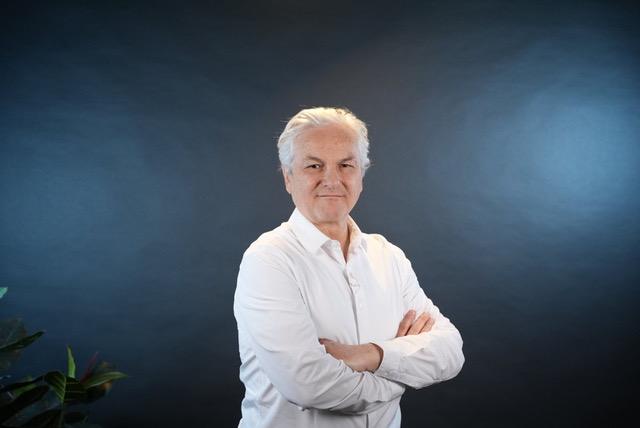
Photo © Aqvita
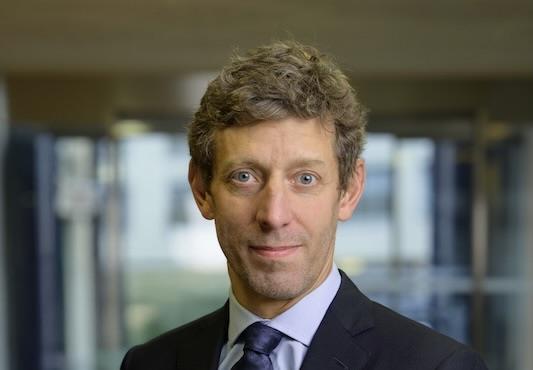
Philippe Tob is a civil chemical engineer and entrepreneur. After more than twenty years in the global seawater desalination industry, he founded Aqvita in Brussels in 2019, a start-up holding European patents that enables anyone to remineralise drinking water at home, at the office or on the move. It is a technology at the intersection of health, ecology and precision chemistry, and a positioning that could well redefine an entire segment of the water industry.
Monde Économique: Until now, seawater desalination was seen as a solution reserved for the arid regions of the Middle East. The ongoing geopolitical crisis and mounting pressure on freshwater resources seem to have changed the picture. Could this growing importance trigger a broader awareness of water issues?
Philippe Tob: Yes, clearly. Desalination is no longer a niche topic reserved for a handful of Gulf countries; it is becoming a marker of the new global water reality. Once entire regions depend on this technology to secure supply, water stops being an invisible given and becomes a strategic asset, on a par with energy or raw materials. This shift in perception can have a very broad knock-on effect. It prompts governments, local authorities and companies to look differently at water quality, availability, resilience and health value. And above all, it reminds us of one essential point: access to water is no longer just about quantity, but also about the ability to guarantee water that is safe, stable and suited to its intended uses.
Monde Économique: In a world where water is therefore becoming both a health issue, a matter of trust and a driver of economic performance, how should a business leader read a market that many still reduce to a simple consumption story?
Philippe Tob: What has been changing over the past few years is that water is no longer judged only by its availability, but by its perceived value. Consumers want to know what they are drinking, where it comes from, and what impact it has on their health or on the environment. That shift is where a very significant part of the market is being reshaped today.
Everywhere in the world, ordinary citizens are beginning to ask questions they were not asking twenty years ago. What is in my water? Is it really safe? What is its long-term impact on my health? This evolution is not anecdotal. It reflects a collective awakening, accelerated by repeated health scandals, by the massive circulation of scientific information on social media, and by growing distrust in the institutions that until now guaranteed the quality of drinking water. PFAS in Belgium, lead in the United States, microplastics in bottled water: each of these episodes has left a lasting mark on public opinion. The result is a consumer who wants to take back control. Not necessarily out of ideology, but out of instinct for protection, for themselves, their children and their loved ones. And that is where the market is being fundamentally reconfigured: demand is no longer focused solely on drinking water, but on trusted water, water whose composition is understood, whose quality is chosen and whose health benefits are measured in everyday life. This is the shift that is redrawing the contours of the entire water industry for years to come.
Monde Économique: You have been working in the water industry for more than twenty-five years. Yet for many executives, this sector remains difficult to define because it is so broad. How would you describe it in 2026?
Philippe Tob: The water industry is in fact one of the largest and most complex in the world. It spans extremely diverse realities: the bottled mineral waters sold in the corner shop, the major seawater desalination plants supplying millions of people in the Middle East, wastewater treatment plants in major metropolitan areas. All of that is part of the “water industry.” To get a proper overview, you absolutely have to specify which segment you are talking about.
At Aqvita, we operate in the segment known as point-of-use water quality improvement. This segment serves both consumers and businesses, and covers all equipment or solutions that make locally available water — tap water, filtered water, purified water — into higher-quality water, both in terms of composition and taste. It is a market whose data underline its potential: the global point-of-use water treatment systems market was valued at more than $24 billion in 2024 and is expected to reach $46 billion by 2032, with a compound annual growth rate of 8.4%. Those figures speak for themselves.
Monde Économique: Yet drinking-water quality is often described as a non-issue in countries such as Switzerland. Tap water in Geneva or Lausanne is regularly ranked among the best in Europe. In that context, how do you explain bottled water continuing to grow at 3 to 5% a year? Is this purely a marketing phenomenon?
Philippe Tob: This is a question that touches on something deep: the perception of quality, not just actual quality. I readily confirm that the water in Geneva or Lausanne is of excellent quality, and yet major mineral water brands continue to grow. Why? Because for many consumers, mineral water is not just a functional product; it is associated with purity, health, wellbeing and sometimes a certain gastronomic lifestyle. These connotations are subjective, but they are real and powerful in consumers’ minds. Added to that is a more troubling phenomenon: repeated health scandals, lead pollution in certain US cities and PFAS contamination in Belgium have instilled a lasting doubt in the public mind about tap water quality. That doubt pushes some consumers towards bottled water.
But here is the paradox: bottled water itself is increasingly being questioned, with revelations about microplastics or contamination at source. We have therefore entered a period of generalised mistrust towards water, whatever its form. And it is precisely in this context that Aqvita makes sense.
Monde Économique: Your response to this context is a water remineralisation technology. Walk us through your intellectual journey: how does a seawater desalination specialist end up wanting to recreate the taste of Evian?
Philippe Tob: It all starts with a fundamental technical observation I made during my years in the desalination industry. When you desalinate seawater through reverse osmosis, you obtain extraordinarily pure water — too pure, in fact, to be consumed directly. Desalinated water must be remineralised, meaning calcium and magnesium are reintroduced and the pH is adjusted. That is a mandatory step in every major desalination plant in the world. From there, together with a group of engineers, we had what I would call a crazy idea about ten years ago: instead of simply remineralising water to make it drinkable, what if we tried to recreate precisely the composition and taste of the great natural mineral waters? Starting from purified water, can you reproduce the mineral signature of Evian, San Pellegrino or Spa Reine? That was the scientific challenge we set ourselves. And ten years later, Aqvita holds European patents on a technology capable of reproducing, in a controlled way, mineral profiles inspired by major natural mineral waters.
.I want to be precise: we do not produce mineral water in the legal sense of the term. But we are deeply inspired by it. To us, these waters are works of nature that we respect and admire. What we enable is for anyone to remineralise their tap water or filtered water in order to recover a composition and taste close to those major references.
Monde Économique: Technological differentiation is at the heart of your positioning. What does your bicarbonate-based approach offer that other solutions on the market — filters, electrolyte powders, conventional mineral supplements — do not?
Philippe Tob: When you look at the composition of major recognised mineral waters, whether Evian, Vichy Célestins or Hépar, you consistently find a common base: calcium and magnesium in bicarbonate form. That is precisely the chemistry that nature produces over millennia as water percolates through rock. We have stabilised and patented that chemistry so it can be introduced instantly into purified water. What fundamentally sets us apart is that we use a supersaturated solution of magnesium and calcium bicarbonate, a form that other remineralisation systems do not know how to produce. Most solutions available on the market use chlorides, resins or calcite powders, which certainly add minerals but with a different chemistry from that found in major natural mineral waters. Our technology is directly inspired by the natural water cycle, which contributes to a taste experience close to certain natural mineral waters.
There is also an important public health dimension. The scientific literature is clear: calcium and magnesium play a role in several normal physiological functions, including muscle function and energy metabolism. Many studies are looking at insufficient magnesium intake in Western populations and its potential consequences. What Aqvita offers is a regular intake of minerals through everyday hydration — discreet, distributed throughout the day, through the simple act of drinking water, without pills, without powders to dissolve, without any constraint.
Monde Économique: On the product side, how does Aqvita present itself today to consumers or corporate decision-makers? What formats are available?
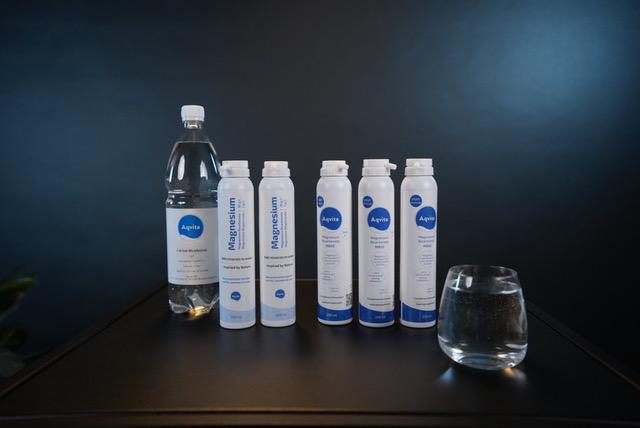
Philippe Tob: We have two main technological lines. The first is our mineral spray system, a concentrated liquid mineral solution that is infused directly into a glass of water. The gesture is immediate, visible, almost sensory: you see and taste the transformation in real time. It is an ideal format for demonstrations and discovery, perfectly suited to events, co-working spaces and client presentations. The second format is our MixFusion technology, which is integrated directly into professional water fountains. It automatically and continuously doses minerals into the water flow, invisibly to the user. It is designed for companies, office spaces, hotels and fine-dining restaurants that want to offer higher-quality water to employees or customers. We have also developed the Aqwaze app, which enables each user to learn the composition of their local water and customise their target mineral profile.
Monde Économique: Looking three to five years ahead, what are the most credible growth drivers for Aqvita: Switzerland, businesses, preventive health, or desalination-linked markets?
Philippe Tob: I think our development has to be read across several fronts at once. In Europe first of all, Switzerland is a very interesting market because it combines high expectations on quality, openness to innovation and a strong environmental awareness. It is a country where the water question is not reduced to the resource itself, but extends to the consumption experience, health and sustainability. Then B2B represents a major lever, particularly in offices, hotels, sports venues and premium living spaces. These are environments where water is both a service and a marker of quality. Finally, longer term, desalination-related markets and public health in regions where water is naturally low in minerals represent genuine strategic depth. It is an even more structural market, because it addresses a societal issue, not just a consumer preference.
Find all our Interviews