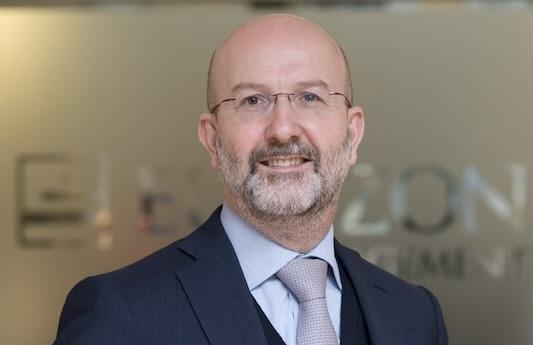
Photo © PRO
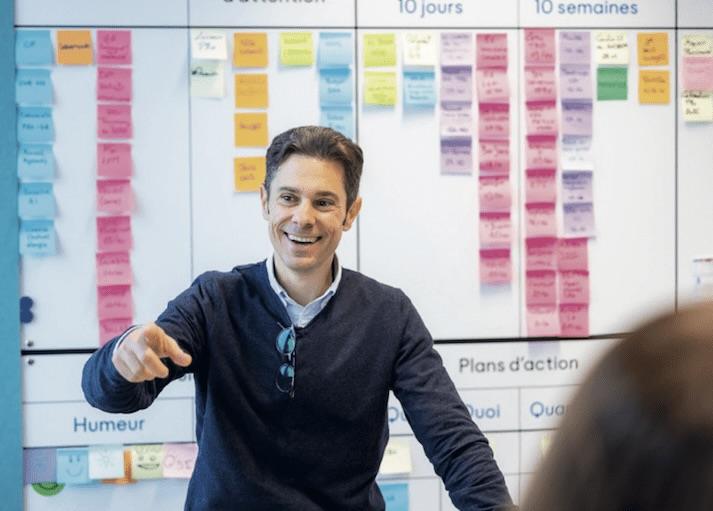
Ivan HARO, Chief Executive Officer of PRO, a human-centered company
What if a company’s true performance depended primarily on the quality of its management and its culture? When leaders build trust, recognize talent, give work meaning and encourage autonomy, they release a collective energy that translates directly into engagement and sustainable results. At the helm of PRO, a social enterprise that is 80% self-financed, Ivan Haro embodies this demanding conviction: economic success is not just a matter of numbers. It reflects the way a company leads, inspires and elevates the women and men who make it up. Interview.
Monde Économique : You argue that human capital is a company’s first strategic asset. In a context of mounting economic pressure, is that still a realistic conviction?

Ivan Haro : Very likely. We are living through a period of increasing strain: pressure on margins, regulatory requirements, strong social expectations, accelerated technological change and a loss of meaning. In this context, some leaders may be tempted to see the human factor as a variable cost to be squeezed rather than an asset to be enhanced. In my view, that is a mistake in perspective. A leader’s most important capital is the women and men who make up the organization. Ensuring their physical, psychological and mental integrity is not a moral stance; it is a condition for economic sustainability. Workplace health should not be reduced to cosmetic measures. It depends in particular on a strong corporate culture, a management framework that is caring without being indulgent, a safe environment and clear processes. Sustainable economic performance rests on a solid human foundation.
Monde Économique : Yet in many companies, employee well-being remains a secondary HR topic. Is that a strategic mistake?
Ivan Haro : I do not know whether it is a mistake, but I can say it is not my view. If you genuinely consider people to be the main asset, then well-being at work cannot be treated as a secondary issue delegated solely to human resources. It belongs to top management. What I mean is that workplace well-being is everyone’s responsibility. I am convinced that to achieve it, three dimensions must be aligned: I must, I can, I want. I must: I understand my role and responsibilities. I can: I have the skills to do my job and the company provides me with the tools to carry out my mission. I want: I find meaning in my work and my manager supports me in fulfilling my mission.
When the work environment allows these three dimensions to come together, both individual and collective performance improve. Organizational fairness advances, workloads become more balanced and tensions ease. It is a demanding, structured and empowering framework that, of course, requires leadership by example.
Monde Économique : How can companies avoid the trap of “social washing”? How can economic performance and social responsibility be reconciled without slipping into idealism?
Ivan Haro : In my experience, idealism is as dangerous as dehumanizing productivity at all costs. Profitability at any price destroys people, and an organization that exhausts its human capital inevitably ends up weakening the company’s performance. Complacency and irresponsibility destroy the organization and then undermine the company’s economic viability. I believe the path to success lies in a subtle balance, combining high standards and consideration.
Monde Économique : Burn-out, quiet disengagement, high turnover: are these the symptoms of a model that is running out of steam?
Ivan Haro : I would say that both our economic model and our societal model are under strain. Expectations of companies are intensifying. They are no longer expected only to produce goods or services that meet quality standards and are delivered at the agreed price and within the agreed timeframe. Today, they are expected to contribute to social cohesion, act responsibly, provide dignified working conditions, be inclusive, prevent psychosocial risks, reduce their environmental footprint, maintain local employment and demonstrate ethics in all their operational choices. And, of course, offer goods and services at lower prices. These expectations may seem incompatible, because they combine an imperative for performance and extreme efficiency with an equally strong requirement for consideration, attentiveness, adaptability and social justice. In this paradoxical environment, the symptoms you mention do not arise by chance. They emerge when leadership by example is lacking, when roles and responsibilities are unclear, when workloads are poorly distributed and when meaning disappears. The solution is not only structural; it is also cultural and societal.
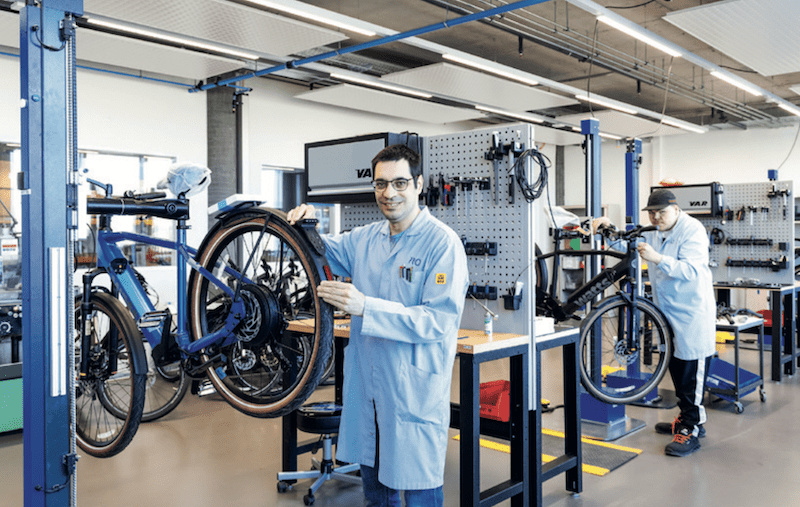
Monde Économique : PRO is a social enterprise that is nearly 80% self-financed while pursuing a mission of labor-market integration for people with disabilities. Is this proof that a hybrid model can perform?
Ivan Haro : Our model rests on a simple principle: our economic performance ensures the sustainability of our social mission. We produce goods and services sold on the market. We face competition, customer demands and the need for operational efficiency. Performance is not theoretical; it is tangible and daily. But it is also true that labor-market integration can become a driver of economic performance. In the framework of our mission, we focus management on skills rather than limitations. We value everyone’s contribution, however modest it may be. In other words, we do not lower quality standards; we adapt the working environment to make them accessible. And this approach is not necessarily reserved for us. It can be applied in any company.
Monde Économique : What do you see today as the main issues for companies’ competitiveness in relation to workers?
Ivan Haro : Three major trends seem to be emerging. First, growing demands around corporate social and environmental responsibility, with companies judged on their overall impact. Second, workers’ search for dignity, meaning, flexibility and a better work-life balance. They no longer settle for a simple employment contract. Finally, the shortage of skilled labor. In some sectors, attracting, training and retaining talent is becoming a major challenge. As a result, organizations that take these trends into account will very likely have a competitive advantage.
Monde Économique : Concretely, what would you say to a leader who wants to better leverage human capital without harming profitability?
Ivan Haro : I would tell them to start by strengthening their culture and then adopt an aligned stance, because culture cannot be decreed, it must be demonstrated. You may have the best strategy in the world, but if your culture is inconsistent, it will remain a dead letter. And if the leader is not exemplary, no consultant and no HR program can make up for it. At PRO, managers must lead by example, supporting people with kindness without complacency. That means setting a demanding framework. Holding people accountable, empowering them, recognizing them, valuing them, while also saying when things are not going well. We work with pride and humility, because we do our best and, alone, one builds nothing. These principles cost nothing beyond conviction, rigor and consistency. Many companies hesitate because they think this requires significant spending, consultants, heavy programs. In reality, it is a cultural investment. A powerful lever for economic performance.
Monde Économique : If you had to sum up your strategic conviction in one sentence for business leaders?
Ivan Haro : Enhancing human capital and economic performance are not mutually exclusive. Quite the opposite: when one supports the other, a virtuous circle begins. And this is in the interest of all stakeholders: the worker, the manager and the company.
Find all our Interviews